
Table of Contents: Residential Main Water Shutoff Valve Engineering & Emergency Guide
- 1. Executive Summary: The Critical Gateway of Residential Water Control
- 2. Mechanical Anatomy & Failure Modes: Gate Valves, Globe Valves & Full-Port Ball Valves
- 3. The Physics of Seized Valves: Torque Limits, Stem Shear & Mineral De-scaling
- 4. Municipal Curb Stop Emergency Isolation: Water Meter Pit Keys & Buffalo Boxes
- 5. Next-Generation Ultrasonic & Motorized Smart Water Shutoff Technology
- 6. Comprehensive Engineering Valve Comparison Matrix: Materials, Lifespan & Flow Capacity
- 7. Step-by-Step Master Plumber Replacement Protocol: Pipe Freezing, Press Tools & Ball Valves
- 8. Colorado Front Range Submarket Profiles: Water Meter Pits, Frost Depth & PRV Sizing
- 9. Financial Risk Analysis: Preemptive Valve Upgrade vs. Catastrophic Water Damage
- 10. Comprehensive Extended FAQ Section (12 Detailed Engineering Questions)
- 11. 24/7 Emergency Shutoff Valve Repair & Replacement Services
1. Executive Summary: The Critical Gateway of Residential Water Control
In every residential plumbing system across the Colorado Front Range, thousands of gallons of pressurized municipal water stand ready behind the walls, pressurized at anywhere from 60 to 120 pounds per square inch (PSI). The single physical barrier standing between the controlled distribution of potable water and an uncontrolled, high-velocity indoor flood is the primary residential main water shutoff valve. Typically situated where the municipal water service line penetrates the basement concrete foundation wall or mechanical room floor, this critical valve is expected to operate instantly and seal hermetically during sudden pipe ruptures, water heater tank fractures, or severe winter freeze bursts.
Tragically, for tens of thousands of homeowners across Broomfield, Westminster, Thornton, and Arvada, the main water shutoff valve is an aging, neglected mechanical relic that has remained untouched for twenty, thirty, or even fifty years. When a plumbing catastrophe strikes in the middle of the night—such as an upstairs frozen copper line rupturing or a pressurized washing machine flex hose bursting—panicked homeowners race to the basement only to discover that their main shutoff valve is completely seized rock-solid with calcified mineral deposits, that the handle spins loosely on a severed brass stem, or that turning the valve causes high-pressure water to spray violently from the packing nut.
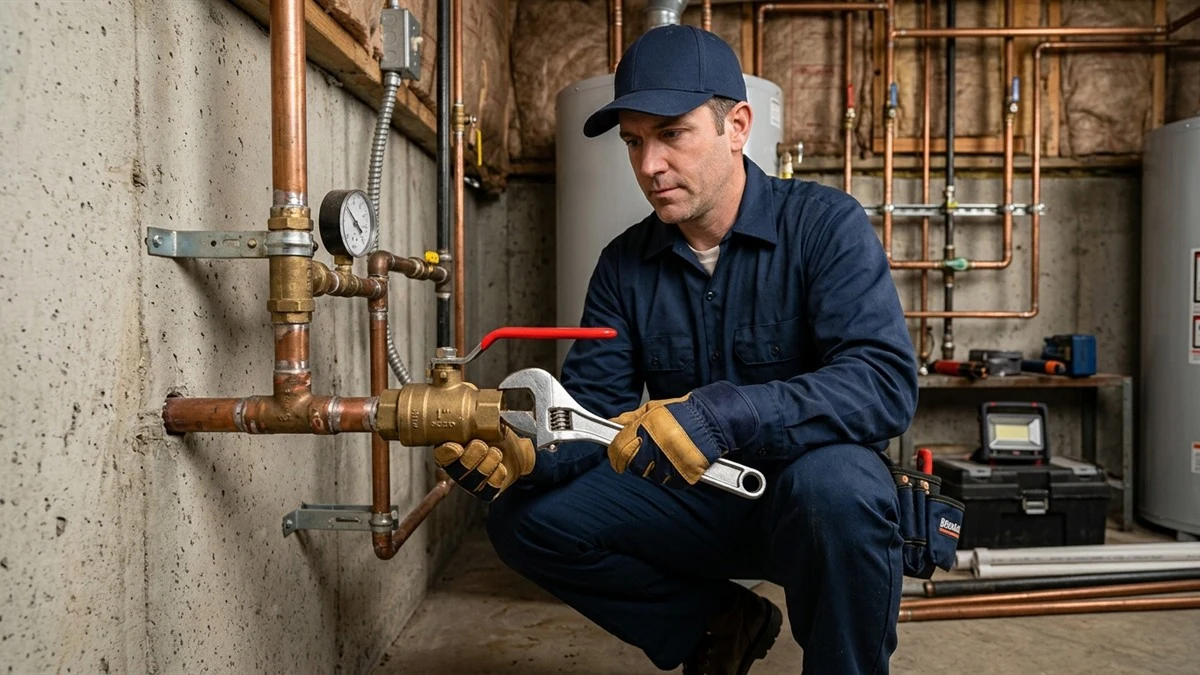
Every sixty seconds that a 3/4-inch pressurized water line flows uncontrolled, between 15 and 25 gallons of water flood into living spaces. Within twenty minutes, over 400 gallons of water saturate subfloors, collapse drywall ceilings, ruin hardwood flooring, soak electrical breaker panels, and cause upwards of $50,000 in catastrophic structural water damage. Attempting to force a frozen multi-turn gate valve with heavy pipe wrenches or channel-lock pliers frequently snaps the internal brass stem, turning a minor fixture leak into an uncontrollable whole-house deluge.
Understanding the mechanical physics of valve failure, knowing how to safely isolate municipal curb stops at the street meter pit, and replacing obsolete gate valves with industrial-grade, full-port stainless-trimmed ball valves or smart IoT automated shutoff valves is vital knowledge for every Colorado homeowner. This definitive technical engineering guide breaks down valve fluid mechanics, mineral galvanic seizure, cryogenic pipe-freezing replacement protocols, and municipal emergency isolation procedures across the northern Denver metropolitan corridor.
2. Mechanical Anatomy & Failure Modes: Gate Valves, Globe Valves & Full-Port Ball Valves
To understand why shutoff valves fail during emergencies, plumbing engineers examine the internal electromechanical anatomy and fluid dynamics of the three primary valve architectures found in Front Range residential structures:
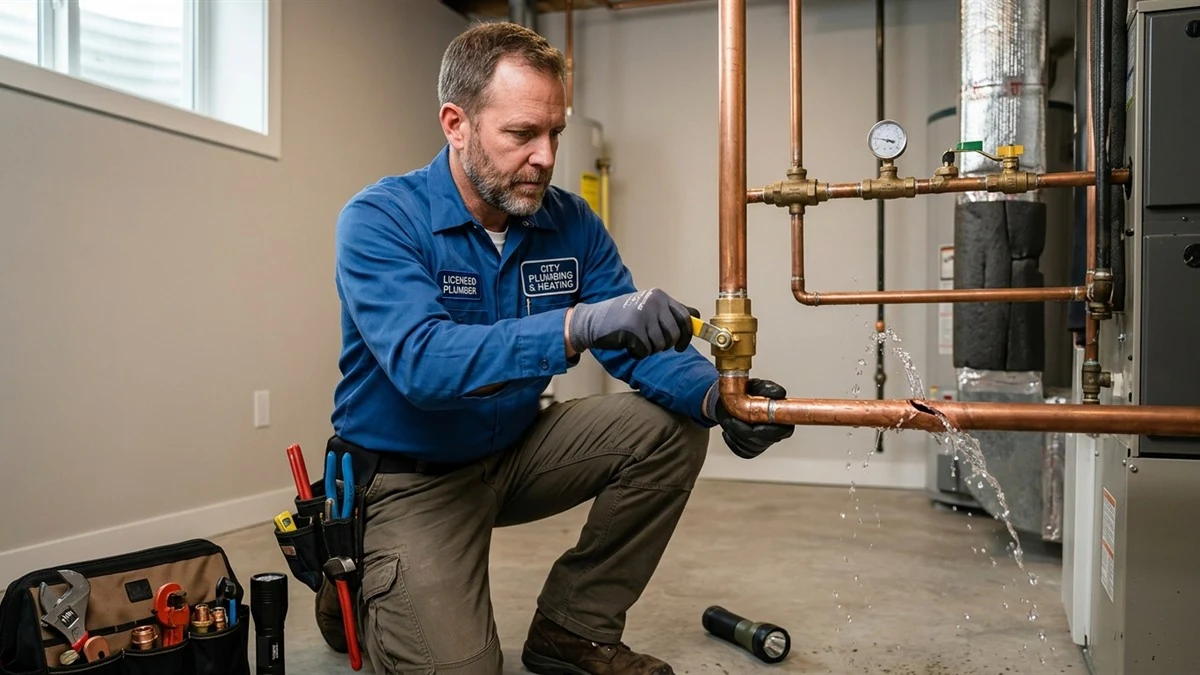
1. Legacy Multi-Turn Gate Valves: The High-Risk Wedge Design
Until the early 2000s, building codes across Colorado permitted the installation of multi-turn brass gate valves as residential main shutoffs. A gate valve operates by turning a round, cast iron or brass wheel handle clockwise through 5 to 8 complete rotations. This wheel turns a threaded internal brass stem, which lowers a solid brass tapered wedge (the “gate”) vertically between two machined brass seats to block water flow.
While inexpensive to manufacture, gate valves suffer from fatal mechanical failure modes in hard water environments:
- Stem-to-Gate T-Slot Shear: The threaded stem connects to the brass gate via a tiny slotted T-channel. Over decades of immersion in municipal water containing dissolved oxygen and chlorine, dezincification and galvanic corrosion weaken this brass junction. When a homeowner applies high torque to close a stuck valve, the T-slot shears clean off. The gate drops halfway down or remains stuck open while the handle spins freely with zero resistance.
- Mineral Sediment Seat Jamming: Calcium carbonate and silica crystals carried in municipal water settle into the recessed groove at the bottom of the valve body. When the wedge is forced downward, these hard mineral aggregates prevent the gate from bottoming out, allowing 5 to 15 GPM of pressurized water to blow past the seat even with the handle tightened completely.
- Stem Packing Gland Extrusion & Leakage: The sealing boundary where the rotating threaded stem exits the brass valve body is sealed with compressed graphite or Teflon packing rope held tight by a threaded packing nut. When the stem is turned after decades of immobility, dried packing seals tear, spraying high-pressure water outward along the stem.
2. Multi-Turn Globe Valves: Severe Flow Restriction & Turbulence
Globe valves are occasionally encountered in older mid-century homes in Westminster and Arvada. Unlike gate valves that provide a straight-through flow path, globe valves force water through an S-shaped internal baffle, pushing fluid up through a circular horizontal orifice sealed by a flat rubber or leather washer pressed down from above.
Under fluid mechanics principles, this tortuous path generates massive hydraulic turbulence and dynamic pressure drop. The equivalent pipe length of a standard globe valve is upwards of 30 to 45 feet of straight pipe, causing a noticeable 5 to 10 PSI pressure drop across the valve during peak household demand. Furthermore, the rubber sealing washer disintegrates over time, leading to total valve failure.
3. Modern Quarter-Turn Full-Port Ball Valves: The Gold Standard
In modern plumbing engineering, the universally specified standard for residential main water shutoff control is the quarter-turn, full-port, solid brass or bronze ball valve (governed by ASME A112.4.14 and MSS SP-110). A ball valve consists of a precision-machined, chrome-plated brass or 316 stainless steel sphere nestled inside virgin PTFE (Teflon) seats. A 90-degree rotation of a heavy-gauge steel lever handle moves the valve from 100% full-bore open to 100% hermetically bubble-tight closed.
Because the internal bore of a “full-port” ball valve matches the exact internal diameter of the connecting copper pipe, it introduces virtually zero hydraulic friction loss ($C_v > 30$). The PTFE seats continuously wipe the spherical surface clean during operation, preventing mineral scaling from adhering to the sealing faces. Ball valves provide unmistakable visual status: when the handle is parallel to the pipe, the valve is fully open; when perpendicular, it is 100% closed.
3. The Physics of Seized Valves: Torque Limits, Stem Shear & Mineral De-scaling
When a homeowner discovers a main gate valve that refuses to turn, the natural instinctive reaction is to grab a cheater pipe, adjustable wrench, or heavy hammer to force the handle. From a materials science and mechanical engineering perspective, this approach is disastrous.

Torsional Shear Stress Equation in Brass Valve Stems
The maximum torsional shear stress ($\tau_{max}$) delivered to a cylindrical valve stem of diameter $d$ by an applied torque $T$ is governed by the torsion formula:
For a typical 3/8-inch ($0.375″$) yellow brass valve stem (Alloy C36000 free-cutting brass), the yield shear strength is approximately 25,000 to 30,000 PSI. If a homeowner slips a 12-inch pipe wrench onto the handwheel and applies 35 pounds of manual force, the generated torque is:
Plugging this into the torsional stress equation:
The applied torsional stress (40,579 PSI) substantially exceeds the yield shear limit of the brass stem (28,000 PSI)! The result is instantaneous catastrophic mechanical fracture: the stem shears completely in half inside the valve body, leaving the gate locked in place while the stem and wheel pull out in the homeowner’s hand, accompanied by an explosive spray of pressurized water.
Dezincification Metallurgy of Yellow Brass in Colorado Water
Beyond mechanical torque over-stressing, the premature catastrophic failure of brass valve bodies and stems is heavily accelerated by Dezincification Corrosion. Standard builder-grade yellow brass (such as UNS C36000 free-machining brass) contains approximately 60% copper and 38% to 40% zinc. When exposed to municipal water treated with chlorine, chloramines, and high dissolved oxygen—typical of Front Range municipal distribution networks—an electrochemical de-alloying reaction takes place.
Zinc atoms are selectively leached out of the brass crystal lattice into the water stream, leaving behind a porous, mechanically brittle red copper framework. While the exterior of the valve may appear structurally sound, the interior metal has lost up to 80% of its tensile and shear strength, becoming crumbly and porous. When torque is applied during an emergency, the dezincified stem shears effortlessly. Modern plumbing code standards mandate the use of Dezincification-Resistant (DZR) Lead-Free Silicon Bronze alloys (such as C87850 or Eco-Brass) containing less than 15% zinc and fortified with arsenic, phosphorus, or silicon to prevent metallurgical leaching.
Safe De-Seizing Protocols for Moderately Sticky Valves
If a valve is stiff but not completely fused, professional master plumbers employ careful mechanical de-scaling protocols:
- Loosen the Stem Packing Nut: Using an adjustable wrench, back off the hex packing nut located directly beneath the wheel handle by 1/4 to 1/2 turn counterclockwise. This relieves compressive squeeze on the graphite packing rope, dramatically reducing friction drag on the stem.
- Apply Penetrating Solvent: Spray a high-solvency penetrating oil (such as Kroil or PB Blaster) directly onto the exposed stem threads. Allow the fluid to capillary-wick into the packing gland for 10 to 15 minutes.
- Gentle Oscillating Torque: Grip the handwheel with leather-gloved hands. Apply gentle clockwise pressure, then rock it slightly counterclockwise. Oscillating back and forth across 5 to 10 degrees breaks the brittle calcium carbonate crystal matrix without exceeding the brass shear limit.
- Retighten the Packing Nut: Once the valve operates smoothly, turn the packing nut clockwise by 1/4 turn to re-compress the graphite packing and eliminate any stem water weeping.
4. Municipal Curb Stop Emergency Isolation: Water Meter Pit Keys & Buffalo Boxes
When an indoor main shutoff valve fails, fractures, or cannot be turned during a major burst pipe emergency, the entire home’s water supply must be isolated upstream at the municipal boundary. This subterranean isolation point is known as the Municipal Curb Stop Valve.
Anatomy of the Exterior Water Meter Pit & Buffalo Box
In most residential communities across Broomfield, Westminster, Thornton, and Arvada, the municipal water meter and curb stop are housed inside a subterranean pit located near the front property boundary, sidewalk, or lawn easement. In Colorado, because the subterranean frost line reaches depths of 42 to 48 inches in winter, the water meter and valve are installed deep inside a 24-inch diameter insulated concrete or corrugated polyethylene culvert, sealed with a heavy cast iron lid.
Alternatively, some older properties feature a separate Buffalo Box (B-Box)—a narrow, 4-inch vertical cast iron standpipe with a threaded brass plug on top that extends straight down to a subterranean quarter-turn plug valve located 4 to 5 feet beneath ground level.
Operating the Curb Stop Key (T-Key)
Isolating a curb stop requires a specialized plumbing tool known as a Water Meter T-Key (a 5-to-6-foot steel shaft with a crossbar T-handle on top and a slotted U-channel socket at the bottom):
- Lid Removal & Frost Foam Extraction: Pry off the heavy cast iron meter pit lid using a flathead pry bar or lid key. Beneath the lid sits a circular extruded polystyrene insulating foam disc (the frost barrier). Carefully lift out this insulation blanket to expose the subterranean plumbing.
- Valve Engagement: Lower the meter key vertically onto the curb stop valve. The valve features a raised, rectangular bronze operating tab (typically 1/2″ wide by 2″ long) with a padlock hole. Slide the key’s slotted socket securely over this bronze tab.
- 90-Degree Quarter-Turn Isolation: Rotate the T-key exactly 90 degrees clockwise until the rectangular tab sits completely perpendicular to the water flow direction. Aligning the padlock hole on the operating tab with the stationary hole on the valve body confirms 100% municipal isolation. Never force the valve past 90 degrees, as municipal curb stop plug valves are strictly quarter-turn mechanisms.
5. Next-Generation Ultrasonic & Motorized Smart Water Shutoff Technology
While mechanical ball valves are essential, modern plumbing engineering has revolutionized residential flood defense through Smart Automated Water Shutoff Systems (such as the Moen Flo Smart Water Monitor, Phyn Plus, or StreamLabs Control).
Ultrasonic Flow Measurement & Micro-Leak Pressure Telemetry
Unlike old paddle-wheel water meters, smart shutoff valves utilize dual ultrasonic transducers to measure water velocity using high-frequency acoustic sound waves (typically 1 MHz to 2 MHz). By calculating the transit-time acoustic phase shift of ultrasound pulses traveling upstream versus downstream, the onboard microprocessor measures micro-leak flow rates as microscopic as 0.003 GPM (one single drop per minute!).
Automated Health Checks & Rapid Disaster Mitigation
Every night during low-usage hours (typically 2:00 AM to 3:00 AM), the smart valve performs an automated Micro-Pressure Decay Health Test. The motorized ball valve closes momentarily, trapping static water pressure inside the home. High-precision pressure transducers measure the decay rate over five minutes. If pressure drops by even 1.5 PSI, the system identifies a concealed pinhole leak in a copper line, toilet flapper seepage, or slab leak, alerting the homeowner via smartphone push notification long before drywall damage occurs.
More critically, during catastrophic failures—such as a burst frozen pipe discharging 20 GPM—the smart controller detects abnormal continuous volume and automatically engages an internal brushless DC motor to drive the valve 100% closed in under 8 seconds, completely preventing basement inundation even if the family is thousands of miles away on vacation!
6. Comprehensive Engineering Valve Comparison Matrix: Materials, Lifespan & Flow Capacity
The comparative matrix below analyzes the technical parameters of the primary residential water shutoff valve architectures:
| Engineering Parameter | Multi-Turn Brass Gate Valve | Quarter-Turn Brass Ball Valve | Motorized Smart Shutoff Valve |
|---|---|---|---|
| Governing Standards | MSS SP-80, ASTM B62 | MSS SP-110, ASME A112.4.14 | IAPMO IGC 349, NSF/ANSI 61 & 372 |
| Internal Sealing Mechanism | Wedge brass gate between brass seats | Solid chrome/stainless ball in PTFE seats | Motor-driven ball valve + ultrasonic sensors |
| Operation Action | 5 to 8 full revolutions (360° x 6) | Single 90-degree quarter-turn | Automated electronic / Smartphone app |
| Flow Coefficient (Cv for 3/4″ valve) | Cv = 18 – 22 (Minor restriction) | Cv = 34 – 38 (Zero restriction) | Cv = 28 – 32 (Negligible drop) |
| Hard Water Mineral Resistance | POOR: Fuses solid; scale jams bottom groove | EXCELLENT: Teflon seats self-wipe ball | EXCELLENT: Periodic auto-cycle clears scale |
| Reliability in Sudden Disaster | High failure rate (Stems shear, packing leaks) | Instantaneous, 1-second physical shutoff | Autonomous closure without human intervention |
| Expected Design Lifespan | 10 to 15 Years (In Front Range hard water) | 30 to 50+ Years | 12 to 18 Years (Electronics) / 30+ (Valve) |
7. Step-by-Step Master Plumber Replacement Protocol: Pipe Freezing, Press Tools & Ball Valves
Replacing an obsolete main shutoff valve when the upstream pipe cannot be easily isolated or when municipal curb stop valves are stuck requires master-level plumbing execution:
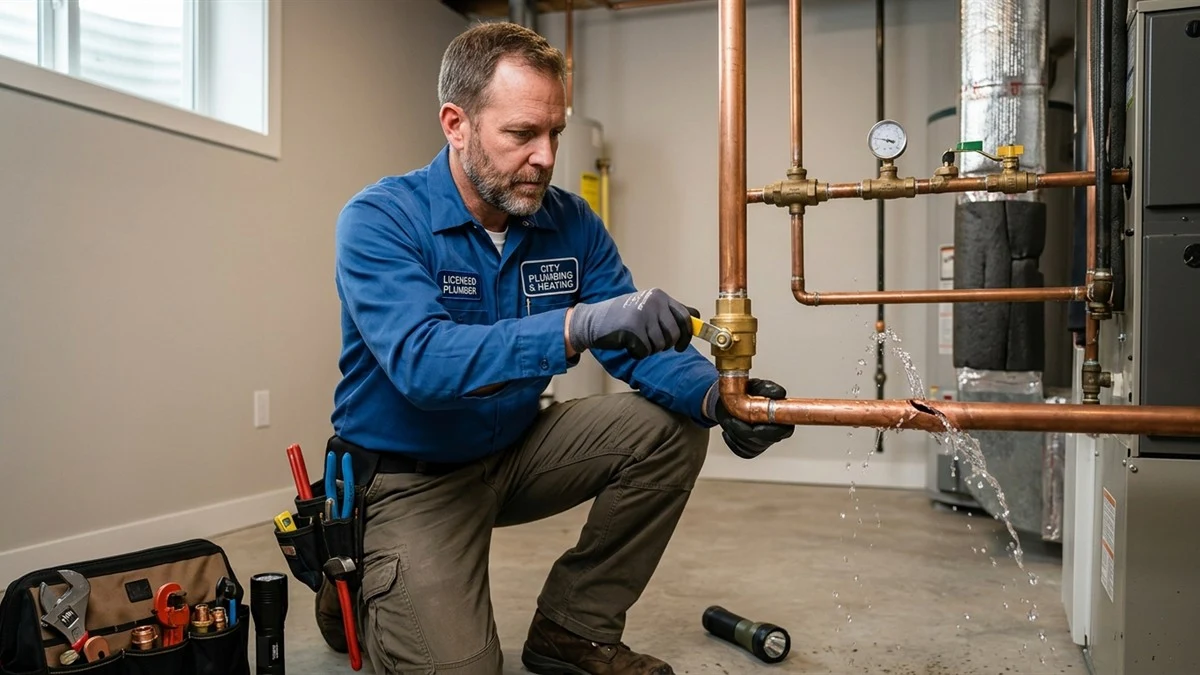
- Upstream Isolation or Cryogenic Pipe Freezing:
If the street curb stop is accessible, isolate water at the meter pit. If the curb stop is broken or inaccessible, master plumbers deploy a Cryogenic Liquid CO2 or Electric Pipe Freezing Rig. Insulated freeze jackets are clamped onto the 3/4-inch incoming copper line upstream of the failed valve. Within 15 minutes, a solid cryogenic ice plug forms inside the pressurized pipe, holding back 100 PSI of water pressure safely without requiring street excavation.
- Precision Pipe Demolition & Reaming:
Depressurize the downstream household plumbing by opening the lowest basement laundry faucet. Using a ratcheting close-quarters copper tubing cutter, excise the old gate valve cleanly. De-burr the internal and external copper pipe ends with a conical reamer to eliminate flow turbulence and protect internal O-rings.
- Installation of Full-Port Lead-Free Ball Valve:
Install a commercial-grade, lead-free brass ball valve (complying with NSF/ANSI 372). Technicians utilize either flameless hydraulic press connections (Viega ProPress) with EPDM sealing elements engineered for 250 PSI or lead-free silver-alloy solder brazing. ProPress connections eliminate open flame fire risks inside tight basement joist cavities near wood framing and insulation.
Additionally, Viega ProPress fittings feature the patented Smart Connect diagnostic indicator groove. If an installer accidentally forgets to crimp a joint during a multi-valve mechanical retrofit, the engineered leakage channel deliberately leaks water under low-pressure testing (0.5 to 45 PSI), guaranteeing that no unpressed joints can go unnoticed before final full-pressure commissioning.
- Thermal Expansion & Pressure Regulating Valve (PRV) Integration:
Directly downstream of the new main shutoff valve, inspect or install a Pressure Reducing Valve (PRV) (such as Watts LF25AUB) to step down excessive municipal pressure to a safe, steady 55 to 65 PSI. Install a full-port brass drain-down bleeder cap to allow winterizing and plumbing purging.
- Electrical Ground Continuity Bonding:
Under National Electrical Code (NEC Article 250.53(D)(1)), metal water service piping often serves as a grounding electrode. When replacing valves or adding dielectric fittings, plumbers install a #4 AWG copper bonding jumper wire secured by heavy-duty bronze grounding clamps bridging across the new valve and water meter to guarantee unbroken electrical ground path continuity.
- Hydrostatic Proof Testing & Commissioning:
Slowly thaw the cryogenic freeze plug or reopen the curb stop valve. Pressurize the newly installed valve assembly slowly to avoid hydraulic surge shock. Inspect all joints under 100 PSI static municipal pressure with high-intensity diagnostic lighting. Verify silky smooth 90-degree handle actuation and complete bubble-tight shutoff.
8. Colorado Front Range Submarket Profiles: Water Meter Pits, Frost Depth & PRV Sizing
Municipal water delivery infrastructure varies significantly across individual jurisdictions along the Front Range:
- City and County of Broomfield (Anthem, Broadlands, Country Vista): Broomfield’s municipal supply pressure can exceed 90 to 115 PSI in subdivisions located at lower elevations near regional pressure zones. Water meter pits are located in front yards, requiring 5-foot meter keys. In older Broadlands homes, original gate valves installed in the late 1990s have reached critical failure age and frequently fail to hold static pressure during water heater replacements.
- City of Westminster (Standley Lake, Countryside, Shaw Heights): Westminster features a wide variety of housing eras. Homes built in the 1970s and 1980s often have main shutoff valves buried behind finished basement drywall without code-compliant access panels. Westminster municipal regulations mandate dual check backflow preventers on all retrofitted water services.
- City of Thornton (Grange Creek, Woodglen, Yorkborough): Thornton’s water hardness levels (averaging 9 to 12 grains per gallon) cause accelerated mineral calcification on valve stems. Gate valves in Thornton frequently seize in the open position after less than 12 years of service. Upgrading to full-port ball valves is strongly recommended prior to undertaking kitchen or bathroom renovations.
- Arvada & West Denver (Leyden Rock, Candelas, Olde Town): High-pressure foothill water distribution lines in Arvada frequently supply static pressures exceeding 120 PSI. Failing to maintain a properly functioning main shutoff valve and calibrated PRV valve in Arvada exposes household PEX and copper joints to dangerous pressure hammer spikes.
9. Financial Risk Analysis: Preemptive Valve Upgrade vs. Catastrophic Water Damage
Replacing an obsolete main shutoff valve is an inexpensive, highly leveraged preventative maintenance investment that prevents catastrophic property destruction:
| Plumbing Scenario | Typical Investment Range | Secondary Property Impact | Financial Protection Rating |
|---|---|---|---|
| Professional ProPress Ball Valve Upgrade | $380 – $650 | Zero damage; scheduled 2-hour clean installation. | MAXIMUM: Guaranteed 1-second emergency water control for 50+ years. |
| Smart Automated Water Shutoff Installation | $950 – $1,600 (Turnkey device + plumbing) | Qualifies for 8% to 15% homeowner insurance premium discounts. | ULTIMATE: Autonomous flood defense even when away from home. |
| Catastrophic Valve Failure During Burst Pipe | $25,000 – $75,000+ (Emergency water mitigation, drywall, hardwood, mold) | Massive family displacement, loss of irreplaceable personal items, insurance deductible. | DISASTROUS: Severe financial and emotional trauma. |
10. Comprehensive Extended FAQ Section
Q1: Where is my main water shutoff valve usually located?
In Colorado homes with basements, the main water shutoff valve is typically located in the basement mechanical room or near the front foundation wall where the copper service pipe enters through the concrete slab. In homes on crawlspaces or concrete slabs, look near the water heater closet, under the kitchen sink, or inside the garage near the front perimeter.
Q2: How can I tell if my main shutoff valve is a gate valve or a ball valve?
A gate valve has a round, wheel-style handle (similar to an outdoor garden spigot handle) that requires 5 to 8 complete circular turns to close. A ball valve has a straight, lever-style handle that only moves 90 degrees (a quarter-turn) between fully open and fully closed.
Q3: What should I do if water starts spraying from the packing nut when I turn the valve?
Do not panic. A small leak from the stem is common when an old valve is turned after years of disuse. Using an adjustable wrench, gently turn the hex packing nut located directly beneath the wheel handle 1/4 turn clockwise. This compresses the internal graphite packing seal against the stem, stopping the leak.
Q4: Can I use WD-40 to loosen a stuck main water shutoff valve?
Standard WD-40 is a water dispersant, not an effective penetrant for dissolving thick calcium carbonate mineral scale. While applying specialized penetrating oil (like PB Blaster or Kroil) to the external stem threads can help, never force the handle. If it does not move with moderate hand pressure, call a licensed plumber to prevent stem snapping.
Q5: How do I find my outside water meter pit in winter when it is covered with snow?
Water meter pits are generally located in the front yard near the sidewalk, aligned straight out from where the water line enters your basement. Keep a snow shovel handy to clear the cast iron lid, and mark the pit location in autumn with a tall reflective marker stake so you can locate it instantly beneath heavy snow drifts.
Q6: Is it legal for a homeowner to turn off the water at the city meter pit?
In an active emergency (such as a catastrophic burst pipe with a broken indoor valve), municipal utilities permit homeowners or plumbers to isolate the curb stop to protect property. However, you must use a proper meter key and turn the valve gently. Forcing or damaging the city curb stop valve can result in municipal repair fines.
Q7: How long does it take for a plumber to replace a main shutoff valve?
A standard main shutoff valve replacement using modern hydraulic press tools (Viega ProPress) typically takes between 1.5 and 2.5 hours. This includes isolating the curb stop or freezing the pipe, removing the obsolete valve, installing a new commercial ball valve, and testing under full municipal pressure.
Q8: Why does my newly installed ball valve feel stiff to turn?
High-quality ball valves utilize dense virgin PTFE (Teflon) seats compressed tightly against the polished spherical ball to guarantee a bubble-tight seal under 150+ PSI. A firm, positive resistance is completely normal and confirms that the internal seals are seated properly.
Q9: How often should I exercise my main water shutoff valve?
Plumbing engineers recommend “exercising” your main shutoff valve twice a year (such as when adjusting clocks for Daylight Saving Time). Turn the ball valve 90 degrees closed and reopen it. This simple action wipes the Teflon seats clean and ensures the valve remains 100% operational when an emergency strikes.
Q10: What is the purpose of the electrical grounding wire clamped to my water pipe?
The copper wire clamped across your water meter and main valve is an electrical grounding electrode conductor. It bonds your home’s electrical panel to the subterranean metallic water pipe. Plumbers must maintain continuous electrical bonding during valve replacement to prevent electric shock hazards and electrical code violations.
Q11: Can a smart water shutoff valve work if my Wi-Fi goes down?
Yes. Commercial smart valves (like Flo by Moen and Phyn Plus) store monitoring algorithms locally on internal flash memory. If an extreme flow event or pipe burst occurs during a Wi-Fi outage, the onboard controller will still trigger the motorized valve to close automatically, protecting your home even without internet connectivity.
Q12: Does homeowner’s insurance require a working main shutoff valve?
While insurance policies do not inspect individual valves, adjusters can deny or dispute water damage claims if they determine that gross homeowner negligence (such as failing to shut off water during a known leak or having a completely broken valve) exacerbated flood damages. Installing a smart automatic shutoff valve often earns policy discounts.
11. 24/7 Emergency Shutoff Valve Repair & Replacement Services
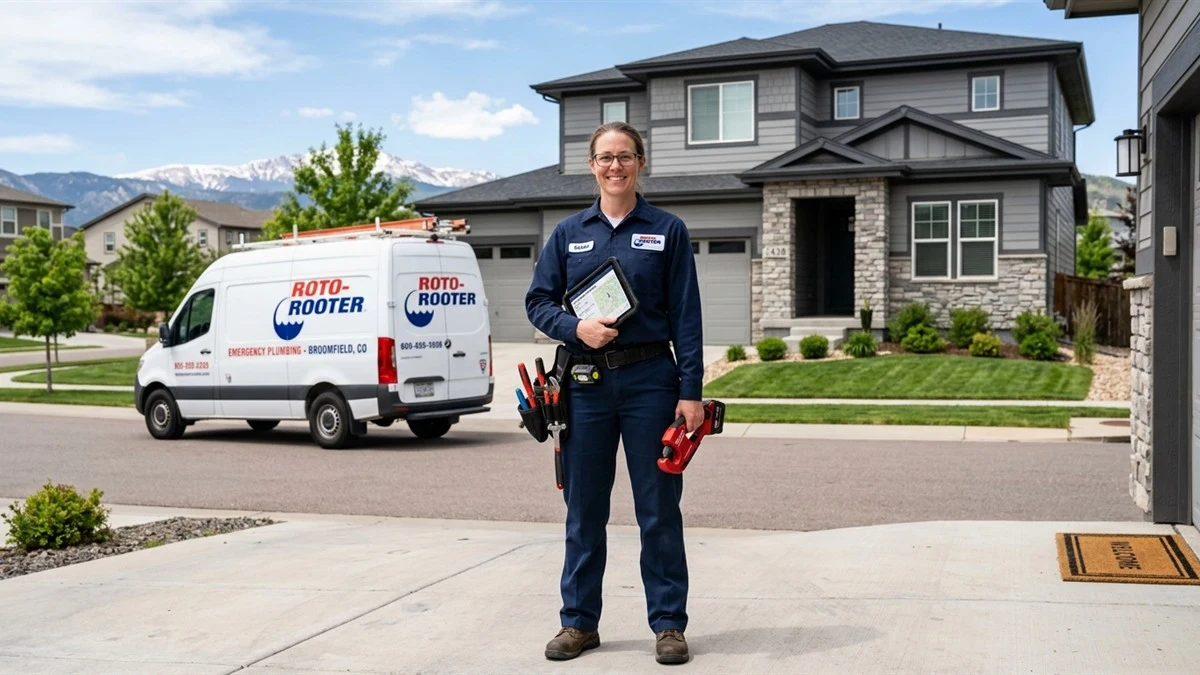
Is Your Main Water Shutoff Valve Stuck, Leaking, or Outdated?
Do not wait for a catastrophic pipe burst to find out your main valve will not turn. Our licensed master plumbers provide same-day emergency shutoff valve replacement, curb stop isolation, and smart automated shutoff installations across Broomfield, Westminster, Thornton, and Denver Metro.