
Table of Contents: Frozen Pipe Emergency Guide
- 1. Executive Summary: The Colorado Winter Freeze Threat
- 2. Thermodynamics of Frozen Pipes: Convection, Drafts & Wind Chill
- 3. Whole-Home Freeze Vulnerability Audit: Uninsulated Zones
- 4. Step-by-Step Safe Pipe Thawing Protocol for Homeowners
- 5. Critical Warnings: Deadly Thawing Practices to NEVER Attempt
- 6. Proven Long-Term Freeze Prevention: Insulation, Air Sealing & Drip Rules
- 7. Winter Vacation Protocols: Thermostat Settings & Winterization
- 8. Smart Water Shutoff Valves & IoT Freeze Monitoring Technology
- 9. Front Range Polar Vortex Patterns: Broomfield, Westminster & Thornton
- 10. Transparent Pricing & Emergency Thawing Investment Breakdown
- 11. Comprehensive Extended FAQ Section (12 Detailed Questions)
- 12. 24/7 Frozen Pipe Emergency Dispatch Action Plan
1. Executive Summary: The Colorado Winter Freeze Threat
Living along the Colorado Front Range offers breathtaking panoramic views of the Rocky Mountains, world-class outdoor recreation, and crisp, sunny winter mornings. However, for residential homeowners across Broomfield, Westminster, Thornton, Louisville, Superior, and Arvada, winter also brings extreme meteorological volatility. Arctic polar vortex cold fronts sweeping down from Canada can cause ambient outdoor temperatures to plummet from a pleasant 55°F at noon down to a bone-chilling -15°F by midnight, accompanied by howling 45 MPH Chinook wind gusts whipping off the Flatirons.
When sub-zero temperatures grip the Front Range, residential plumbing systems enter a state of severe physical vulnerability. Water enclosed within rigid domestic supply lines—such as copper tubing, CPVC plastic, and PEX piping—is subjected to rapid thermodynamic cooling. If a pipe is situated inside an uninsulated exterior wall cavity, an open crawlspace, an unheated garage, or a drafty basement cantilever, the water inside will freeze solid, creating an impenetrable ice blockage.
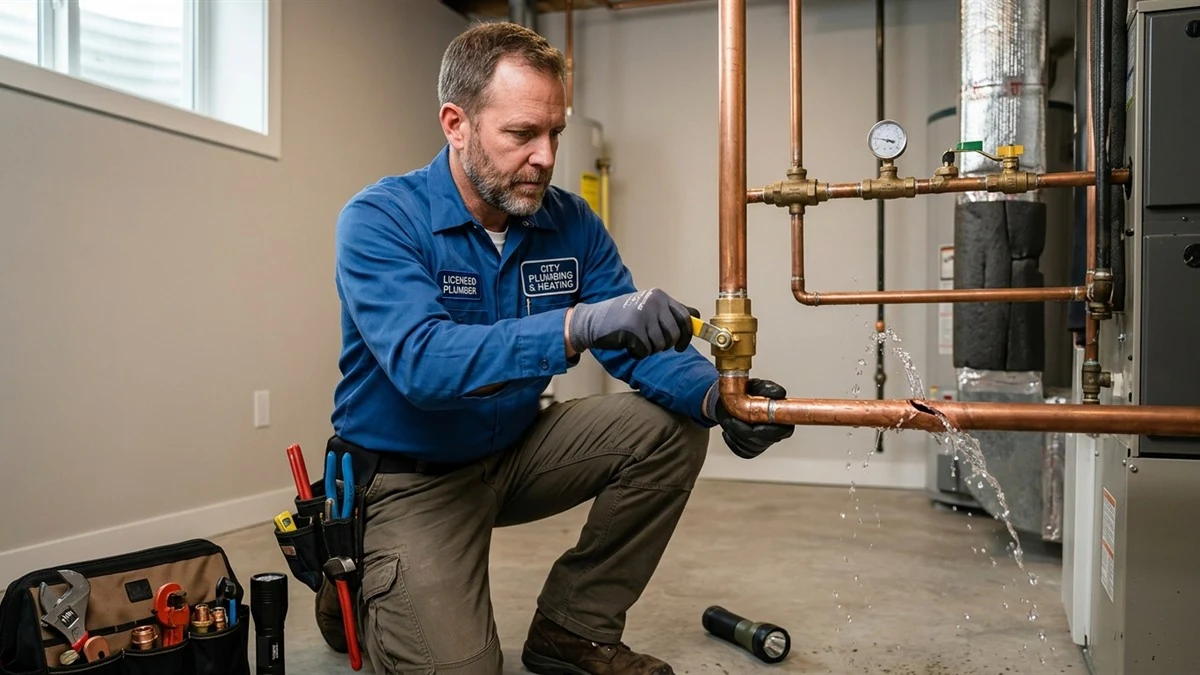
The danger is not merely that you wake up in the morning to find zero water running from your master bathroom vanity faucet or kitchen sink. The true catastrophe occurs during the freezing and thawing cycle. As water freezes and expands volumetrically by 9 percent, it acts like a hydraulic ram inside the pipe, compressing trapped liquid water to astronomical pressures exceeding 3,000 to 4,000 PSI. Rigid copper and plastic pipe walls split open with explosive force. When temperatures begin warming up the following afternoon and the ice plug melts, pressurized municipal water at 65 PSI sprays continuously at 12 to 15 gallons per minute, flooding ceilings, submerging basement subflooring, and inflicting tens of thousands of dollars in structural damage within minutes.
Knowing how to conduct a proactive freeze vulnerability audit of your home, how to safely thaw an actively frozen pipe without setting your wall framing on fire, and what exact emergency steps to execute if a pipe ruptures is essential knowledge for every Colorado homeowner. This comprehensive guide provides field-tested, master-level plumbing protocols designed specifically for Front Range winter conditions.
2. Thermodynamics of Frozen Pipes: Convection, Drafts & Wind Chill
To understand why pipes freeze inside a heated residential home, one must examine the thermodynamic principles of heat transfer: conduction, radiation, and convective air currents.
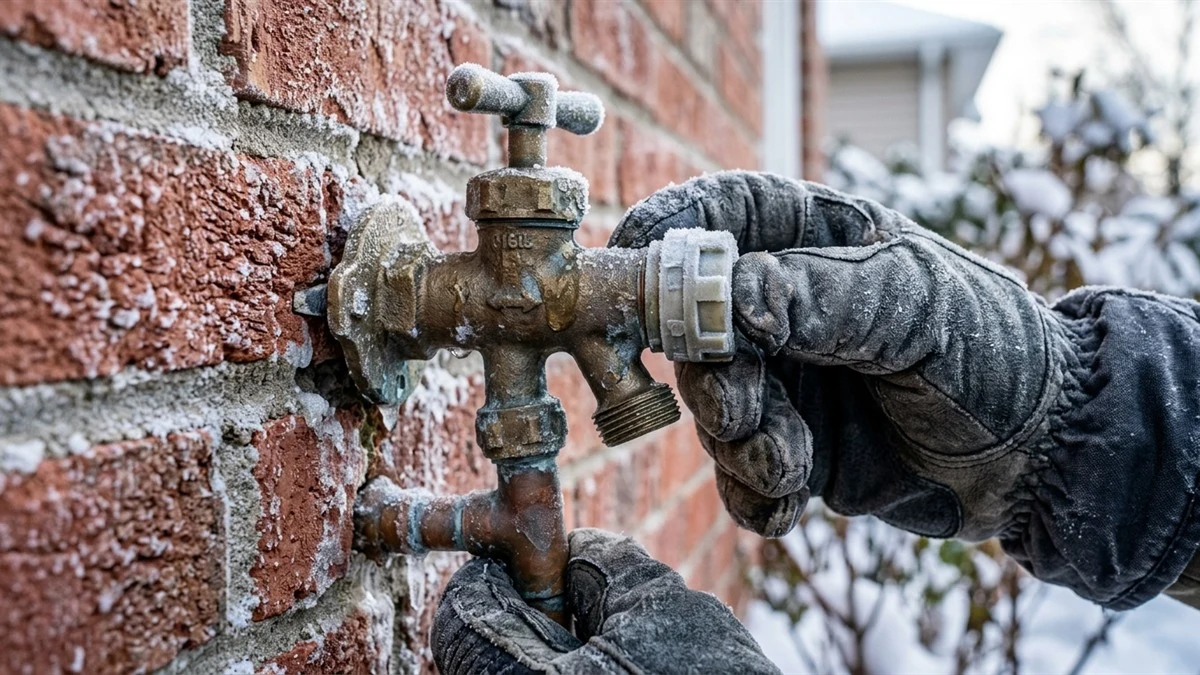
A home’s central heating system maintains indoor room air at 68°F to 72°F. However, water pipes are rarely installed in the middle of a heated living room; they are routed through hidden architectural wall cavities, subfloors, and crawlspaces. In building science, the boundary separating conditioned indoor air from unconditioned outdoor air is the thermal building envelope.
Pipes freeze when the rate of heat loss from the pipe to the surrounding cold air exceeds the rate of heat supplied to the pipe from the home’s heating system. This thermodynamic failure is accelerated by three critical mechanisms:
- Convective Draft Penetration (The Wind Chill Factor): While non-living objects do not experience “wind chill” in the physiological sense, moving air drastically accelerates the convective heat transfer rate. A residential pipe surrounded by stagnant 20°F air may take 8 to 12 hours to freeze. However, if a 40 MPH Colorado Front Range wind gust forces sub-zero air through exterior siding gaps, unsealed dryer vent penetrations, or uncaulked rim joist band boards, the convective air jet strips heat away rapidly, freezing the water line in less than 90 minutes.
- Thermal Bridging Across Structural Framing: Metal plumbing pipes secured tightly against exterior masonry foundation walls or steel framing members lose heat through direct conduction. Heat flows naturally from warmer zones to colder zones. The exterior masonry acts as an active heat sink, pulling thermal energy out of copper water lines.
- Architectural Dead-Air Pockets: Closed kitchen and bathroom vanity cabinet doors create an unheated micro-environment. The cabinet doors block warm furnace air from circulating around the back wall, allowing cold outdoor air leaking through exterior wall electrical boxes and pipe penetrations to pool beneath the sink, dropping localized temperatures below the 32°F threshold while the adjacent living room is comfortable.
3. Whole-Home Freeze Vulnerability Audit: Uninsulated Zones
Before the first Arctic freeze hits Colorado in late autumn, every homeowner should perform a comprehensive, room-by-room vulnerability audit of their plumbing infrastructure:
| Architectural Location | Common Building Features | Freeze Risk Level | Vulnerability Mechanism | Mandatory Preventive Action |
|---|---|---|---|---|
| Exterior Wall Vanities & Sinks | Kitchen sinks, master bath double vanities | EXTREME | Pipes routed through exterior walls; closed cabinet doors block heat | Open cabinet doors during freezes; let cold faucet drip steady stream. |
| Outdoor Hose Bibbs (Sillcocks) | Front/back exterior faucets, garden taps | CRITICAL | Attached hoses trap water inside brass barrel; splits valve body in wall | Disconnect all garden hoses before October 15; install insulated faucet covers. |
| Uninsulated Crawlspaces | 1960s-1970s ranch homes in Westminster/Thornton | VERY HIGH | Open foundation vents allow sub-zero air to pool beneath subflooring | Close and insulate foundation vents in autumn; insulate all exposed pipes with foam sleeves. |
| Cantilevered Floor Overhangs | Second-story rooms projecting over porches | High | Pipes run through floor cavities exposed to cold air on three sides | Air seal soffit cavities with closed-cell spray foam insulation. |
| Attached Unheated Garages | Laundry supply lines, water softeners, slop sinks | High | Garage doors opened in winter drop ambient temperatures instantly | Install self-regulating electric heat trace tape; keep garage doors closed. |
4. Step-by-Step Safe Pipe Thawing Protocol for Homeowners
If you turn on a faucet during a freezing winter morning and get only a faint trickle or no water at all, your pipe has frozen. Immediate, methodical intervention can thaw the pipe safely before structural rupture occurs:
- Step 1: Open the Affected Faucet Completely: Turn on both the hot and cold handles of the faucet that has lost water flow. Opening the faucet serves two vital purposes: it provides an exit relief pathway for expanding water and steam during thawing, and once water begins flowing, the moving liquid will accelerate melting the rest of the ice plug from the inside out.
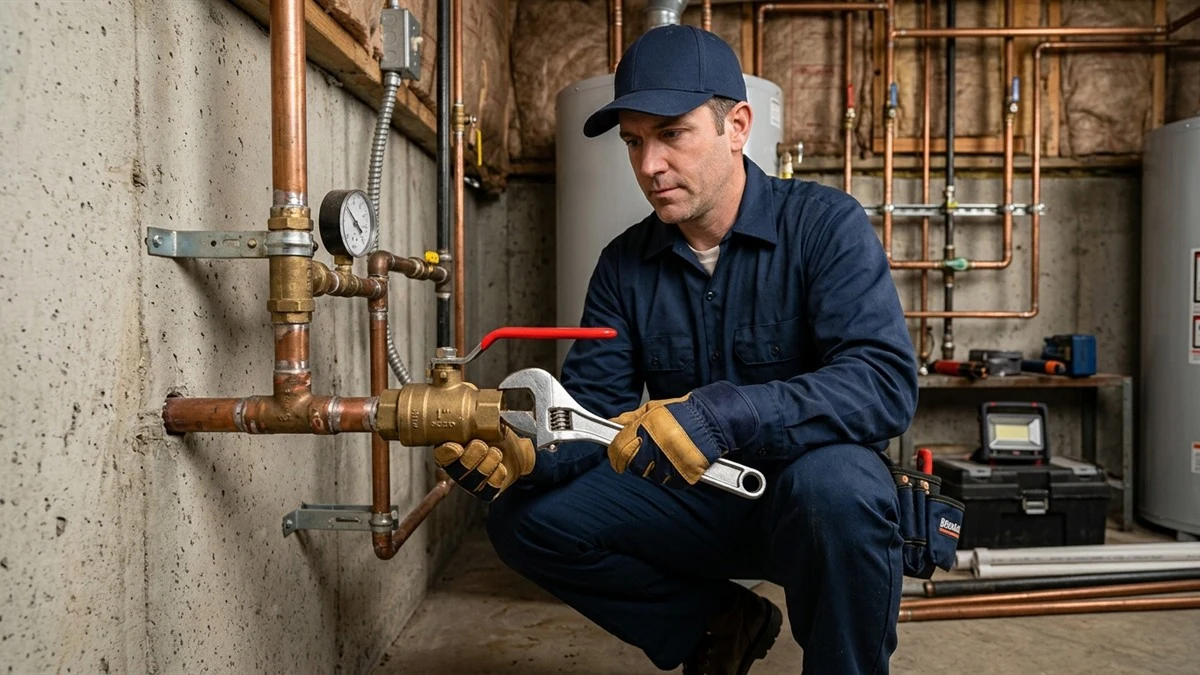
- Step 2: Locate the Main Water Shutoff Valve & Stand Ready: Before applying any heat, walk to your main domestic water shutoff valve and verify you know how to operate it. Keep an adjustable wrench or flashlight nearby. A pipe that is frozen may already have split beneath the ice plug. The ice is currently acting as a solid plug holding back municipal pressure. The moment the ice melts, pressurized water will immediately spray out through the fracture. You must be prepared to shut off the main water valve instantly if a burst occurs.
- Step 3: Trace the Pipe to Identify the Freeze Point: Walk along the piping run starting from the non-functioning faucet toward the main service entry. Check pipe sections located in exterior walls, unheated basements, crawlspaces, or near drafty foundation penetrations. Look for visible physical clues: white frost forming on copper walls, slight bulging or egg-shaped deformation of the pipe, or sections that feel ice-cold to the touch.
- Step 4: Apply Gentle, Controlled Convection Heat: Always start thawing from the faucet end of the pipe and work backward toward the blockage. This ensures that melting water can escape through the open faucet. Safe heating tools include:
- Electric Handheld Hair Dryer: The safest, most effective tool for homeowners. Move the hair dryer back and forth along the pipe segment, keeping the heat source moving to distribute warmth evenly.
- Portable Ceramic Space Heater: Position a space heater a safe distance (at least 3 feet) from combustible wall framing in unheated crawlspaces or mechanical rooms.
- Hot Water Towel Wraps: Soak heavy terrycloth utility towels in boiling water, wring them out with protective rubber gloves, and wrap them around the frozen pipe segment, replacing them as they cool.
- Step 5: Verify Full Flow Restoration: Once water begins sputtering and surging from the open faucet, let it run continuously for 10 to 15 minutes to flush out all ice slush and warm the pipe metal above the freezing threshold. Carefully inspect every linear inch of the pipe segment with a high-output flashlight to verify that no hairline pinholes or seam fractures are weeping moisture.
5. Critical Warnings: Deadly Thawing Practices to NEVER Attempt
Every winter along the Front Range, local fire departments in Broomfield, Westminster, and Denver respond to residential structure fires caused by homeowners attempting to thaw frozen plumbing using unsafe methods. Strictly avoid these dangerous practices:
- NEVER Use an Open Flame Propane Blowtorch: Applying an open flame torch to a copper pipe inside a wall cavity is extremely hazardous. Copper conducts heat rapidly, transferring high temperatures into dry structural 2×4 framing, cellulose insulation, and paper drywall backing, igniting structural wall fires that burn invisibly for hours. Furthermore, applying direct flame to an enclosed pipe holding ice creates flash-steam pockets that can violently explode the pipe like a bomb, showering the room in scalding steam and metal shrapnel.
- Never Use Outdoor Charcoal Grills or Propane Heaters Indoors: Operating unvented combustion equipment inside basements or crawlspaces produces deadly carbon monoxide ($CO$) gas that rapidly reaches fatal concentrations.
- Never Heat the Middle of an Ice Plug First: If you apply heat directly to the middle of an ice-locked pipe while both ends are sealed, the melting ice turns to expanding water with nowhere to go, instantly generating astronomical hydrostatic pressures that shatter the pipe. Always thaw from an open faucet backward toward the freeze.
6. Proven Long-Term Freeze Prevention: Insulation, Air Sealing & Drip Rules
Preventing frozen pipes is vastly less expensive and less stressful than dealing with an emergency flood. Implement these four proven preventive engineering measures:
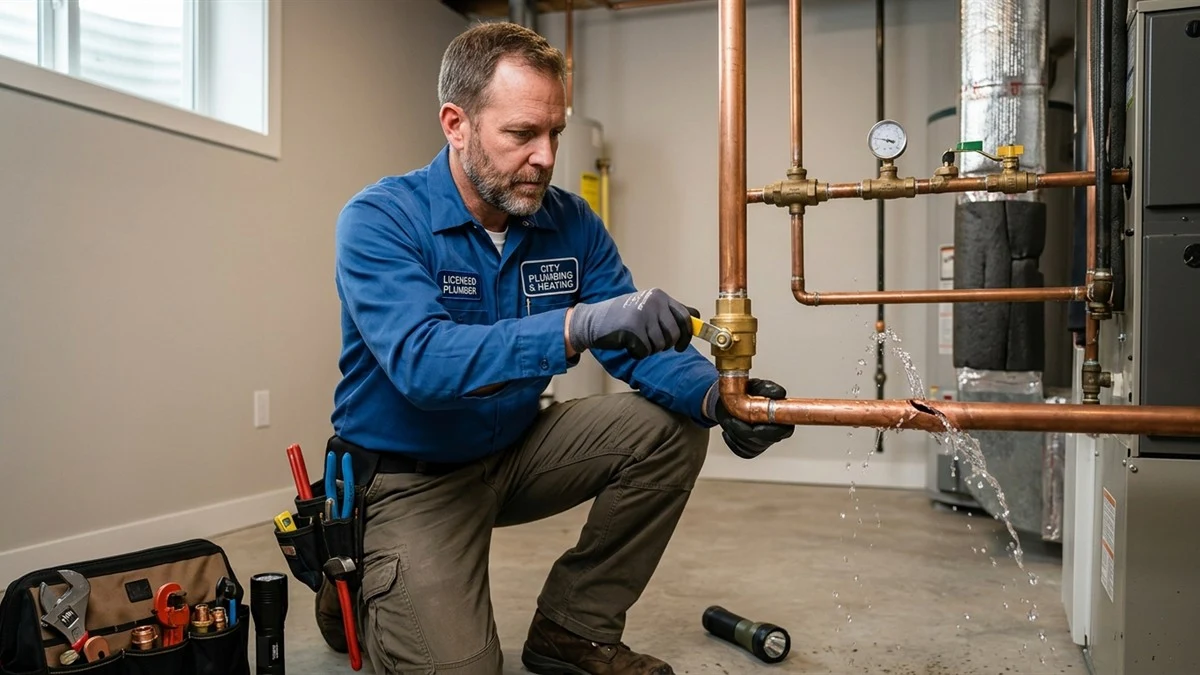
- Disconnect Outdoor Garden Hoses Before First Freeze: This is the single most common cause of winter pipe bursts in Colorado. A modern frost-proof sillcock faucet is designed to drain water from its exterior barrel when shut off. However, if a garden hose remains attached, surface tension traps water inside the barrel. That water freezes, splits the brass valve tube inside the wall cavity, and floods your basement the following spring. Disconnect and drain all garden hoses before October 15.
- The Critical “Pencil-Lead” Faucet Drip Rule: During extreme cold snaps (temperatures below 15°F), open faucets connected to exterior wall pipes so that water drips in a steady stream about the thickness of a pencil lead. Moving water requires lower temperatures to freeze than standing water, and an open tap provides a permanent pressure relief outlet if an ice plug begins to form.
- Air Seal Rim Joist Penetrations: Inspect your basement or crawlspace rim joists (the wooden band board that rests atop your concrete foundation wall). Use expanding polyurethane spray foam to seal around outdoor spigot penetrations, electrical conduits, and dryer exhaust vents, eliminating convective freezing drafts.
- Install Self-Regulating Electric Heat Trace Cables: For vulnerable pipes in unconditioned crawlspaces or garages, install commercial self-regulating heat trace cables certified to UL standards. These cables automatically adjust heat output based on ambient temperature, keeping pipes safely above 40°F.
7. Winter Vacation Protocols: Thermostat Settings & Winterization
If you plan to travel away from your Colorado home during winter months, taking decisive winterization precautions is mandatory to protect against heating system failures:
- Never Set the Thermostat Lower Than 55°F (13°C): While lowering the heat saves utility costs, setting a thermostat below 55°F allows exterior wall cavities and remote crawlspaces to drop below freezing during sub-zero cold snaps. In large homes with finished basements, maintain indoor temperatures at 65°F to 68°F during extreme winter alerts.
- Shut Off the Main Water Supply: Before leaving, close your main interior water shutoff valve and open upper and lower faucets to depressurize the system. If your furnace fails while you are away, an empty pipe network cannot flood your home.
- Replace Thermostat Batteries: Ensure digital thermostats have fresh lithium batteries installed so your heating system does not shut down unexpectedly during a winter storm.
8. Smart Water Shutoff Valves & IoT Freeze Monitoring Technology
Modern plumbing technology offers advanced whole-home protection through intelligent, automated smart shutoff systems:
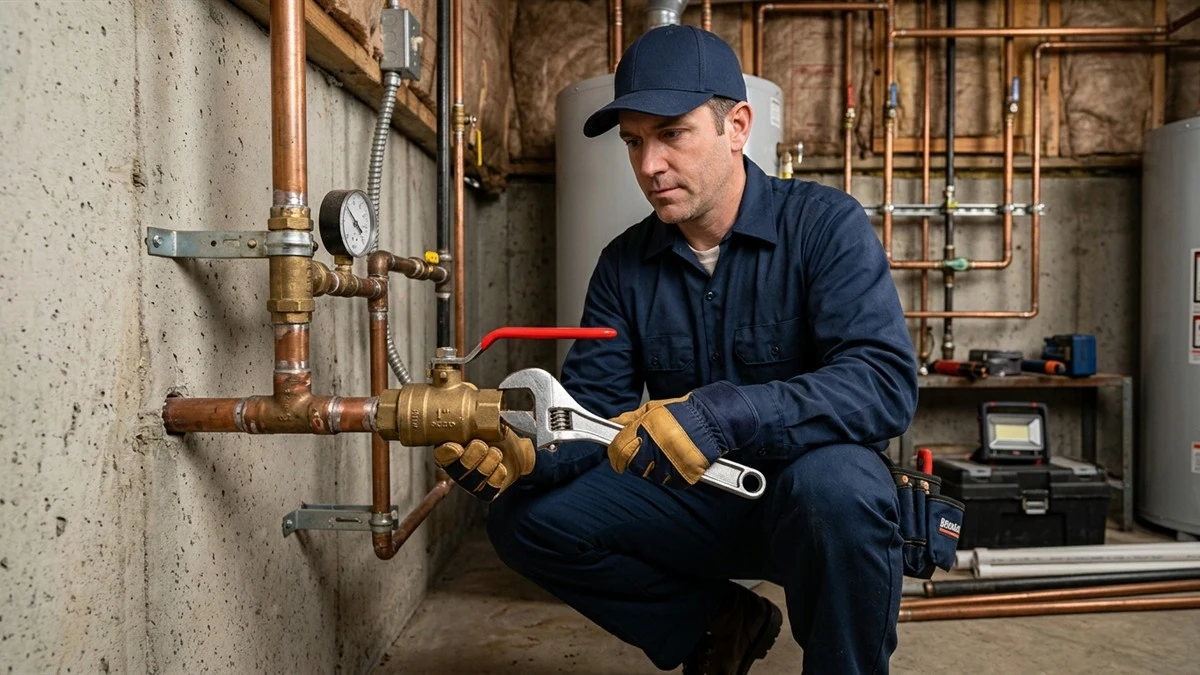
A **Smart Automated Water Shutoff Valve** (such as Moen Flo, Phyn Plus, or FloLogic) is installed directly on your main water service line. The device continuously monitors water pressure, flow rates, and ambient pipe temperatures with micro-second precision:
- Automated Micro-Leak Detection: The system runs automated pressure-decay tests every night, detecting pinhole leaks as small as one drop per minute.
- Freeze Alerts & Automatic Emergency Shutoff: If ambient pipe temperatures drop near freezing or if a sudden high-velocity flow is detected (indicating a burst pipe), the motorized brass ball valve rotates 90 degrees, shutting down municipal water delivery in under five seconds and sending an instant notification to your smartphone.
- Homeowner Insurance Premium Discounts: Most major insurance carriers offer premium discounts of 5% to 15% for properties protected by smart automated shutoff valves.
9. Front Range Polar Vortex Patterns: Broomfield, Westminster & Thornton
Cold weather plumbing emergencies across the northern Denver metropolitan area follow predictable regional patterns:
- The Rapid Chinooks to Polar Plunge Transition: Front Range weather is famous for rapid temperature drops. A warm 60°F afternoon driven by westerly downslope winds can transition to -10°F with blowing snow in under six hours as an Arctic cold front collides with the mountains. This sudden shock catches homeowners unprepared, triggering dozens of burst spigots overnight.
- Broomfield (Anthem, Broadlands): High-end modern homes often feature second-story laundry rooms or finished basements with cantilevered floor overhangs. High winds off the Flatirons force sub-zero air into floor joists, making localized air sealing essential.
- Westminster & Thornton (Mid-Century Crawlspaces): Subdivisions built in the 1960s and 1970s feature uninsulated crawlspaces. Homeowners who forget to close foundation vents before Thanksgiving regularly experience frozen main water lines during Christmas cold snaps.
10. Transparent Pricing & Emergency Thawing Investment Breakdown
Below is a transparent breakdown of baseline industry investments for professional cold weather plumbing services across the Colorado Front Range:
- Professional Safe Electrical Pipe Thawing Service: $350 – $650 (Includes locating freeze point, applying commercial safe convection heat/thawing rigs, pressure testing, and thermal inspection).
- Emergency Frozen Burst Pipe Repair (Direct Splicing): $450 – $950 (Includes emergency after-hours dispatch, water isolation, cutting out split section, and installing ProPress or soldered couplings).
- Frost-Free Hose Bibb (Sillcock) Replacement: $350 – $600 (Removes ruptured 10-to-12-inch frost-proof valve, installs quarter-turn brass valve with integral vacuum breaker, and connects to interior line).
- Whole-Home Smart Water Shutoff Valve Installation: $1,200 – $2,200 (Includes premium motorized smart valve, power supply setup, smartphone app configuration, and insurance certification).
- Sectional Pipe Reroute Away From Cold Exterior Wall: $1,200 – $2,800 (Abandons vulnerable pipe in exterior wall and routes new insulated PEX-A line through heated interior walls).
10. Engineering Mechanics of Pipe Failure: Hoop Stress & Hydraulic Pressure Waves
To fully understand why a frozen water pipe ruptures with violent force, one must evaluate the mechanical yield strength of common plumbing alloys under extreme internal hydrostatic pressure.
In mechanical engineering, the internal circumferential tensile stress exerted on a cylindrical pipe wall is defined by Barlow’s Formula for **Hoop Stress** ($\sigma_h$):
\sigma_h = \frac{P \times D}{2t}
Where $P$ represents internal fluid pressure in PSI, $D$ is the outside pipe diameter in inches, and $t$ is the nominal wall thickness. For standard 3/4-inch Type M rigid copper tubing (nominal wall thickness of 0.032 inches), the ultimate tensile strength of annealed copper is approximately 30,000 to 40,000 PSI, yielding a standard theoretical internal burst pressure of roughly 1,200 to 1,500 PSI.
During an Arctic freeze event, water does not freeze uniformly. Ice crystals form along the outer circumference of the pipe wall and advance inward toward the center, creating an elongated solid ice plug. As this ice plug expands longitudinally down the pipe, it acts like a hydraulic piston compressing the trapped liquid water pocket against a closed downstream faucet. Because water is an incompressible fluid with a high bulk modulus (approximately 312,000 PSI), even a 1% volumetric compression causes internal hydrostatic pressure to spike beyond 3,500 to 4,000 PSI—nearly triple the ultimate burst threshold of the copper wall.
The resulting failure exhibits distinct physical characteristics: the copper undergoes plastic deformation, swelling outward into an elongated, egg-shaped bulge before tearing open along its longitudinal seam. This explains why freeze ruptures almost always occur downstream in warm interior spaces rather than inside the frozen wall cavity itself.
11. Complete Whole-Home Winterization Protocol: Seasonal & Vacant Properties
For rental properties, vacation homes, and vacant residences left unoccupied during Colorado winter months, relying solely on heating systems is an unacceptable risk. If a winter blizzard knocks out power or if a furnace blower motor fails, an un-winterized home will suffer multiple catastrophic freeze bursts within 24 to 48 hours.
Professional winterization executes a complete hydraulic purge of the building envelope:
- Main Service Isolation & Meter Disconnect: The primary domestic water shutoff valve is fully closed. In unheated basements, the brass water meter is disconnected and drained to prevent the delicate internal measuring chamber from freezing and cracking.
- Compressed Air Pneumatic System Blowout: An oil-free commercial air compressor delivering 50 PSI of regulated dry air is connected to the plumbing system via a specialized hose adapter. Every fixture in the home—from upstairs vanity sinks and shower cartridges to exterior hose bibbs and washing machine valves—is opened sequentially until only pure compressed air exits, completely purging all residual water droplets.
- Water Heater Tank Evacuation: Power sources to the water heater are shut down. A heavy-duty transfer hose is connected to the bottom drain valve, and the entire 40- to 75-gallon tank is completely evacuated into a floor drain or exterior grade.
- Non-Toxic Propylene Glycol P-Trap Protection: Drain P-traps holding standing water seals are highly vulnerable to freezing and cracking. One pint of non-toxic virgin propylene glycol (pink marine/RV antifreeze) is poured into every sink P-trap, shower floor drain, laundry standpipe, and toilet bowl. The antifreeze displaces the standing water, protecting the trap down to -50°F without harming municipal wastewater systems or septic bacteria.
12. Hydronic Radiant Heating & Boiler Freeze Vulnerabilities
Along the Front Range, thousands of custom and modern mid-century homes in Broomfield, Westminster, and Boulder County utilize hydronic baseboard or in-floor radiant tube heating systems rather than forced-air furnaces. While radiant heat provides unmatched comfort and energy efficiency during Colorado winters, it introduces specialized freeze vulnerabilities that traditional domestic supply lines do not face.
A closed-loop hydronic heating system circulates heated water through hundreds of feet of PEX-AL-PEX or barrier PEX tubing embedded in concrete slabs, under-joist aluminum heat-transfer plates, or perimeter finned-tube baseboards. In sub-zero weather, if a boiler experiences a mechanical flame rollout failure, pilot outage, or low-water cut-off shutdown while homeowners are asleep or away, the stagnant water in perimeter radiant loops will begin freezing within hours. Because radiant heating loops pass directly adjacent to cold exterior perimeter foundation footings, heat loss occurs rapidly.
When water freezes inside hydronic radiant floor tubing, the resulting pipe burst can be catastrophic. Unlike exposed plumbing lines that can be cut and spliced in minutes, a ruptured radiant loop embedded inside a four-inch structural concrete slab requires precision acoustic leak correlation, concrete jackhammer demolition, or abandoning the entire thermal zone at an expense often exceeding $10,000 to $25,000.
Hydronic System Freeze Prevention: Propylene Glycol Concentration Standards
To eliminate hydronic freeze failure, master heating technicians charge closed-loop hydronic systems with inhibited propylene glycol specially formulated for residential boilers. Unlike automotive ethylene glycol (which is highly toxic and prohibited in residential structures), inhibited virgin propylene glycol is food-grade safe and contains multi-metal corrosion inhibitors that protect copper, brass, cast iron, and aluminum heat exchangers.
| Glycol Concentration (%) | Freeze Protection Point | Burst Protection Point | Viscosity & Heat Capacity Impact | Front Range Suitability |
|---|---|---|---|---|
| 0% (Pure Water) | 32°F (0°C) | 32°F (0°C) | Optimal heat transfer, zero friction penalty | High Risk – Not recommended for perimeter loops |
| 30% Glycol Solution | 15°F (-9°C) | -8°F (-22°C) | 4% reduction in heat transfer capacity | Marginal – Insufficient for extreme Arctic vortex events |
| 40% Glycol Solution | -10°F (-23°C) | -30°F (-34°C) | 8% reduction in heat transfer; higher pump head | RECOMMENDED STANDARD for Front Range Residential |
| 50% Glycol Solution | -28°F (-33°C) | -60°F (-51°C) | 14% reduction in heat transfer; heavy circulator load | Mountain high-altitude installations (Estes Park, Nederland) |
Every autumn, our technicians test boiler glycol concentration using an optical digital refractometer rather than hydrometer test strips, which degrade rapidly. We also verify the pH level of the solution: if boiler glycol degrades thermally over years of cycling, its pH can drop below 7.0, turning acidic and attacking copper solder joints. Routine annual conditioning ensures your heating system provides uninterrupted freeze defense all winter long.
11. Comprehensive Extended FAQ Section
Q1: At what temperature are pipes most likely to freeze in Colorado?
Pipes are at significant risk of freezing whenever outdoor temperatures drop to 20°F (-6°C) or lower for more than four consecutive hours. However, in homes with drafty crawlspaces or uninsulated wall cavities, pipes can freeze when ambient outdoor temperatures are as high as 28°F if accompanied by strong winds.
Q2: Does letting a faucet drip really work to prevent freezing?
Yes. Moving water requires colder ambient temperatures to freeze than stagnant water. More importantly, an open faucet provides a continuous pressure relief valve, eliminating the extreme 3,000+ PSI hydraulic pressure spike that actually causes pipes to rupture when ice expands.
Q3: How can I tell if a frozen pipe has already burst before it thaws?
Carefully inspect all visible pipe sections with a bright flashlight. Look for bulging, egg-shaped pipe walls, hairline cracks along copper seams, or frost forming on pipe fittings. If a pipe has deformed, it has likely split, and you should shut off the main water valve before applying heat.
Q4: Why should I leave vanity cabinet doors open during a freeze?
Opening cabinet doors allows warm air from your home heating system to circulate beneath sinks located on exterior walls, keeping supply lines and drain traps comfortably above the 32°F freezing threshold.
Q5: Can PEX piping freeze without bursting?
PEX-A tubing has thermal elasticity that allows it to expand up to three times its standard diameter and return to shape after thawing. However, the rigid brass and plastic fittings used to connect PEX lines do not expand and will crack under extreme freeze pressure.
Q6: What should I do if my water meter freezes?
Do not apply direct flame to a frozen water meter, as rapid heating will shatter the glass register or crack the cast bronze casing. Contact your municipal water department immediately; they have specialized equipment to thaw or replace the meter safely.
Q7: Will wrapping pipes in fiberglass insulation completely stop them from freezing?
Insulation slows the rate of heat loss from the pipe to the cold air, but it does not generate heat. In sustained sub-zero temperatures, an unheated insulated pipe will eventually reach the same temperature as the surrounding cold space and freeze unless paired with air sealing or heat tape.
Q8: How long does it take for pipes to thaw on their own?
Pipes will only thaw on their own once ambient temperatures around the pipe rise above 32°F for several hours. However, waiting for pipes to thaw naturally is dangerous because if a pipe has ruptured, pressurized water will spray unchecked the moment the ice melts.
Q9: Can a frozen drain pipe burst?
Drain pipes rarely burst because they are open to atmospheric air and rarely hold standing water under pressure. However, standing water inside fixture P-traps can freeze and crack plastic or cast iron trap bodies, causing leaks once water is run.
Q10: What is electric heat tape, and is it safe to use?
Modern self-regulating electric heat tape is completely safe when installed according to manufacturer instructions. It automatically adjusts heat output based on ambient temperature. Never overlap heat tape upon itself, and never cover non-regulated heat tape with insulation.
Q11: Does homeowner’s insurance cover frozen pipe bursts?
Yes, standard homeowner’s policies almost universally cover damage caused by sudden and accidental burst pipes, provided you maintained adequate heat in the home (typically at least 55°F) during winter periods.
Q12: How do smart shutoff valves detect a frozen pipe?
Smart valves use internal ultrasonic sensors to measure minute water pressure drops and flow anomalies. If an abnormal continuous flow is detected (a burst pipe) or if ambient temperature sensors drop near freezing, the valve closes automatically within seconds.
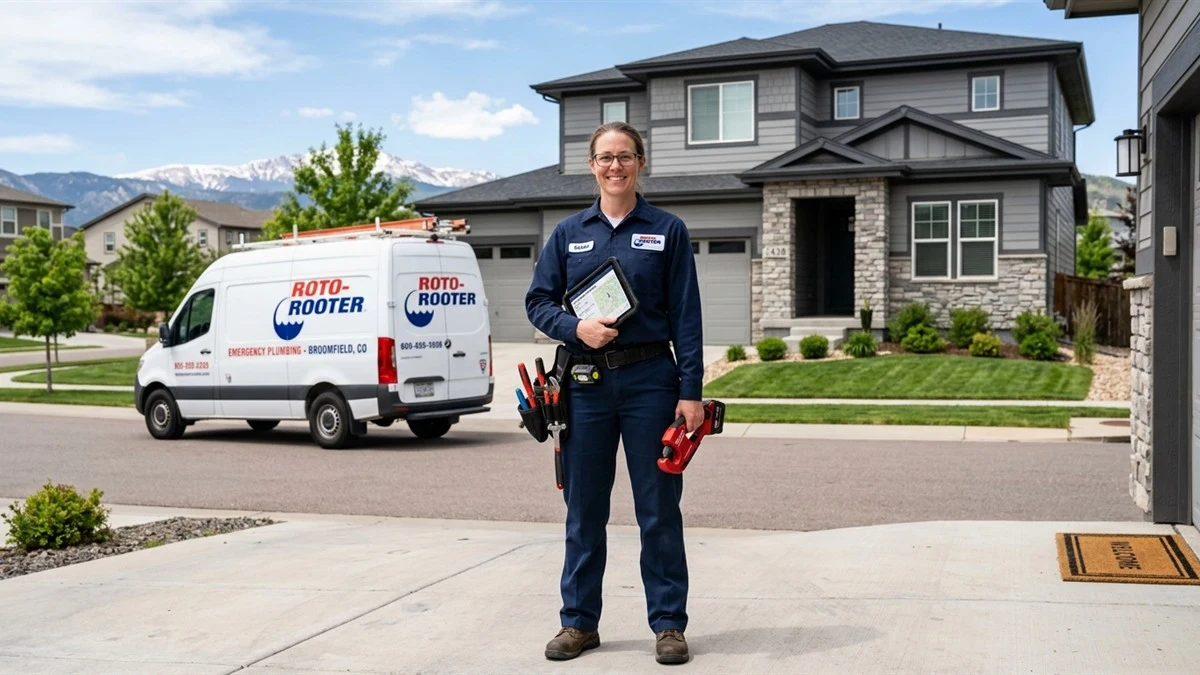
12. 24/7 Frozen Pipe Emergency Dispatch Action Plan
Are Your Water Pipes Frozen or Burst Right Now?
Do not risk fire with open flames or wait for catastrophic water damage. Our master emergency plumbing technicians are equipped with commercial safe thawing equipment and ProPress rapid repair tools across Broomfield, Westminster, Thornton, and Denver Metro.