
On a Saturday morning inside a premier multi-family apartment community or high-rise residential tower in Broomfield, Colorado, thirty commercial-grade high-efficiency washing machines are spinning simultaneously. Families are doing their weekend laundry. Suddenly, frantic maintenance calls flood the property manager’s desk.
In the ground-floor garden-level apartments, a wall of dense soap lather is erupting out of the laundry standpipes, floor drains, and bathtubs.
Suds are crawling six feet up the drywall.
Hot, alkaline water is pooling across luxury vinyl plank flooring.
Down in the central mechanical room, the industrial gravity lint interceptor is overflowing its gasketed cast-iron lid, dumping wet cellulose fibers and greywater across the concrete slab.
What just happened?
The building’s drainage stack has suffered a catastrophic **Suds Pressure Zone Lockout**.
This is not a simple lint hairball blockage that a maintenance handyman can clear with a small hand snake.
It is a dangerous hydraulic and pneumatic phenomenon governed by **International Plumbing Code (IPC) Section 711**, chemical saponification encrustation, and extreme air-entrainment backpressures.
When multi-story buildings lack properly engineered suds relief vents or when lint interceptors fail to capture synthetic microfibers, explosive backpressure forces chemical foam backward through lowest-fixture P-traps.
Let’s examine the fluid dynamics of two-phase suds flow, calculate hydraulic air displacement in multi-story waste stacks, analyze the chemistry of hard-water saponification crusts, review IPC 711 suds venting geometry, and detail master plumber hydro-flail milling restorations across the Colorado Front Range.

1. The Fluid Dynamics of Suds Pressure Zones: IPC Section 711 Mandates
Why does laundry waste behave so differently from ordinary sanitary sewage?
The difference comes down to **two-phase fluid mechanics: liquid water and aerated detergent foam**.
In a conventional sanitary stack draining toilets or sinks, gravity pulls liquid water downward as an annular sheet clinging to the interior pipe walls, leaving an open air core down the center that equalizes atmospheric pressure.
Commercial laundry discharge is completely different.
Modern liquid detergents contain high concentrations of anionic and nonionic surfactants (linear alkylbenzene sulfonate and alcohol ethoxylates).
When dozens of washing machines discharge hot water simultaneously, violent turbulence inside the vertical stack whips the water and air core into billions of microscopic bubbles.
The density of this aerated foam collapses from 62.4 pounds per cubic foot (liquid water) down to less than **3.0 to 5.0 pounds per cubic foot**.
Because suds are extraordinarily light, gravity has little effect on them.
They will not flow cleanly down a horizontal building drain. Instead, the foam expands rapidly, filling the entire cross-sectional diameter of the pipe and creating a solid pneumatic plug that chokes off the building’s atmospheric air flow.
The Surfactant Chemistry of High-Efficiency (HE) Commercial Washers
Property managers often assume that modern High-Efficiency (HE) commercial washing machines produce less suds and therefore eliminate drainage issues.
The opposite is true.
HE washers use significantly less water per cycle—often as little as 12 to 15 gallons compared to 35 to 45 gallons in older top-load machines.
However, tenants consistently overdose detergent, assuming that more soap produces cleaner laundry.
This concentrated surfactant mixture enters the vertical drainage stack with minimal dilution water.
When this ultra-concentrated soap slug falls down twelve stories, the mechanical shearing action creates a micro-cellular foam of exceptional structural stability.
Unlike plain bubble bath that pops within seconds, commercial laundry foam is stabilized by polymers and optical brighteners. It can maintain its structural bubble matrix under continuous pressure for up to four hours without collapsing.
IPC Section 711 Suds Safety Zones
Under **International Plumbing Code (IPC) Section 711 (Suds Relief)**, commercial and multi-family buildings with four or more branch intervals draining clothes washers must engineer specific **Suds Pressure Relief Zones**:
- Vertical Stack Base Zone: Extends from the base of the drainage stack upward to a height of **40 pipe diameters** above the 90-degree stack base elbow. In a 4-inch stack, this encompasses the lowest 13.3 feet of vertical pipe.
- Horizontal Drain Zone: Extends from the stack base fitting downstream along the horizontal building drain for a distance of **10 pipe diameters** (40 inches in a 4-inch line).
- Upper Offset Zones: If the drainage stack makes a horizontal offset of greater than 45 degrees, suds zones extend 40 diameters above the offset and 10 diameters downstream.
- Strict Fixture Prohibition: IPC Section 711 strictly prohibits connecting lower-floor plumbing fixtures (floor drains, laundry trays, bathroom groups) into these suds pressure zones unless a dedicated **suds relief vent** is installed to bleed off pneumatic foam pressure.
| Building Zone | IPC 711 Definition | Physical Pressure Phenomenon | Mandatory Plumbing Requirement |
|---|---|---|---|
| Stack Base (Lowest 40 Diameters) | Vertical primary suds zone | Falling slug impact converts water velocity into massive upward foam pressure. | Zero fixture branch connections allowed without dedicated suds relief pipe. |
| Horizontal Drain (First 10 Diameters) | Horizontal suds zone | Hydraulic jump compresses air, trapping light foam against pipe crown. | Fixtures must connect downstream of the 10-diameter zone or tie into suds vent. |
| Horizontal Stack Offset | Offset suds zone | Turbulent direction change acts as an aeration foam generator. | Suds relief vent required above and below offset fittings. |
| Suds Relief Vent Riser | Full-diameter parallel vent | Channels light foam upward to atmospheric vent above highest flood rim. | Must tie into stack vent or vent stack at least 40 diameters above lowest fixture. |
When builders violate IPC 711 by tying first-floor or basement laundry trays directly into the stack base without a suds relief line, catastrophic indoor foam blowouts are guaranteed.
2. Saponification Chemistry: Front Range Hard Water & Stearate Encrustation
Why does laundry lint turn into rock-solid concrete inside commercial drain lines?
The culprit is **Chemical Saponification Encrustation**.
Across Broomfield, Westminster, and Boulder County, municipal water supplies carry moderate to high mineral hardness, typically between **7 to 12 grains per gallon (120 to 205 mg/L)** of dissolved calcium carbonate ($CaCO_3$) and magnesium ions ($Mg^{2+}$).
When synthetic detergents, fabric softeners, and laundry soil mix in hot water, three chemical reactants collide:
- Fatty Acids and Triglycerides: Body oils, sebum, and food greases washed out of clothing ($R-\text{COOH}$).
- Alkaline Builders: Sodium carbonate ($Na_2CO_3$) and sodium silicate present in commercial laundry detergents to raise pH and strip stains.
- Dissolved Hard Minerals: Calcium ($Ca^{2+}$) and magnesium ($Mg^{2+}$) ions in Front Range tap water.
The Chemical Reaction of Insoluble Lime Soap
Under normal conditions, alkaline soap stripping produces soluble sodium salts.
However, when high temperatures drop inside the cold underground drain lateral, the calcium ions displace sodium, precipitating **Insoluble Calcium Stearate**:
Calcium stearate does not wash away with water.
It is an extremely sticky, waxy, insoluble white curd.
As synthetic polyester fibers and natural cotton lint escape the washing machine drain pumps, they embed themselves within the sticky calcium stearate matrix.
Layer by layer, this creates an impenetrable composite material known to master plumbers as **Saponified Lint-Scale Crust**.
Within three to five years, a 4-inch commercial cast-iron laundry waste pipe is choked down to a 1-inch pinhole.
Colorado Water Treatment Impact on Encrustation Rates
Municipal water treated through the Moffat Water Treatment Plant and Carter Lake distribution feeds brings significant alkalinity buffers.
When hot 140°F laundry greywater cools down upon hitting 50°F sub-slab soil temperatures beneath commercial basements, thermal precipitation accelerates.
Calcium and magnesium ions reach supersaturation, causing crystals to nucleate directly onto the rough internal walls of unlined cast iron soil pipe.
The iron pipe’s internal rust tubercles act as microscopic anchors, mechanically bonding the stearate scale to the pipe wall with bond strengths exceeding 400 PSI.
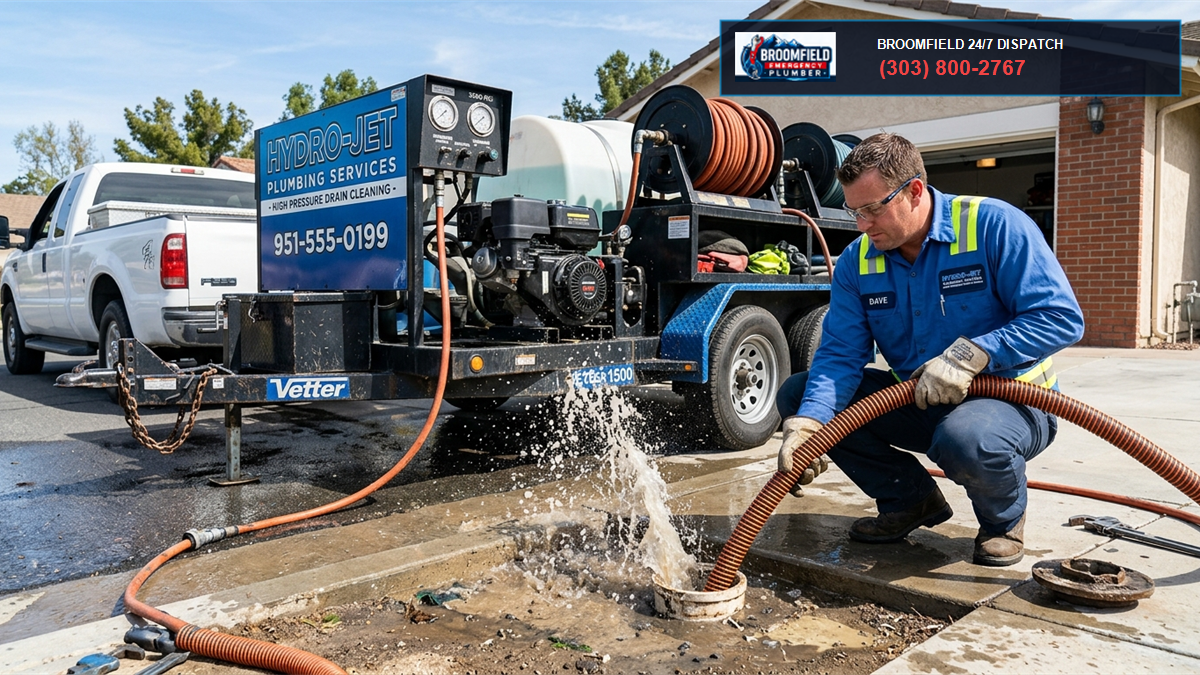
3. Engineering Lint Interceptors: Baffle Geometry, Micron Ratings & IPC 1003.6
Why are laundry facilities prohibited from draining directly into municipal sewer lines without an interceptor?
Under **IPC Section 1003.6 (Laundry Waste Interceptors)**, commercial laundries, multi-family common laundry rooms, and laundromats must intercept lint, string, and fabric solids before greywater enters the public sanitary sewer.
Synthetic fibers—primarily polyester, nylon, and polypropylene—do not biodegrade in municipal wastewater treatment digesters.
They bind with municipal fatbergs, choking municipal lift stations and pumps.
Anatomy of an Engineered Commercial Lint Interceptor
An industrial gravity lint interceptor operates through a three-stage mechanical filtration process:
- Inlet Quiescent Diffusion Baffle: Incoming high-velocity pumped greywater hits a heavy stainless steel baffle plate that absorbs kinetic turbulence, dropping fluid velocity below **0.5 feet per second** to permit gravity solids separation.
- Dual Basket Strainer System: Discharged greywater passes through removable stainless steel perforated baskets:
- Primary Coarse Basket: 1/8-inch (3.175 mm) perforations to trap buttons, coins, tags, and large lint balls.
- Secondary Fine Screen: 30-mesh to 50-mesh (300 to 600 micron) stainless steel wire cloth to filter microfibers and hair.
- Submerged Deep-Seal Outlet Trap: The discharge pipe pulls water from the bottom quadrant of the basin through an inverted P-trap leg, preventing floating lint scum and surface foam from discharging into the city lateral.
- Airtight Gasketed Access Cover: Heavy cast-iron or reinforced composite cover secured with stainless steel hex bolts and a closed-cell neoprene gasket to contain foul sewer gases and suds pressure.
| Interceptor Metric | Light Multi-Family (4-8 Washers) | Commercial Multi-Family (12-30 Washers) | Industrial Laundry Facility (30+ Washers) |
|---|---|---|---|
| Liquid Holding Capacity | 50 to 100 Gallons | 250 to 500 Gallons | 750 to 1,500 Gallons |
| Peak Design Flow Rate | 35 GPM | 100 to 150 GPM | 250 to 450 GPM |
| Screen Mesh Filtration | Single 20-Mesh Basket | Dual 30-Mesh / 50-Mesh Baskets | Automated Self-Cleaning Rotary Screen |
| Mandatory Cleanout Interval | Monthly | Bi-weekly | Weekly or Continuous Automated |
When building maintenance neglects the lint interceptor, wet lint cakes over the fine mesh screens.
As thirty washing machine discharge pumps fire simultaneously, head pressure builds inside the sealed interceptor.
The neoprene gasket blows out under hydrostatic pressure, flooding the commercial laundry room floor in minutes.
4. Hydraulic Calculations: Air Displacement & Pneumatic Backpressure in Waste Stacks
How does falling water generate enough air pressure to blow standing water out of a toilet fifty feet away?
The answer lies in **Air Entrainment and Boyle’s Law Pneumatic Compression**.
When multi-story washers discharge into a vertical stack, falling water drags a massive volume of air downward through shear friction at the water-air interface.
The volume of air entrained by falling drainage water is calculated using **Hunter’s Hydraulic Formula**:
Where $Q_{\text{air}}$ is the airflow dragged down the stack, $Q_{\text{water}}$ is liquid water flow, and $k$ is an empirical turbulence coefficient ($k \approx 0.04 \text{ to } 0.08$ for turbulent laundry waste).
The Stack Base Hydraulic Jump
At the base of the multi-story stack, falling water at twenty-five feet per second slams into the 90-degree base elbow transitioning to the horizontal building drain.
This sudden deceleration creates a **Hydraulic Jump**:
Where $Fr_1 = \frac{v_1}{\sqrt{g \cdot y_1}}$ is the Froude number of the incoming high-velocity supercritical flow, and $y_2$ is the elevated water depth in the horizontal drain.
The hydraulic jump forces water to fill 100% of the pipe diameter, completely blocking air flow down the horizontal line.
All that entrained downward air has nowhere to go.
According to **Boyle’s Law ($P_1 V_1 = P_2 V_2$)**, compressing trapped air inside the stack base generates intense positive backpressure, spiking local pneumatic pressure by **+4.0 to +12.0 inches of water column (in. w.c.)**.
A standard plumbing P-trap contains only **2.0 to 4.0 inches of water seal**.
A positive pressure spike of +8.0 in. w.c. easily overcomes the trap seal, blowing sewer gas, contaminated laundry greywater, and thick soap lather straight up through garden-level floor drains and toilets.
Two-Phase Foam Friction Factor Calculations
Standard hydraulic charts assume clean single-phase water flow. In reality, aerated foam exhibits an apparent dynamic viscosity up to ten times greater than plain water.
The effective friction factor $f_{\text{foam}}$ in the Colebrook-White equation surges:
Because $Re_{\text{foam}}$ plummets due to low velocity and high apparent viscosity, the friction factor spikes from $0.02$ to over $0.08$.
This sudden rise in frictional resistance chokes the pipe, transforming a gentle gravity horizontal drain into a pressurized closed conduit that forces fluid upward through the lowest available fixture opening.
5. Mechanical Remediation: High-RPM Carbide Chain Knockers & Hot-Water Hydro-Jetting
Why does standard mechanical drain cabling fail completely on commercial laundry stoppages?
Standard drain snakes use a coiled steel cable with a spearhead or retrieving corkscrew tip.
When pushed into a saponified lint-scale crust, the snake simply pokes a 1-inch hole through the soft center of the wax.
As soon as the plumber pulls the snake out, the elastic saponified wax and fibrous lint slump back together.
Within forty-eight hours, the pipe is 100% choked again.
Our master plumbers execute a permanent two-stage mechanical restoration:
Stage 1: High-RPM Carbide Flail Chain Milling
- We insert a high-speed flexible shaft system (Picote Maxi Miller or Spartan high-torque rig) spinning at **1,500 to 2,200 RPM**.
- At the working head, circular carbide-tipped chain knockers expand outward via centrifugal force, conforming exactly to the true 360-degree diameter of the pipe.
- The carbide teeth pulverize rock-hard calcium stearate crusts and tear apart tough synthetic microfiber mats, restoring the interior cast iron or PVC pipe to its original inner diameter without damaging the pipe wall.
Stage 2: 4,000 PSI High-Temp Hydro-Jetter Scour
- Following chain milling, we deploy our trailer-mounted commercial hydro-jetter operating at **4,000 PSI at 18 GPM**, heated to **160°F**.
- Hot high-pressure water melts residual stearate waxes and emulsifies grease residues. The 160°F threshold is vital: it exceeds the 156°F melting point of calcium stearate wax without exceeding the thermal tolerance of modern PVC sewer pipe.
- We select specialized multi-orifice rotating nozzles featuring a 15-degree forward penetrator jet combined with six 35-degree rear-facing driving thrusters. The forward jet shatters remaining stearate plugs, while the high-velocity rear thrusters pull the heavy 1/2-inch steel-braided jetting hose up to three hundred feet down the horizontal lateral.
- Spinning ceramic warjet nozzles blast the pulverized debris downstream into the lint interceptor for final extraction.
- We finish with a full-color CCTV sewer camera video inspection to verify 100% structural clearance and pristine pipe wall restoration.
Water Softening Mitigation: Stopping Saponification at the Source
To permanently prevent recurring stearate encrustation, commercial laundries must treat hardness minerals before water ever contacts washing detergent.
We calculate commercial duplex ion-exchange water softener sizing using the fundamental ion-exchange formula:
For a multi-family complex utilizing 4,000 gallons of 10-grain water daily, the system must exchange 40,000 grains per day.
Installing an automated alternating twin-tank water softener strips calcium and magnesium ions completely, replacing them with benign sodium ions.
Without free multivalent calcium ions, insoluble calcium stearate cannot physically synthesize. Laundry soap remains 100% soluble, washing cleanly into the public main as liquid effluent without forming internal pipe crusts.
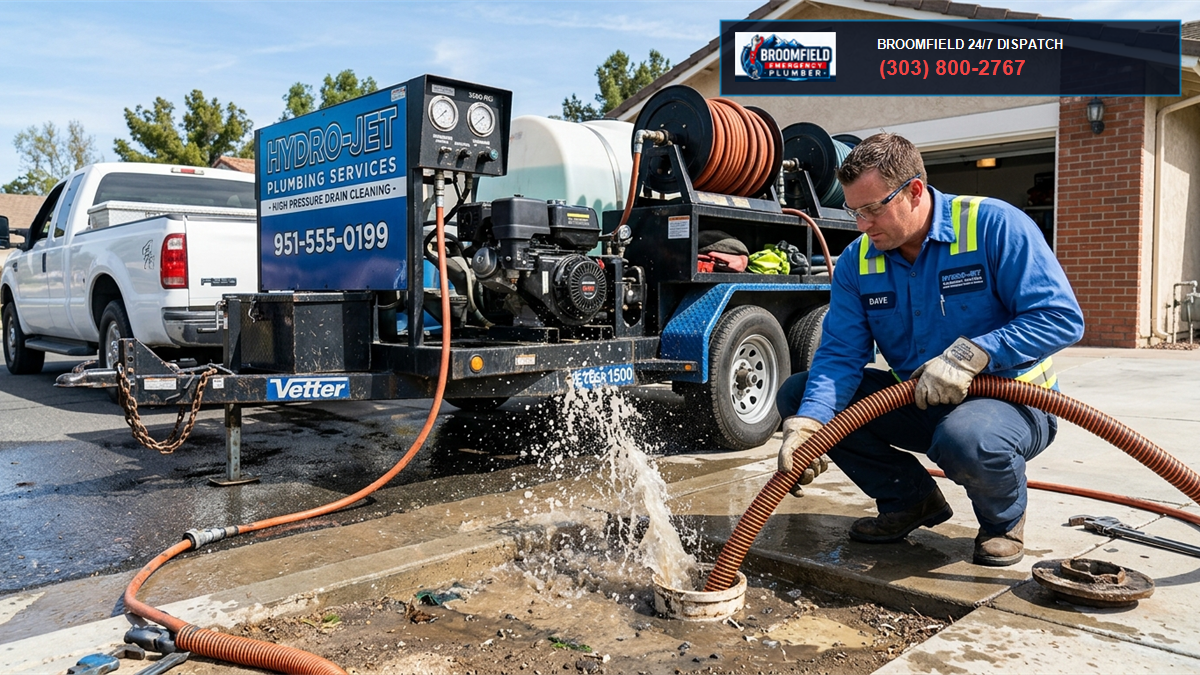
6. Real-World Case Studies from Broomfield Multi-Family & Commercial Facilities
Reviewing real-world commercial emergencies reveals how precision engineering saves multi-family properties from devastating insurance claims:
Case Study 1: The Multi-Family Garden Apartment Suds Eruption in Broomfield Town Center
The Building: A 140-unit luxury apartment community featuring eight vertical laundry stacks.
The Crisis: Every Saturday at 10:00 AM, the ground-floor garden-level apartment units suffered violent suds eruptions. Soap lather rose out of the master bathroom bathtubs and kitchen floor drains, ruining ten thousand dollars of carpet and luxury vinyl tile. The property management company had called three generic drain cleaners, who snaked the line repeatedly without success. Management faced furious tenant rent-withholding demands and imminent lease terminations.
Our Master Plumber Diagnosis: We performed a diagnostic review of building plumbing schematics and inserted our optical sewer camera. The original plumbing contractor had tied the garden-level bathroom group directly into the base of the 4-inch laundry stack only 3 feet above the 90-degree stack base elbow—a direct violation of IPC Section 711’s 40-diameter (13.3-foot) suds safety zone. In addition, the 4-inch horizontal lateral was 70% occluded by dense calcium stearate lime soap crust.
The Restoration: First, we deployed our Picote carbide chain knocker to mill the entire 80-foot lateral back to its full 4-inch bore, followed by a 160°F hot-water hydro-jetting scour. Second, we re-piped the garden-level fixture branch, separating it from the laundry stack base and connecting it 15 feet downstream along the main building drain. Third, we retrofitted a dedicated 3-inch suds relief vent connecting above the second floor. Suds blowouts ceased entirely.
Case Study 2: Extended-Stay Hotel Laundry Interceptor Collapse near Flatiron Crossing
The Building: A 120-room extended-stay commercial hotel operating six commercial washer-extractors around the clock.
The Crisis: The hotel’s 250-gallon commercial lint interceptor in the basement laundry mechanical room suffered a gasket blowout, discharging 400 gallons of scalding soapy greywater across the electrical switchgear room. Hotel laundry operations ground to an immediate halt. With guest linens piling up and wedding weekend arrivals pending, management faced an emergency hotel shutdown.
Our Master Plumber Diagnosis: The interceptor’s dual 30-mesh stainless screens had not been cleaned in four months. The screens were blinded by a solid 1/2-inch felt-like pelt of synthetic polyester microfibers and dried detergent curd. When two 50-lb washers pumped simultaneously, internal hydraulic pressure surged to 18 PSI, blowing out the cast-iron cover gasket.
The Restoration: Our emergency vacuum unit evacuated 300 gallons of standing wastewater and sludge. We power-washed the interceptor body, extracted the blinded screens, and restored them with ultrasonic chemical descaling. We replaced the sheared cover bolts and installed a new high-durometer EPDM oil-resistant compression gasket. We hydro-jetted the downstream 4-inch gravity sewer to the city main. Total turnaround was 4.5 hours. The laundry facility resumed operations that afternoon.
Case Study 3: Commercial Industrial Uniform Laundry Facility in North Broomfield
The Building: A regional industrial uniform processing plant washing heavy petroleum-stained workwear with high-alkali detergents.
The Crisis: Plant engineers noted effluent sewer alarms tripping. Municipal wastewater authorities issued a formal notice of violation for elevated chemical oxygen demand (COD) and suspended solids, threatening daily fines exceeding $5,000.
Our Master Plumber Diagnosis: Inspection of their automated 1,000-gallon concrete lint pit revealed severe concrete biogenic sulfide corrosion on the pit walls, paired with severe saponification plugging of the downstream gravity baffle chamber.
The Restoration: We mobilized a confined-space hazardous team, pumped down the interceptor, hydro-milled the encrusted baffles, and applied an epoxy barrier coating to protect the concrete pit from further acid etching. We re-engineered their automated screen spray-wash cycle to prevent future solids blinding, bringing effluent water within full municipal discharge limits.
Case Study 4: Senior Living Campus Common Laundry Stack Lockout in Broomfield
The Building: A multi-wing senior living care facility with twelve common laundry rooms.
The Crisis: Laundry wastewater backed up into ground-floor hallway cleanouts, saturating drywall adjacent to commercial food preparation areas. Health department inspectors threatened an immediate operational pause.
Our Master Plumber Diagnosis: High quantities of hospital-grade sanitizing detergents had interacted with hard water, creating an extraordinarily dense stearate crust that was trapping laundry sheet lint. The main stack base cleanout was buried behind drywall without code-mandated access.
The Restoration: We created an engineered wall access panel, inserted high-torque carbide flail knockers, and scoured 120 feet of lateral line to the exterior sewer manhole. We installed a secondary lint catch basket and restored full drainage capacity in under 4 hours.
7. Preventive Maintenance Checklist for Commercial Laundry Waste Systems
Protect multi-family properties and commercial laundry assets with this scheduled maintenance regimen:
| Frequency | System Component | Maintenance / Inspection Action | Engineering Standard / Benchmark |
|---|---|---|---|
| Weekly | Lint Interceptor Baskets | Remove coarse and fine screen baskets; scrape accumulated lint felt | Zero mesh blinding; free gravity flow through 100% of screen area. |
| Monthly | Interceptor Gasket & Bolts | Inspect EPDM / neoprene lid gasket; check bolt torque to 25 ft-lbs | Airtight seal; zero greywater weep or sewer gas odor leakage. |
| Quarterly | Suds Relief Vent Terminals | Inspect roof-level suds vent terminals for bird nests or frost closures | Unobstructed atmospheric airflow; zero pneumatic backpressure. |
| Biannually | Horizontal Laundry Drain Laterals | High-pressure hot water hydro-jetting flush (3,500 PSI at 150°F) | Remove early calcium stearate lime soap curd before crystallization. |
| Annually | CCTV Sewer Video Inspection | Push-camera optical survey of stack base and first 40 pipe diameters | Verify 100% full pipe diameter; zero saponification necking down. |
| Every 2-3 Years | Mechanical Flail Chain Milling | High-RPM carbide chain knocker descaling of cast iron waste stacks | Remove hard tuberculation and bonded synthetic fiber coatings. |
8. Emergency Action Steps: What to Do When Suds Blow Out of Your Drains Right Now
If soap lather or laundry wastewater is erupting from your building’s lowest drains:
- Shut Down All Commercial Washers Immediately: Kill the main electrical circuit breakers to all commercial washing machines or post emergency closure notices across the common laundry facility. Stopping the pumped water volume immediately halts pressure accumulation.
- Do NOT Pour Chemical Drain Cleaners Down the Stack: Never pour sulfuric acid, lye, or caustic drain openers into a foaming drain. Caustic chemicals react violently with hot laundry surfactants, generating toxic fumes and splashing boiling chemical foam onto maintenance workers.
- Contain and Protect Electrical Assets: Deploy wet/dry vacuum units and hydrophobic spill barriers around elevator shafts, electrical switchgear rooms, and low-lying residential apartment doors.
- Inspect the Central Lint Interceptor: Check the basement lint trap lid. If water is leaking past the gasket, open the manual bypass gate only if an approved emergency containment basin is in place.
- Call Licensed Commercial Master Plumbers Immediately: Contact our rapid-response commercial drain team at (303) 647-3363. We deploy high-RPM Picote carbide chain milling rigs, 4,000 PSI hot-water trailer hydro-jetters, CCTV diagnostic cameras, and master plumbers certified in IPC 711 suds mechanics 24/7 across Broomfield and the Denver Metro area.
Frequently Asked Questions (FAQ)
What is a suds pressure zone in multi-story plumbing?
A suds pressure zone is a localized high-pressure area created in a drainage stack when aerated detergent foam from upper-floor washing machines falls downward and encounters a direction change (such as a stack base elbow or horizontal offset). Because the light foam cannot flow away as fast as liquid water, it compresses trapped air, creating pneumatic backpressure that blows soap lather out through lowest-level fixtures.
Why does the International Plumbing Code mandate suds relief venting?
Under IPC Section 711, buildings with clothes washers located on four or more branch intervals generate severe pneumatic pressures in the lowest 40 pipe diameters of the stack. Suds relief venting connects the high-pressure zone to a parallel vent stack or atmospheric relief line, harmlessly bleeding off foam pressure and protecting lowest-floor P-trap water seals.
What is calcium stearate, and why does it plug laundry pipes?
Calcium stearate is an insoluble lime soap formed when fatty soils and laundry detergents react chemically with dissolved calcium and magnesium minerals in Colorado’s hard water. It forms a dense, waxy, insoluble curd that catches synthetic polyester lint fibers, turning into a rock-solid composite scale that generic drain snakes cannot clear.
How often should a commercial lint interceptor be cleaned?
In multi-family properties with 12 to 30 commercial washers, lint interceptor fine-mesh screens should be inspected and cleaned bi-weekly. Heavy commercial laundromats or hotel laundry rooms require weekly cleaning. Allowing screens to blind with lint generates internal hydrostatic head pressure that blows out cover gaskets and floods mechanical rooms.
How do master plumbers remove rock-hard saponified lint scale from cast iron pipes?
We use high-RPM flexible shaft machines equipped with carbide-tipped chain knockers spinning at 2,000 RPM. The centrifugal force expands the carbide teeth against the pipe wall, pulverizing the hard lime soap crust without cracking the pipe. We follow this with 160°F hot-water hydro-jetting at 4,000 PSI to flush all emulsified waxes out of the system.
Commercial Laundry Suds Blowout in Broomfield?
Don’t let exploding soap lather or clogged lint interceptors destroy apartment floors, flood basements, or trigger tenant lawsuits. Our master plumbers deploy high-speed carbide chain knockers, 4,000 PSI hot hydro-jetters, and IPC 711 suds venting engineering 24/7.