
1. Executive Overview & Municipal FOG Regulatory Framework in Colorado
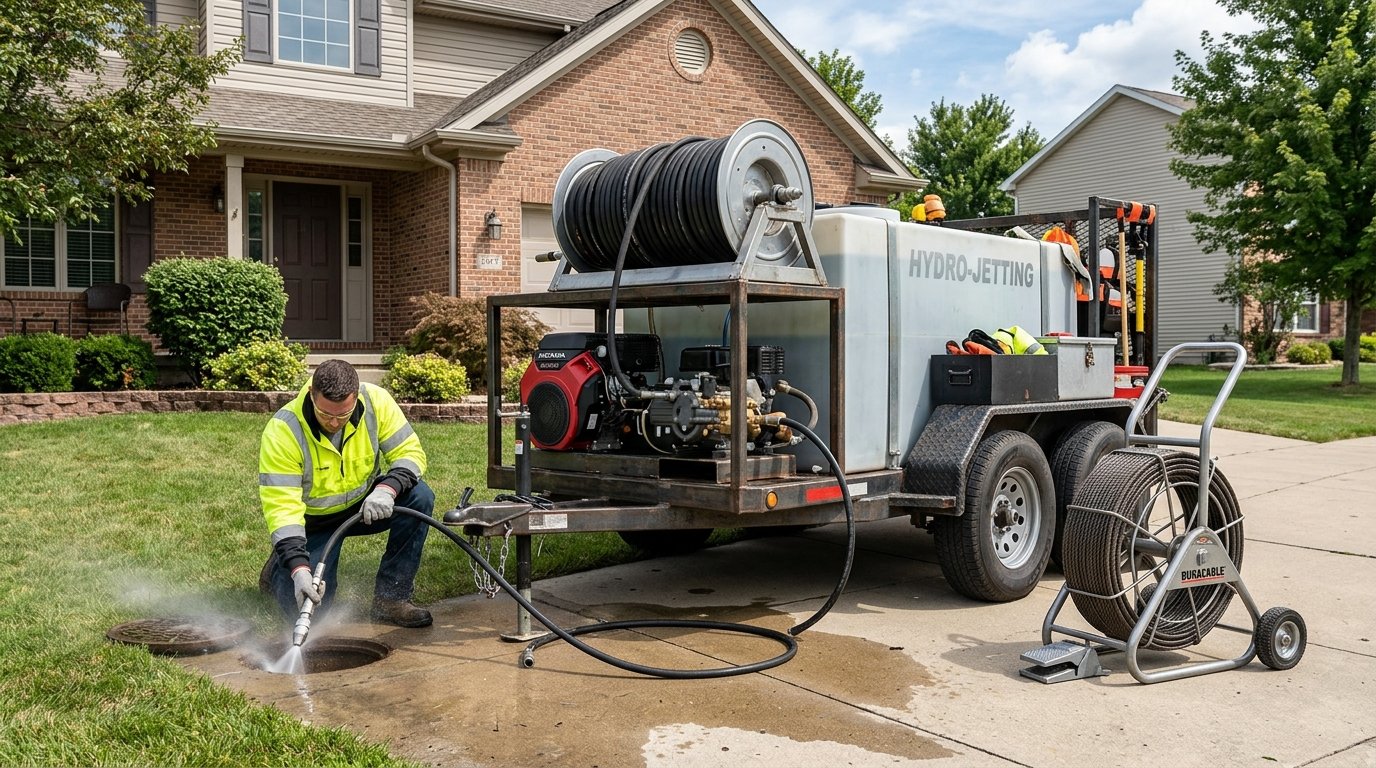
In commercial food service establishments across the Colorado Front Range — spanning Broomfield, Boulder, Adams, Jefferson, and Weld counties — fats, oils, and grease (collectively termed FOG) represent the single greatest existential threat to municipal sanitary collection systems and on-site facility drainage. When hot, emulsified cooking oils, animal lards, shortening, dairy byproducts, and wash-down residues from commercial warewashing machines enter the drainage waste system, they undergo rapid thermal deceleration. As hot kitchen effluent cools below its liquid melting threshold — typically between 105 degrees Fahrenheit and 125 degrees Fahrenheit — the fatty acid triglycerides undergo saponification, coagulating with free calcium carbonate ions naturally present in Colorado’s moderately hard municipal water supplies. This biochemical reaction precipitates solid, adhesive calcium soaps, colloquially known within municipal wastewater engineering as ‘fatbergs.’
Left unchecked, solidified grease deposits choke the internal hydraulic diameter of commercial lateral lines, trigger catastrophic floor drain backups during peak dinner services, and discharge into municipal utility mains. Under the City and County of Broomfield Municipal Code (specifically Chapter 13-12 governing Wastewater Collection and Pretreatment Regulations) as well as parallel discharge ordinances enforced by the Boulder Department of Public Works and the Metro Wastewater Reclamation District, commercial kitchens are legally classified as Non-Domestic Industrial Dischargers. These regulations enforce strict discharge ceilings, typically prohibiting any industrial waste effluent containing total oil and grease concentrations exceeding 100 milligrams per liter (100 mg/L) or exhibiting a pH outside the regulatory envelope of 5.5 to 9.5 standard units.
Failure to demonstrate compliance through verified maintenance logs, licensed pumping manifests, and properly engineered interceptor installations carries severe administrative penalties. Municipal authorities and local wastewater inspectors conduct unannounced quarterly effluent grab-sampling. Violations trigger escalating civil fines starting at five hundred dollars per calendar day, mandatory installation of expensive external gravity interceptors, billing for municipal sewer cleaning and emergency street hydro-jetting, and in recurrent or negligent instances, summary revocation of the commercial food establishment’s wastewater discharge permit — effectively shutting down commercial restaurant operations immediately.
Moreover, Colorado’s semi-arid, high-altitude geography accelerates cooling gradients within underground drainage lines. During Front Range winter months, sub-surface ground temperatures in Broomfield hover near 32 to 38 degrees Fahrenheit. When 140-degree commercial dishwasher discharge enters horizontal collection laterals buried four to six feet deep, the thermal shock causes instantaneous grease congealment against cold pipe walls. Consequently, commercial establishments in the Denver-Boulder metropolitan corridor experience severe grease line blockages at nearly twice the national statistical frequency compared to warm-weather coastal municipalities.
2. Fundamental Physics of Gravity vs. Hydromechanical Grease Interceptors
To design, diagnose, and maintain grease abatement systems effectively, commercial plumbing engineers must distinguish between the two primary classifications of grease removal apparatus recognized by the International Plumbing Code (IPC Section 1003) and the Uniform Plumbing Code (UPC Chapter 10): Hydromechanical Grease Interceptors (HGIs) and Gravity Grease Interceptors (GGIs). While both technologies operate upon the physical principle of differential specific gravity — exploiting the fact that fats, oils, and grease exhibit a specific gravity ranging between 0.85 and 0.92, making them significantly lighter and more buoyant than pure water (specific gravity 1.00) — their internal fluid dynamics, residence retention times, and maintenance thresholds diverge dramatically.
2.1 Hydromechanical Grease Interceptors (HGI) Mechanics & Stokes’ Law
Hydromechanical grease interceptors are compact, precision-engineered assemblies designed for indoor point-of-use installation — frequently situated directly beneath three-compartment pot sinks, pre-rinse warewashing stations, or adjacent to commercial tilt skillets. Certified under ASME A112.14.3 or PFI (Plumbing and Drainage Institute) Standard PDI-G101, an HGI does not rely solely on expansive liquid detention volumes. Instead, it utilizes engineered flow-control fittings with integral air entrainment vents installed upstream of the interceptor chamber.
The mathematical foundation governing oil droplet buoyancy within an interceptor is expressed through Stokes’ Law for laminar settling velocities:
V_s = [2 * r^2 * (rho_w – rho_o) * g] / [9 * mu]
Where V_s represents the terminal upward rise velocity of the buoyant grease droplet, r is the radius of the oil globule, rho_w is the mass density of water (approximately 998 kg/m3 at operating room temperatures), rho_o is the mass density of grease (approximately 890 kg/m3), g is the acceleration due to gravity (9.81 m/s2), and mu represents the dynamic absolute viscosity of the aqueous fluid. Because the upward separation velocity increases proportionally with the square of the droplet radius (r^2), modern hydromechanical units utilize internal flow-calming diffusion baffles to coalesce minute microscopic oil globules into larger, highly buoyant macro-droplets before they can escape beneath the discharge weir.
The integral air-entrainment fitting introduces tiny atmospheric air bubbles into the incoming turbulent waste stream. These micro-bubbles adhere to hydrophobic grease particles, reducing their apparent composite density and dramatically accelerating their vertical ascent toward the surface scum layer. As a result, a certified 50-gallon-per-minute (50 GPM) HGI can achieve oil separation efficiencies exceeding 90% while maintaining a total fluid retention time of under two minutes, storing up to 100 pounds of separated grease before hydraulic breakdown occurs.
However, HGIs are exceptionally sensitive to surfactant chemical overloading. High-alkaline commercial detergents and chemical emulsifiers utilized in dishwashing operations chemically bind grease globules into stable colloidal suspensions, artificially depressing droplet size (r). When droplet size drops below 20 microns, terminal rise velocity approaches zero, allowing emulsified grease to slip directly past internal baffles and pass untreated into building drainage laterals.
2.2 Gravity Grease Interceptors (GGI) & Large-Volume Retention Physics
In contrast to indoor point-of-use units, Gravity Grease Interceptors (GGIs) are massive multi-compartment precast concrete, fiberglass, or heavy rotational-molded polyethylene underground vaults installed outside the building footprint. Engineered in compliance with IAPMO/ANSI Z1001 standards, commercial GGIs typically feature holding capacities between 750 gallons and 5,000 gallons. Unlike HGIs, gravity interceptors operate strictly on hydrodynamic detention time without the aid of artificial air entrainment or upstream flow-restricting orifices.
Plumbing engineering codes mandate a minimum hydraulic retention time (HRT) of 20 to 30 minutes inside a gravity interceptor under peak calculated fixture flow conditions. As grease-laden water enters the primary compartment through an engineered sanitary drop-tee, the substantial cross-sectional flow area causes instantaneous deceleration of linear velocity. Large food solids, bone fragments, and heavy particulate settle to the tank floor, establishing the bottom sludge layer, while liberated grease globules float upward to form an unbroken floating scum mat. Clarified graywater from the middle liquid zone passes through a submerged mid-depth baffle wall opening or siphon transition pipe into the secondary separation chamber for secondary polish clarification before exiting through the outlet sanitary tee into the municipal lateral.
3. Engineering Sizing Calculations for Commercial Kitchen Applications
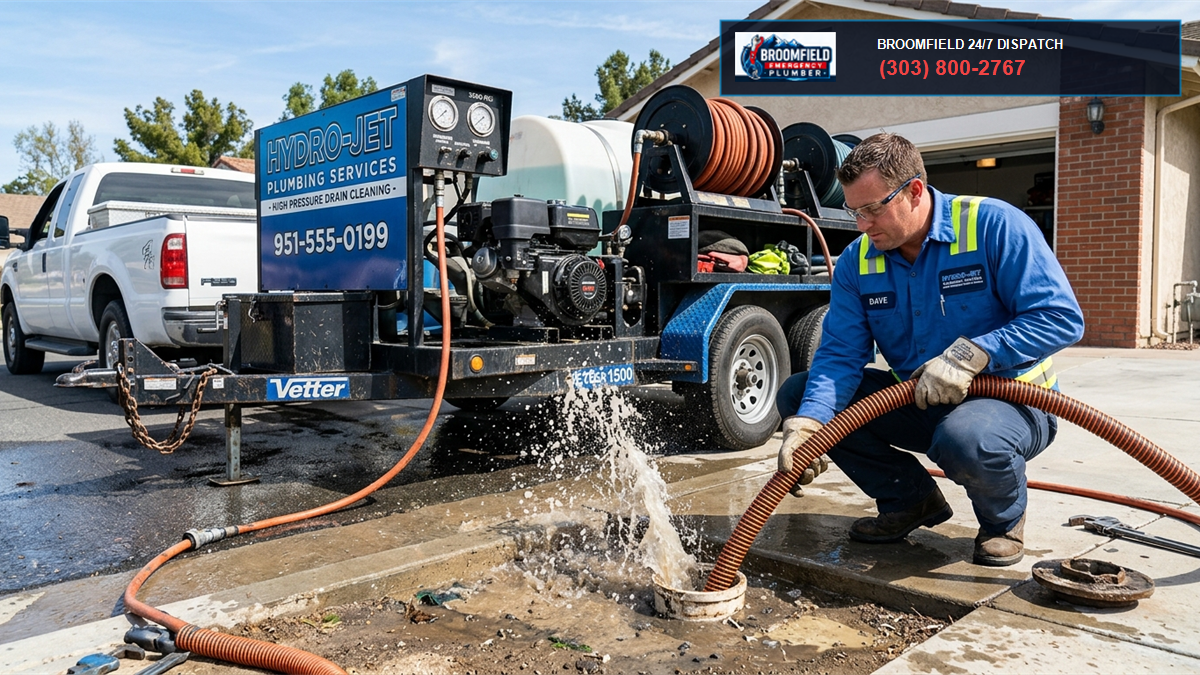
Undersized grease interceptors represent the leading cause of chronic commercial sewer line failures across Colorado commercial developments. Sizing an interceptor cannot rely upon arbitrary guesswork; it demands rigorous hydraulic fixture unit calculations or volumetric meal-flow evaluations codified by the IPC and local Broomfield utility criteria.
3.1 Sizing Hydromechanical Interceptors by Fixture Discharge Rating
To calculate the required flow rating (GPM) for an indoor point-of-use HGI serving a three-compartment sink, master plumbers utilize the dimensional cubic displacement formula:
- Calculate Total Liquid Volume: Measure the inside length, width, and depth (in inches) of each sink compartment. Multiply Length * Width * Depth = Cubic Inches. Multiply by the number of compartments (typically 3).
- Convert to Liquid Gallons: Divide the total cubic inches by 231 (the number of cubic inches in one US gallon) to establish the maximum gross liquid capacity in gallons.
- Apply Practical Displacement Factor: Under real-world kitchen operating conditions, sinks are rarely filled to the top rim, and immersed dishware/pots displace liquid. Multiply total gallons by an operational load factor of 0.75 (75%).
- Determine Drain Down Period: Standard engineering code dictates a rapid 1-minute or 2-minute drain-down period for commercial sanitation. Dividing the operational gallon capacity by the drainage time produces the required fixture discharge rate in gallons per minute (GPM).
For example, consider a standard commercial restaurant three-compartment pot wash sink where each compartment measures 24 inches long by 24 inches wide by 14 inches deep:
Volume per basin = 24 in * 24 in * 14 in = 8,064 cubic inches
Total Volume (3 basins) = 8,064 * 3 = 24,192 cubic inches
Gross Capacity = 24,192 / 231 = 104.72 Gallons
Operational Capacity = 104.72 * 0.75 = 78.54 Gallons
Flow Rate for 2-Minute Drainage = 78.54 / 2 = 39.27 GPM
Consequently, an engineering specification must select the next standard commercial manufactured HGI size rated for at least 40 GPM or 50 GPM, coupled with a minimum certified grease retention capacity of 80 to 100 pounds. Selecting an unrated 20 GPM unit will result in severe weir blowby, forcing grease directly downstream into the sanitary building drain.
3.2 Sizing Outdoor Gravity Interceptors (GGI) by Drainage Fixture Units (DFU)
For complex commercial food processing facilities, hospitals, and high-volume dining halls with multiple preparation sinks, dishwashers, wok ranges, and braising pans, outdoor gravity interceptors must be sized utilizing the Uniform Plumbing Code Drainage Fixture Unit (DFU) method or the EPA volumetric meal model:
| Fixture Type | UPC DFU Value | Trap / Waste Size (Inches) | Peak Flow Contribution |
|---|---|---|---|
| Commercial 3-Compartment Pot Sink | 3 DFU per compartment (9 Total) | 2.0 or 3.0 Inch | High Surge / Thermal |
| Commercial Pre-Rinse Spray Sink | 3 DFU | 2.0 Inch | Continuous Food Scraps |
| Floor Drain / Mop Sink (Kitchen Area) | 2 DFU per fixture | 3.0 Inch | Intermittent Washdown |
| Commercial Wok Station (with water trough) | 4 DFU | 2.5 or 3.0 Inch | Continuous High Grease |
| Commercial Food Waste Disposer (Pulper) | 6 DFU | 3.0 Inch | Heavy Organic Sludge |
When the cumulative fixture unit count exceeds 50 DFUs, municipal guidelines dictate an interceptor liquid capacity formula: Interceptor Volume (Gallons) = Total DFU * Peak Discharge Coefficient * 25 Gallons, with standard baseline minimums never falling below 750 or 1,000 gallons for commercial kitchens operating within the City and County of Broomfield service jurisdiction.
4. The Critical 25 Percent Rule & Pumping Protocols
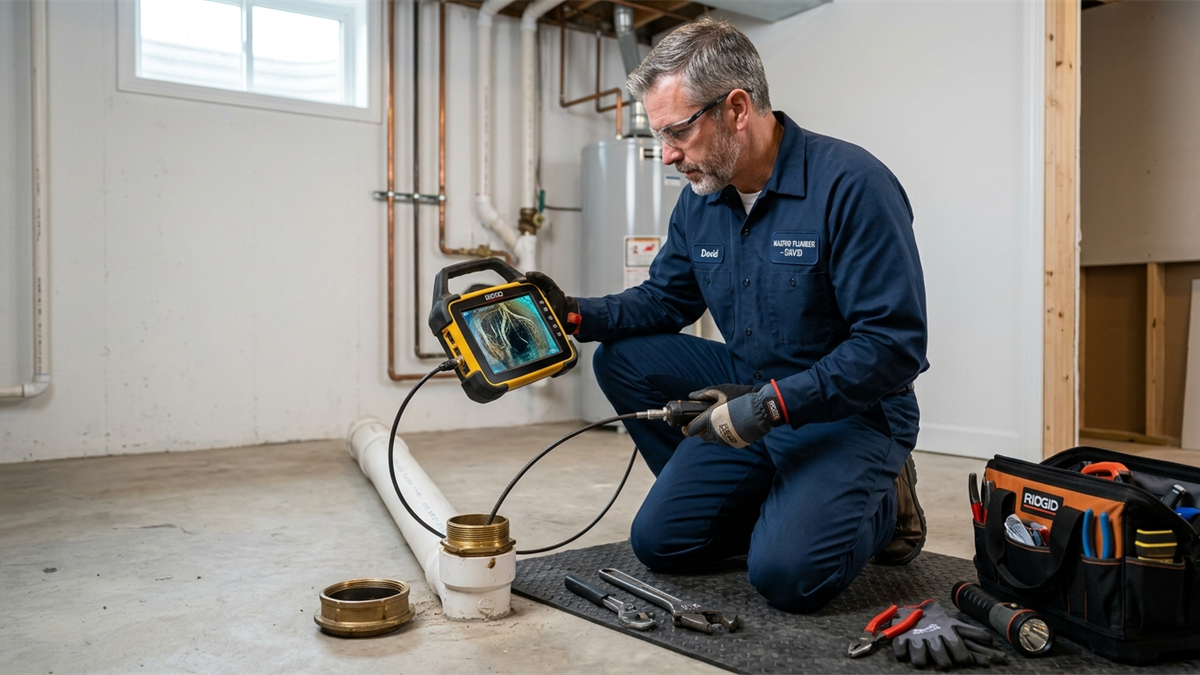
The universal benchmark governing commercial grease interceptor pumping cycles is the ’25 Percent Rule’ established by the EPA and codified in regional Colorado municipal pretreatment manuals. This mandate dictates that when the combined vertical depth of the top floating grease layer and the bottom settled solids layer occupies 25 percent (1/4) or more of the total liquid working depth of the interceptor, the unit is operating beyond its hydraulic design capacity and must be immediately and thoroughly pumped out.
4.1 Mathematical Breakdown of the 25% Threshold
Why is the 25 percent limit so strictly enforced? Interceptor fluid separation efficiency is not linear; it degrades exponentially once internal storage chambers become congested. Consider an interceptor with an active liquid depth of 40 inches:
- Maximum Allowable Accumulation: 25% of 40 inches = 10 inches total combined thickness (e.g., 7 inches of top grease scum + 3 inches of bottom food sludge).
- Velocity Compression: When 25% of the liquid volume is displaced by dense accumulation, the clear water zone in the center of the tank is compressed from 40 inches to 30 inches.
- Reduced Retention Time: Because the cross-sectional flow corridor is narrowed, the linear horizontal velocity of incoming water increases by over 33%.
- Scour & Hydraulic Short-Circuiting: Once the fluid velocity exceeds the critical Reynolds number threshold for turbulent flow, incoming surges begin scouring and eroding the underside of the floating grease layer, tearing off emulsified fatty globs and carrying them straight down the outlet drop-tee into the municipal sewer line.
4.2 Professional Inspection Tool: The Sludge Judge Core Sampler
Plumbing inspectors and certified waste haulers verify compliance utilizing a transparent, calibrated acrylic core sampling instrument known as a ‘Sludge Judge.’ The operator lowers the segmented clear tube through the interceptor access manhole to the tank floor, trapping a complete vertical cross-section of the fluid column. Upon withdrawing the tube, the technician visually measures:
- The thickness of the dark yellow/brown solidified top grease mat (inches).
- The depth of the middle translucent clarified aqueous effluent layer.
- The depth of the heavy black/gray bottom organic sediment sludge.
If the sum of top grease and bottom sludge divided by total fluid depth equals or exceeds 0.25 (25%), the facility is immediately issued an official notice of violation requiring pumping within 48 to 72 hours, backed by a certified manifest submitted directly to the municipal pretreatment division.
5. Commercial Hydro Jetting: Kitchen Lateral Restoration Protocols
While routine pump-outs remove grease captured inside the interceptor tank, they do virtually nothing to remediate the upstream and downstream plumbing network. Kitchen waste branches running from pot sinks, dishwashers, and floor sinks to the interceptor gradually become lined with rock-hard calcified grease deposits. Standard mechanical drain snaking (cables with spring heads) merely punches a temporary 1-inch or 2-inch pilot hole through the center of a grease blockage, leaving the dense peripheral buildup intact to snag subsequent food solids within days.
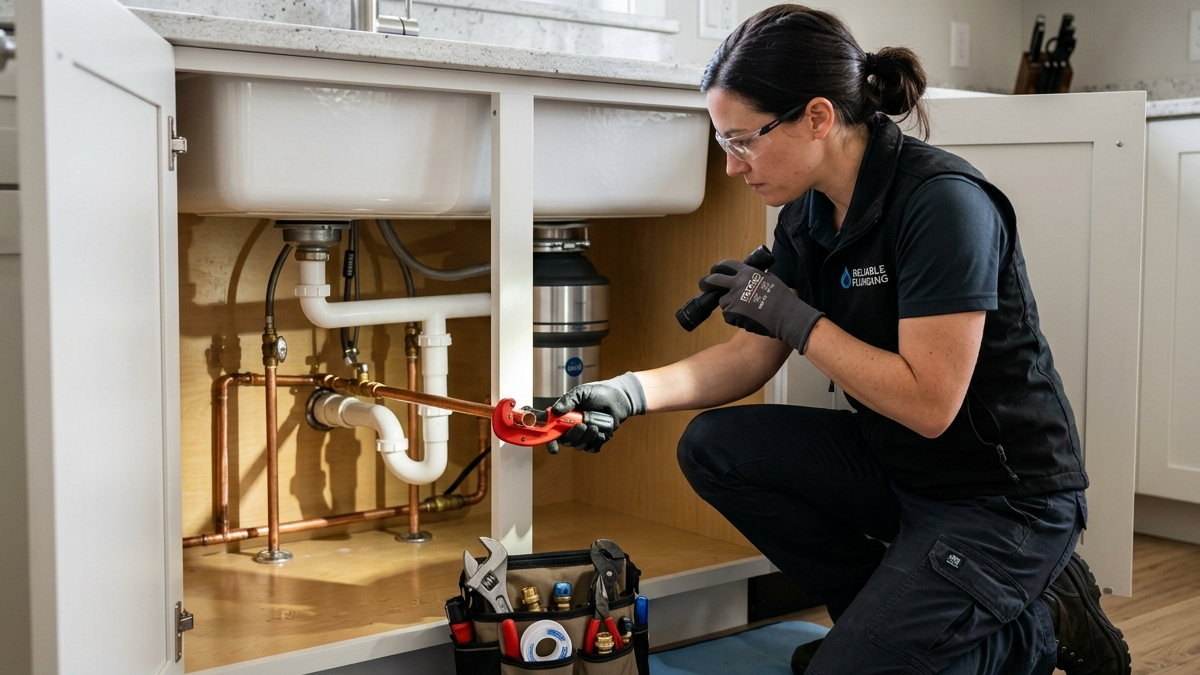
The only scientifically verified methodology for achieving 100% pipe lumen restoration in commercial kitchens is High-Pressure Hydro Jetting coupled with hot-water thermal flushing. The engineering protocols implemented by licensed master plumbers involve:
5.1 Operating Parameters & Rotary Nozzle Physics
- Operating Hydraulic Pressure: Commercial jetting rigs must generate between 3,500 PSI and 4,000 PSI at a continuous flow rate of 12 to 18 gallons per minute (GPM). Small electric jetters operating at 1,500 PSI / 2 GPM lack the kinetic energy necessary to shear bonded fatberg deposits from cast iron or PVC walls.
- Thermal Enhancement (Hot-Water Hydro Jetting): High-end commercial hydro jetters incorporate industrial diesel-fired burner coils that elevate water temperatures to 140-160 degrees Fahrenheit. Hot water instantaneously liquifies solidified animal fats and grease binders, transforming calcified blockages into a milky emulsion that flows freely to the interceptor rather than shearing off in damaging solid chunks.
- Specialized Nozzle Configurations: Technicians utilize precision-machined stainless steel nozzles featuring 3D rotating fluid bearings. Forward-facing penetrating jets bore through total obstructions, while rearward-facing flushing jets angled at 30 to 45 degrees provide hydraulic forward propulsion and scour the pipe circumference through 360-degree wall coverage.
5.2 High-Frequency Preventive Maintenance (PM) Scheduling
For high-volume Front Range restaurants — such as steakhouses, burger franchises, pizzerias, and Asian stir-fry concepts — reactive emergency unclogging is exponentially more expensive than proactive maintenance. Leading facilities establish automated quarterly (every 90 days) or semi-annual hydro jetting contracts executed during off-hours (midnight to 5 AM) to guarantee zero kitchen downtime and complete elimination of foul sewer odor migration into customer dining rooms.
6. Common Plumbing Failure Modes & Master Diagnostic Checklist
Commercial kitchen plumbing systems exhibit distinct failure signatures when grease interceptors or waste lines malfunction. Master plumbers utilize the following diagnostic tree to pinpoint root-cause mechanics:
| Symptom | Probable Mechanical Failure | Underlying Physics / Chemistry | Master Plumber Corrective Action |
|---|---|---|---|
| Floor Drains Backing Up During Dishwashing | Downstream line choked or missing internal flow control | Hydraulic overloading exceeds interceptor flow rating; effluent backs up to lowest fixture. | Install certified vented flow restrictor upstream; hydro jet lateral line to interceptor. |
| Persistent Rancid Odors Around Indoor Interceptor | Degraded cover gasket or unvented chamber | Anaerobic bacterial digestion produces toxic hydrogen sulfide (H2S) gas escaping unsealed lid. | Replace closed-cell neoprene perimeter gasket; torque stainless dog-ear bolts to spec; verify trap vent. |
| Grease Bypassing Interceptor into City Main | Missing or broken outlet sanitary drop-tee / baffle | Without vertical drop-tee, floating scum layer is drawn directly into horizontal outlet pipe. | Reconstruct PVC/SDR-35 outlet tee assembly extending to bottom 1/3 clear zone; re-inspect. |
| Rapid Recurrent Sink Drain Gurgling | Obstructed air intake on flow control fitting | Air entrainment port plugged with food particles creates negative siphonage, draining sink traps. | Disassemble flow control valve; clear integral air orifice; clean connecting vent piping. |
7. Colorado Front Range Municipal Discharge Code Compliance
Commercial facilities operating within Broomfield, Westminster, Arvada, Thornton, and Boulder must maintain meticulous regulatory records. Municipal industrial pretreatment inspectors possess legal administrative search authority to enter non-residential properties during business hours without prior appointment. To safeguard your business against catastrophic fines or operational shutdown, your compliance protocol must include:
- On-Site FOG Logbook: Maintain a dedicated binder containing the past rolling 36 months of grease hauling manifests, pumping receipts, maintenance service tickets, and hydro-jetting work orders.
- Licensed Waste Hauler Manifests: Municipalities mandate that grease pumping be performed exclusively by state-licensed non-hazardous liquid waste transporters registered with the Colorado Department of Public Health and Environment (CDPHE). The manifest must detail exact pumped gallonage, date, disposal site facility ID, and measured pre-pump grease thickness.
- Chemical & Enzyme Additive Prohibition: Crucially, Section 1003.3.2 of the International Plumbing Code strictly prohibits the introduction of chemical emulsifiers, solvent degreasers, or live biological enzymes designed to ‘dissolve’ grease inside the interceptor. These agents do not eliminate FOG; they temporarily emulsify the oils, allowing them to bypass the interceptor into the municipal utility main where the emulsion breaks down miles down the line, causing massive municipal fatbergs. Facilities discovered using chemical or enzyme bypass injection face immediate administrative fines and revocation of permits.
8. Microbial Bioremediation vs. Saponification Chemistry in High-Altitude Colorado
The biochemical behavior of organic grease within commercial interceptors is heavily influenced by environmental ambient conditions and microbial ecology. In high-altitude Colorado commercial kitchens (5,280 to 5,500 feet above sea level), reduced atmospheric pressure (approximately 12.2 PSI compared to 14.7 PSI at sea level) marginally depresses the boiling point of water to 202 degrees Fahrenheit and alters the dissolved oxygen saturation curves within standing wastewater.
Inside an interceptor, grease exists as triglycerides — esters consisting of glycerol bound to three fatty acid chains. When commercial sanitizers, chlorine bleach, and alkaline dish detergents enter the waste stream, they react with fatty acids in an alkaline hydrolysis reaction known as saponification:
Triglyceride + 3 NaOH (or KOH) —> Glycerol + 3 Fatty Acid Salts (Crude Soap)
When these fatty acid salts combine with dissolved calcium (Ca2+) and magnesium (Mg2+) ions abundant in Colorado municipal water (often measuring 120 to 180 ppm as CaCO3), insoluble calcium palmitate and calcium stearate precipitates form. These mineralized soap curds adhere tenaciously to pipe walls, hardening into concrete-like structures that resist standard snake cutting blades.
To counteract this, modern engineering explores aerobic bioremediation — introducing specialized bacterial consortia (primarily non-pathogenic Bacillus strains) equipped with extracellular lipase enzymes. Lipase catalyzes the hydrolysis of lipids into free fatty acids and glycerol, which the bacteria subsequently metabolize into harmless carbon dioxide (CO2) and water (H2O) through the beta-oxidation metabolic pathway. However, for bioremediation to function without violating municipal pretreatment prohibitions, bio-dosing must be engineered within dedicated aerobic incubation retention chambers upstream of the primary interceptor, maintaining dissolved oxygen levels above 2.0 mg/L and pH between 6.5 and 8.0 standard units.
9. Real-World Colorado Front Range Commercial Case Studies
Case Study 1: High-Volume Mexican Cantina in Broomfield, Colorado
A 220-seat high-volume Mexican restaurant located off 120th Avenue in Broomfield suffered catastrophic floor drain backups during Friday night peak dinner volume. Kitchen staff had been clearing sluggish sinks with basic chemical lye solutions and an electric snake rental. Upon emergency dispatch, our commercial master plumbing diagnostics team executed fiber-optic video camera inspection. The 4-inch cast iron kitchen lateral was discovered to be 95% choked with mineralized lard and cheese fatbergs over a 60-foot horizontal run leading to the exterior parking lot interceptor.
Our team mobilized a heavy-duty trailer hydro-jetter operating at 3,800 PSI with 150-degree Fahrenheit hot water, utilizing a specialized vibration-pulsating chisel nozzle. Over four passes, the lateral was restored to 100% original diameter. Inspection of the 1,000-gallon exterior concrete interceptor revealed that the outlet sanitary drop-tee had broken off at the hub, allowing raw grease to pour into the city main. We reconstructed the outlet baffle assembly with SDR-35 PVC, installed cleanout extensions to grade, and established a 60-day scheduled pumping and hydro-jetting regimen. The facility passed municipal grab-sample testing with total oil and grease under 35 mg/L, saving the owners an estimated ,000 in threatened municipal penalties.
Case Study 2: Microbrewery & Gastropub in Boulder County
A craft brewery and gastropub in Boulder County experienced persistent foul sewer gas odors escaping indoor kitchen drains, alongside sluggish drainage from the commercial keg-washing station. Core sampling of their indoor 50 GPM hydromechanical interceptor revealed an astounding 65% grease and trub accumulation — far exceeding the 25% legal threshold. Thermal cycling from 180-degree brewing kettle washdowns had warped the interceptor lid seal and melted internal flow baffles.
Our team performed complete vacuum extraction of the chamber, replaced the damaged unit with an ASME-certified heavy-duty rotomolded polyethylene interceptor rated for continuous 180-degree thermal discharge, fabricated an airtight neoprene perimeter gasket, and recalibrated the upstream vented flow control. Furthermore, we replumbed the high-temperature brewing trub lines to bypass the grease interceptor entirely, directing yeast sediment to an appropriate solids settling tank per Boulder industrial discharge regulations. Odor complaints ceased immediately, and kitchen drain velocity tripled.
Case Study 3: Fast-Casual Chicken Franchise along the US-36 Corridor
A fast-casual fried poultry franchise along the US-36 corridor in Westminster faced an imminent municipal shut-down order after city inspectors detected severe grease plumes inside the public main down-gradient from the restaurant. The franchise operator believed their monthly contract with a local pumper was sufficient. However, forensic analysis by our master plumbing investigators revealed the pumper was merely skimming the top 2 inches of liquid grease without pumping out the dense 14-inch bottom sludge layer of breading crumbs and poultry solids.
We executed a complete pump-down and pressure wash of the 1,500-gallon vault, removing over 2,200 pounds of anaerobic sludge. We then deployed trailer hydro-jetting across the entire 180-foot lateral to the municipal manhole, clearing dense grease rings. We provided the franchise owner with an authenticated Sludge Judge core sampler, trained kitchen management on pre-scrape dry wiping protocols, and instituted verified manifests. The municipal enforcement action was formally dismissed with zero citations.
10. Comprehensive Commercial Kitchen Preventive Maintenance Matrix
| Frequency | Operational Task | Responsible Party | Technical Standard / Verification |
|---|---|---|---|
| Daily (End of Shift) | Dry-scraping cookware; empty sink scrap baskets into solid trash | Kitchen Line Staff | Zero solid food debris washed directly into 3-compartment basins. |
| Weekly | Visual inspection of indoor HGI lids and perimeter seals | Kitchen General Manager | Verify no sewer gas odors; verify cover bolts are snug and tight. |
| Bi-Weekly / Monthly | Sludge Judge core measurement of top grease & bottom sludge | Facilities Manager / Plumber | Combined depth must remain strictly under 25% total liquid height. |
| Every 30-90 Days | Complete chamber pump-out, wall pressure washing & manifest logging | Licensed CDPHE Waste Hauler | 100% liquid/solids evacuation; sign manifest for municipal logbook. |
| Semi-Annually / Annually | Hot-water hydro-jetting (4,000 PSI) & CCTV video pipe inspection | Commercial Master Plumber | 100% pipe lumen restoration from prep sinks to street main connection. |
11. Comprehensive Frequently Asked Questions (Commercial FOG)
How often does my restaurant grease trap really need to be pumped?
Under Colorado Front Range municipal ordinances and the 25% Rule, indoor hydromechanical interceptors (HGIs) typically require complete pump-outs every 30 to 60 days, while large outdoor underground gravity vaults (GGIs) operate on 60 to 90 day cycles. High-volume fryers and high-capacity dishwashing operations may require monthly pumping. If your interceptor exceeds 25% total grease and solids accumulation prior to your scheduled service date, your pumping frequency must be accelerated immediately to maintain legal compliance.
Can kitchen staff clean an indoor grease trap manually to save money?
While manual skimming of tiny 20-pound under-sink grease traps is technically permissible in some jurisdictions, it is strongly discouraged. Staff members rarely remove heavy bottom sludge, frequently damage fragile internal PVC baffles, and lack the legal manifest disposal chain required by Broomfield inspectors. Furthermore, pouring skimmed grease into trash dumpsters or down unauthorized drains violates CDPHE solid waste disposal regulations. Utilizing licensed commercial pumping services ensures legal manifest documentation and total chamber cleaning.
Why does my kitchen experience drain backups even right after the trap was pumped?
If an interceptor is completely empty but sinks still drain sluggishly or floor sinks overflow, the obstruction resides inside the internal building piping network upstream or downstream of the interceptor. Over months or years, saponified grease coats the pipe walls, reducing a 4-inch pipe to a 1-inch bottleneck. Standard snaking only pokes small holes through soft grease. The permanent solution is professional 4,000 PSI hot-water hydro-jetting to strip the pipe walls back to original full bore.
What is the difference between yellow grease and brown grease?
Yellow grease refers to clean, unadulterated used cooking oil collected directly from deep fryers into secure outdoor rendering barrels; it possesses commercial market value and is recycled into biodiesel and animal feed. Brown grease refers to contaminated, decomposed, highly acidic fats, oils, grease, and rotting food solids captured inside grease interceptors. Brown grease has zero culinary value, is biologically hazardous, and must be treated and disposed of exclusively by licensed wastewater treatment facilities.
12. Conclusion & 24/7 Front Range Commercial Dispatch
Maintaining a compliant, flawless commercial grease interception system is the backbone of any successful commercial food establishment across the Colorado Front Range. A single catastrophic grease backup on a Saturday evening can cost tens of thousands of dollars in lost dining revenue, health department citations, inventory spoilage, and emergency remediation fees. By partnering with certified commercial master plumbers who understand the precise fluid physics of Stokes’ law, the rigorous engineering of hydro-mechanical sizing, and the power of scheduled hot-water hydro jetting, your facility guarantees uninterrupted operations and 100% municipal code compliance.
When emergency grease clogs threaten your kitchen or municipal inspectors issue a short-fuse correction notice in Broomfield, Westminster, Boulder, or Adams County, our specialized commercial plumbing fleet stands ready with 4,000 PSI hot-water trailer jetters, fiber-optic color drain inspection cameras, and licensed master technicians dispatched 24 hours a day, 365 days a year.