
Table of Contents: Sewer Gas Diagnostic & DWV Forensic Engineering Guide
- 1. Executive Summary: The Invisible Toxicology of Sewer Gas Infiltration
- 2. Biochemistry & Toxicology: Sulfate-Reducing Bacteria, MIC & Volatile Mercaptans
- 3. Architectural Ingress Pathways: P-Traps, Wax Rings, Bernoulli Stack Physics & DFUs
- 4. Forensic Diagnostic Methodologies: Artificial Smoke Testing, PIDs & CCTV Camera Scopes
- 5. Comprehensive Ingress Matrix: Odor Vector vs. Hazard Level vs. Remediation Protocol
- 6. Step-by-Step Mechanical Remediation Protocol: From Trap Primers to Stack Replacement
- 7. Colorado Front Range Submarket Profiles: Arid Winter Evaporation & Frozen Roof Vents
- 8. Transparent Cost Matrix: Diagnostic Smoke Testing vs. Structural Wall Repair
- 9. Comprehensive Extended FAQ Section (12 Detailed Engineering Questions)
- 10. 24/7 Emergency Sewer Gas Detection & Diagnostic Smoke Testing
1. Executive Summary: The Invisible Toxicology of Sewer Gas Infiltration
Few domestic occurrences trigger immediate revulsion and acute anxiety quite like an unmistakable, pungent odor reminiscent of rotten eggs, raw sewage, or decomposing organic matter permeating an enclosed residential living space. Beyond being an intolerable nuisance that destroys indoor air quality and comfort, the presence of sewer gas inside a home represents a serious architectural breach in the building’s Drain-Waste-Vent (DWV) sanitary barrier.
A modern residential plumbing system is engineered as a hermetically sealed closed-loop environment. While gravity conveys liquid effluent and solid human waste downward toward municipal sewer collectors or septic tanks, the DWV piping network is charged with containing toxic bacterial gases and routing them harmlessly upward through vertical vent stacks to terminate safely above the roofline. When sewer odor permeates a master bathroom, finished basement, laundry room, or mechanical closet, that hermetic sanitary boundary has suffered mechanical or structural failure.
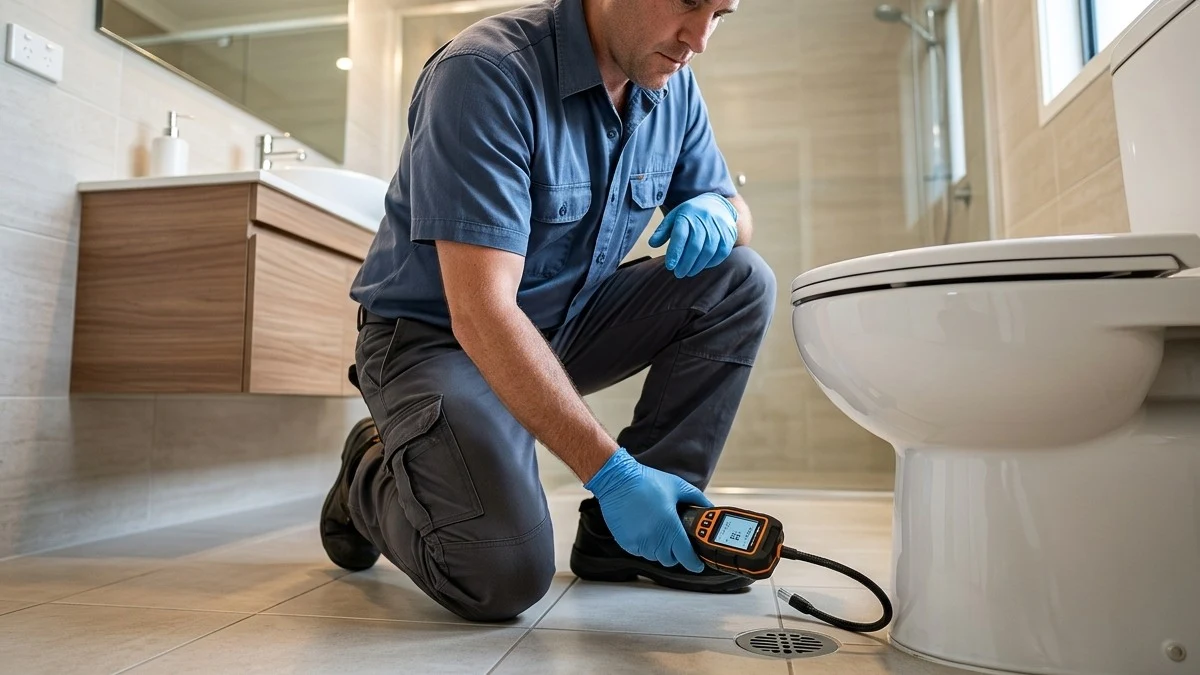
Tragically, many homeowners dismiss intermittent sewer odors as a minor hygiene issue, attempting to mask the scent with aerosol air fresheners, scented candles, or bleach poured into drains. This is exceptionally hazardous. Sewer gas is not merely foul-smelling air; it is a complex, toxic, and potentially explosive chemical cocktail composed of hydrogen sulfide ($H_2S$), methane ($CH_4$), ammonia ($NH_3$), carbon monoxide ($CO$), and airborne pathogenic bioaerosols.
Prolonged exposure causes chronic headaches, severe nausea, dizziness, respiratory inflammation, and eye irritation. At elevated concentrations, hydrogen sulfide induces olfactory fatigue—a terrifying physiological condition where the gas paralyzes human olfactory nerve receptors, rendering occupants incapable of smelling the lethal poison accumulating around them. This comprehensive engineering guide examines the biochemistry of sewer gas, architectural failure vectors, advanced diagnostic smoke testing protocols, and permanent mechanical remediation strategies across Broomfield, Westminster, Thornton, and Denver Metro.
2. Biochemistry & Toxicology: Sulfate-Reducing Bacteria, MIC & Volatile Mercaptans
Sewer gas is the natural byproduct of anaerobic bacterial decomposition of biological human waste, grease, hair, and organic matter inside municipal mains and residential lateral pipes. Its production is driven primarily by anaerobic Sulfate-Reducing Bacteria (SRB), specifically species of the genus Desulfovibrio desulfuricans:
In this biochemical reduction, sulfate ions present in household water supplies react with organic carbon waste to yield gaseous hydrogen sulfide ($H_2S$) and bicarbonate. Furthermore, in the humid, oxygenated headspace of residential vent stacks, aerobic bacteria such as Thiobacillus oxidize this hydrogen sulfide into concentrated biogenic sulfuric acid:
This process, known as Microbially Induced Corrosion (MIC), eats through the crowns of cast iron vent pipes and erodes copper drainage arms, creating structural pinhole perforations that allow sewer gas to escape into wall cavities.

1. Hydrogen Sulfide ($H_2S$): The Rotten-Egg Neurotoxin
Hydrogen sulfide is a colorless, heavier-than-air gas ($density = 1.19\text{ relative to air}$) characterized by a potent rotten-egg odor detectable by human noses at minute concentrations as low as 0.0005 to 0.01 Parts Per Million (PPM). As concentrations increase, its toxicological threat escalates exponentially:
- 10 PPM: The Occupational Safety and Health Administration (OSHA) 8-hour permissible exposure limit. Causes eye irritation, dry throat, and mild coughing.
- 20 to 50 PPM: Moderate respiratory irritation, intense headache, dizziness, nausea, and vomiting. Prolonged exposure causes pulmonary edema.
- 100 to 150 PPM: Olfactory Nerve Paralysis (Olfactory Fatigue). Within 2 to 15 minutes, the gas deadens human smell receptors. Victims falsely believe the danger has passed while toxic inhalation continues unabated!
- 300 to 500 PPM: Rapid chemical asphyxiation, pulmonary hemorrhage, loss of consciousness, and permanent neurological trauma.
- 700+ PPM: Immediate collapse (“knockdown”), respiratory cessation, and fatality within minutes.
2. Methane ($CH_4$): The Invisible Asphyxiant & Explosive Hazard
Methane constitutes up to 60% to 80% of total sewer gas volume. It is a completely odorless, colorless, lighter-than-air hydrocarbon ($density = 0.55\text{ relative to air}$) that migrates upward into upper floor ceilings and attic spaces. Methane acts as a simple asphyxiant by displacing breathable oxygen in confined spaces. More critically, methane possesses a Lower Explosive Limit (LEL) of 5% and an Upper Explosive Limit (UEL) of 15% by volume in air. If methane accumulates inside an unventilated basement mechanical room and encounters an open pilot light from a furnace or water heater, catastrophic gas combustion can occur.
3. Ammonia ($NH_3$), Mercaptans and Volatile Organic Compounds
Beyond hydrogen sulfide and methane, sewer gas contains Methyl Mercaptans ($CH_3SH$), Dimethyl Sulfide ($C_2H_6S$), and heterocyclic nitrogen compounds such as Indole and Skatole. These compounds produce intense, sickening fecal odors detectable at sub-part-per-billion concentrations. Additionally, household cleaning chemicals and solvents washed down drains react to create volatile organic compounds (VOCs) that aggravate respiratory illnesses and degrade home air quality.
3. Architectural Ingress Pathways: P-Traps, Wax Rings, Bernoulli Stack Physics & DFUs
To pinpoint how sewer gas bypasses the plumbing system and enters living spaces, plumbing engineers evaluate five primary mechanical failure pathways:

1. Evaporated Dry P-Trap Liquid Water Seals
Every plumbing fixture—sinks, bathtubs, showers, laundry basins, and basement floor drains—must be equipped with a curved pipe fitting known as a P-trap. Under Uniform Plumbing Code (UPC) and International Plumbing Code (IPC) Section 1002.4, a code-compliant P-trap must maintain a liquid water seal depth between 2 inches (51 mm) and 4 inches (102 mm).
This stationary column of water acts as an impenetrable physical barrier: gas molecules cannot penetrate through 2 inches of liquid water under standard atmospheric pressures. However, in rarely used plumbing fixtures—such as a basement floor drain, an unfinished utility basin, or a guest bathroom shower—this standing water column evaporates. In Colorado’s arid climate, a 2-inch P-trap water seal can completely evaporate in just 14 to 21 days, leaving an open, direct conduit for sewer gases to surge freely into the room.
2. Toilet Wax Ring Deterioration & Mechanical Rocking
The sanitary seal beneath a residential toilet is formed by a compressed ring of refined petroleum wax and polyisobutylene plasticizers molded over a plastic horn. When a toilet is bolted down to the closet flange, the wax deforms plastically, creating a gas-tight, watertight hermetic seal between the porcelain horn and the DWV piping.
If the closet flange bolts loosen, if the underlying subfloor rots from moisture, or if the toilet rocks even slightly when sat upon, the soft wax seal fractures. Because wax possesses zero elastic memory, it cannot re-expand to fill the void. Every time a downstream fixture drains or the municipal sewer surges with air pressure, sewer gas seeps out from beneath the toilet base into the bathroom.
3. Bernoulli Stack Dynamics & Siphonage Physics
In vertical soil and waste stacks, falling slug flow accelerates until reaching terminal velocity ($10\text{ to }15\text{ ft/s}$). Under Bernoulli’s Principle:
The rapidly moving water column entrains air, generating severe dynamic pressure differentials. Without properly engineered atmospheric venting calculated via Drainage Fixture Units (DFUs according to IPC Chapter 9):
- Negative Pneumatic Vacuum (below -1.0 inch w.c.): Sucks the protective water seal out of adjacent sink or tub P-traps (induced siphonage).
- Positive Backpressure (exceeding +1.0 inch w.c.): Forces sewer gas bubbles backward through intact P-trap water seals, expelling foul mist into bathrooms.
4. Cracked, Punctured or Disconnected DWV Vent Stacks
Vertical vent stacks (typically constructed from ABS, PVC, or legacy cast iron) travel vertically through interior 2×4 wall cavities up through the roof envelope. Over decades, structural foundation shifting can shear solvent-welded plastic fittings or snap brittle cast iron hubs. Furthermore, DIY remodelers or trim carpenters routinely drive drywall screws, picture hooks, or baseboard nails directly into concealed vent pipes inside walls. The resulting puncture allows sewer gas to seep silently into wall cavities, migrating into bedrooms and living spaces through electrical outlets and HVAC returns.
4. Forensic Diagnostic Methodologies: Artificial Smoke Testing, PIDs & CCTV Camera Scopes
Locating a microscopic sewer gas leak hidden behind insulated drywall or beneath a tiled concrete slab requires advanced diagnostic instrumentation:
1. High-Output Artificial Non-Toxic Smoke Testing
The gold standard for forensic sewer gas leak detection is Artificial Smoke Testing. A commercial smoke generator utilizing food-grade propylene glycol and liquid paraffin vapor is coupled to a high-capacity centrifugal air blower (delivering 1,500 to 2,000 CFM). The blower is clamped securely over an exterior cleanout riser or roof vent stack, pressurizing the entire residential DWV system with dense, high-visibility white smoke at a controlled pressure of 0.5 to 1.0 inch of water column (approx. 0.036 PSI).
Because this pneumatic pressure matches the operating pressure of plumbing vents without blowing out intact P-traps, smoke travels throughout the entire piping network. Technicians inspect the home with high-intensity forensic lights. Any failed wax ring, cracked vent pipe behind drywall, dry trap, or nail puncture will produce an immediate, unmistakable plume of billowing white smoke, pinpointing the breach with 100% precision!
2. Photoionization Detectors (PID) & Combustible Gas Sniffers
Electronic handheld gas detectors utilize ultraviolet light photoionization sensors to detect volatile sulfur compounds and hydrogen sulfide down to 0.1 PPM. Technicians sweep baseboards, vanity cabinets, toilet rims, and mechanical closets to trace concentration gradients back to the exact physical point of emission.
3. Closed-Circuit Optical Video Camera Scopes
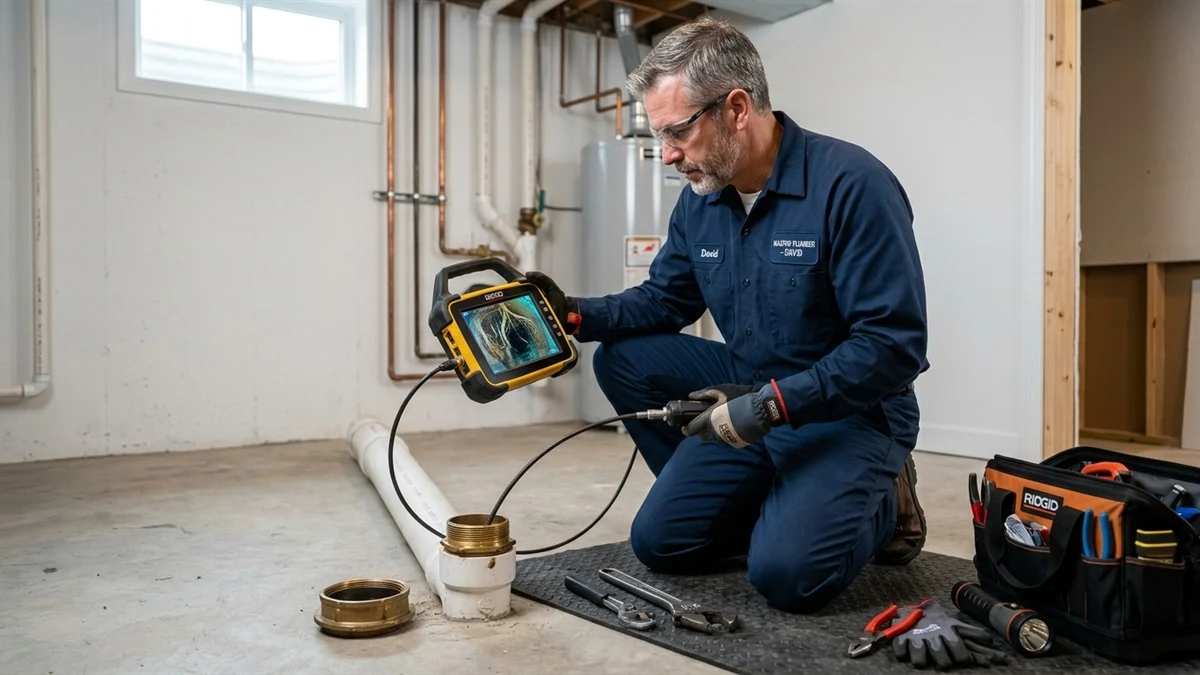
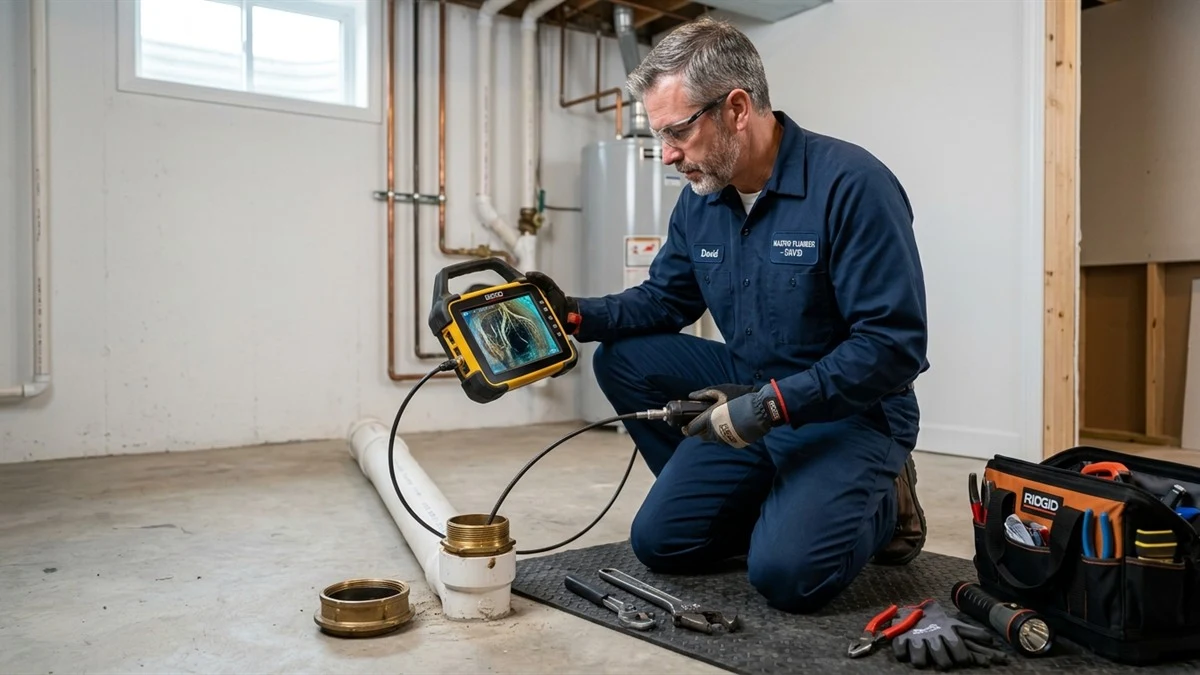
Fiber-optic CCTV push-rod cameras with self-leveling heads and integrated 512 Hz radio sondes are navigated through drain lines and vent stacks. The high-definition optical feed reveals broken pipe joints, separated vent couplings, root intrusions, and internal scale that compromise structural integrity.
4. Differential Digital Manometer Pneumatic Pressure Decay Testing
While smoke testing visually locates gross leaks, verifying that a DWV system is 100% airtight down to microscopic pores requires Digital Manometer Pneumatic Testing according to ASTM and IPC protocols. Technicians isolate the DWV piping network using mechanical inflatable test balls at cleanouts and roof stacks. A digital precision micro-manometer (measuring differential pressure down to 0.1 Pascal or 0.001 inch of water column) is connected to the system.
The system is pressurized to 1.0 inch w.c. (249 Pascals). Under code compliance standards, the system must maintain static pressure without exhibiting a decay rate exceeding 0.10 inches w.c. over a 15-minute dwell interval. If the digital manometer detects a steady decay rate ($\Delta P / \Delta t$), plumbing diagnostic engineers calculate the equivalent orifice leakage area ($A_o$) using fluid discharge mechanics:
This quantitative measurement proves whether odor complaints stem from an imperceptible hairline fissure inside a wall or simply an un-trapped condensate line from an HVAC air handler.
5. Whole-House Stack Effect & HVAC Negative Pressure Dynamics
The migration of sewer gas inside Colorado Front Range homes is often magnified by the Thermal Stack Effect. In winter, warm air inside the home rises buoyantly toward the attic, exfiltrating through recessed light fixtures and ceiling penetrations. This upward air movement creates a continuous negative pressure zone (typically $-3\text{ to }-8\text{ Pascals}$) in the basement and ground floors.
Simultaneously, high-efficiency bathroom exhaust fans (running at 80 to 110 CFM) and powerful kitchen range hoods (discharging 400 to 900 CFM) depressurize the building envelope if dedicated make-up air systems are lacking. This indoor negative pressure acts like an industrial vacuum pump, actively pulling sewer gas upward through compromised toilet wax rings, fractured under-slab piping, or dried floor drain traps that would otherwise remain dormant under balanced neutral atmospheric conditions.
5. Comprehensive Ingress Matrix: Odor Vector vs. Hazard Level vs. Remediation Protocol
The diagnostic matrix below details the primary sewer gas ingress vectors, associated symptoms, hazard severity, and master plumber remediation solutions:
| Ingress Failure Vector | Observable Symptoms & Odor Behavior | Health & Explosion Risk | Permanent Engineering Solution |
|---|---|---|---|
| Evaporated P-Trap Water Seal | Odor emanates directly from open floor drain, guest shower, or wet bar sink. | Moderate: Continuous gas influx into enclosed rooms. | Rehydrate trap with water; install automatic Trap Primer Valve or mechanical silicone trap seal. |
| Failed Toilet Wax Ring Gasket | Odor strongest around toilet base; toilet may wobble or rock slightly on tile. | Moderate-High: Subfloor moisture rot and constant gas leakage. | Pull toilet, repair closet flange, install reinforced rubber horn gasket or commercial wax seal, shim and bolt tight. |
| Vent Stack Siphonage / Blockage | Gurgling sounds from sink drains when toilet flushes; recurring odors after heavy water use. | High: Repeated trap evacuation allows uncontrolled gas surges. | Clear roof vent obstruction (ice caps, bird nests); install auxiliary Air Admittance Valves (AAVs) where appropriate. |
| Cracked or Punctured In-Wall Vent Pipe | Odor permeates bedrooms or hallways without obvious plumbing source; smoke test reveals wall plume. | Severe: Gas accumulates in closed wall cavities and attic spaces. | Perform precision drywall opening; excise cracked section; replace with Schedule 40 PVC and shielded Mission couplings. |
| Loose or Corroded Cleanout Plug | Odor concentrated in basement mechanical room near main stack base. | Severe: Potential methane accumulation near water heater / furnace burners. | Replace corroded brass or stripped plastic cleanout plug; apply Teflon paste and install mechanical expanding rubber plug. |
6. Step-by-Step Mechanical Remediation Protocol: From Trap Primers to Stack Replacement
Restoring a compromised sanitary barrier demands systematic diagnostic execution and master-level plumbing repair:
- Phase 1: Olfactory Triangulation & Electronic Sensor Sniffing:
Close all windows and exterior doors for 60 minutes to allow air to stabilize. Technicians sweep all plumbing zones with a handheld photoionization detector (PID), recording $H_2S$ and volatile hydrocarbon concentrations across floor drains, toilet perimeters, vanity cabinetry, and laundry standpipes.
- Phase 2: Rehydration & Trap Primer Commissioning:
Pour 1 gallon of clean water followed by 2 ounces of food-grade mineral oil into every rarely used floor drain, utility sink, and guest bathroom shower. The mineral oil forms a thin liquid meniscus on top of the water column, cutting evaporation rates by over 90%. For permanent protection, install an automatic Pressure-Drop Trap Primer Valve tied into a nearby lavatory cold water supply line that injects 2 ounces of fresh water into the floor drain every time the faucet is turned on. Alternatively, install an ASSE 1072 certified mechanical floor drain barrier (such as Green Drain or SureSeal) that permits downward drainage while sealing hermetically against upward gas backflow.
- Phase 3: Diagnostic Blower Smoke Pressurization:
If trap rehydration does not resolve the odor, connect the commercial artificial smoke generator to the primary cleanout riser. Seal all roof vent stacks with inflatable rubber test balls. Pressurize the DWV network to 1.0 inch w.c. with dense non-toxic white smoke. Perform a dark-room inspection with high-lumen halogen beams, visually identifying any smoke emerging from baseboards, electrical receptacles, or fixture subfloors.
- Phase 4: Structural Toilet Flange & Wax Seal Reconstruction:
Where smoke escapes around a toilet base, isolate water supply and remove the toilet. Scrape away all old wax from the closet flange and porcelain horn. Inspect the flange for cracks: replace fractured PVC flanges with stainless steel repair rings. Install a modern reinforced rubber horn gasket (such as Fernco Wax-Free or Danco Perfect Seal) that features flexible elastomeric seals that accommodate structural floor movement without rupturing. Shim the toilet perfectly level and torque closet bolts evenly to 30 inch-pounds.
- Phase 5: In-Wall Vent Stack Surgical Repair:
When smoke testing confirms a cracked or nail-punctured vent stack inside a wall, make a surgical drywall incision directly at the smoke source. Cut out the damaged pipe section using a ratcheting pipe cutter. Splice in a new section of Schedule 40 DWV pipe utilizing heavy-duty, stainless steel-shielded elastomeric transition couplings (Mission or Proflex couplings) torqued to 60 inch-pounds to guarantee gas-tight and shear-resistant performance.
- Phase 6: Final Electronic Clearance Testing:
Ventilate the structure thoroughly. Re-pressurize the DWV network and verify zero drop on a digital manometer over a 15-minute test period. Re-scan the living areas with electronic $H_2S$ sensors to certify that ambient air reads 0.00 PPM, confirming complete restoration of the sanitary barrier.
7. Colorado Front Range Submarket Profiles: Arid Winter Evaporation & Frozen Roof Vents
Sewer gas dynamics along the Colorado Front Range are heavily influenced by our semi-arid climate, high elevation, and extreme winter temperature swings:
- Broomfield (Anthem, Broadlands, Country Vista, McKay Landing): During Colorado’s arid winter months, indoor relative humidity levels frequently plummet to 10% to 18%. This extreme dryness accelerates liquid evaporation inside basement floor drains and mechanical room traps. Furthermore, Broomfield’s notorious bentonite clay soil shifts can exert vertical heave on basement concrete slabs, stressing and cracking PVC drain arms beneath the concrete.
- Westminster (Standley Lake, Countryside, Shaw Heights): Older homes built in the 1960s and 1970s often feature cast iron DWV stacks with lead-and-oakum joints. Decades of acidic sewer gas exposure cause “graphitization”—a form of corrosion where iron leaches out, leaving brittle graphite that develops hairline fissures behind finished bathroom plaster walls.
- Thornton & Northglenn (Grange Creek, Woodglen, Hunters Glen): Rapid winter freeze-thaw cycles frequently cause roof vent stack frost closure. Warm, humid sewer air rising up the vent stack freezes upon contacting the sub-zero exterior metal pipe terminal, gradually building an ice cap that completely seals the vent. The trapped sewer gases are forced backward down through household P-traps into living spaces. Installing an insulated or upsized 3-inch roof vent increaser prevents frost bridging.
- Arvada & West Denver (Leyden Rock, Candelas, Olde Town): Foothill homes at elevations above 5,600 feet experience significant barometric pressure drops during passing winter bomb-cyclone storm systems. Rapid drops in atmospheric barometric pressure draw sewer gas out through microscopic fissures that remain undetectable during high-pressure fair weather.
- Louisville, Lafayette & Superior: Highly insulated modern homes constructed to strict energy conservation codes have low air-exchange rates (under 2.0 ACH50). When a minor sewer gas breach occurs in these tightly sealed building envelopes, toxic gases cannot dissipate, concentrating quickly to dangerous levels.
8. Transparent Cost Matrix: Diagnostic Smoke Testing vs. Structural Wall Repair
Remediating sewer gas issues early prevents costly drywall demolition and eliminates dangerous toxic exposure:
| Diagnostic / Repair Service | Typical Investment Range | Scope of Work Included | Expected Longevity |
|---|---|---|---|
| Professional Diagnostic Smoke Test | $450 – $750 | Full-system blower smoke pressurization, roof stack test, electronic sensor sweep. | Pinpoints 100% of hidden leaks with zero guesswork. |
| Toilet Wax Ring & Flange Replacement | $220 – $380 | Pull toilet, flange reconstruction, new rubber horn seal, stainless bolts, level & shim. | 15 to 20+ Years with rubber elastomeric gasket. |
| Automatic Trap Primer Valve Retrofit | $350 – $550 | Install pressure-drop primer valve on supply line; route PEX primer line to floor drain. | Permanent automated floor drain rehydration. |
| In-Wall Vent Stack Surgical Repair | $650 – $1,400 | Drywall access, excision of cracked pipe, shielded Mission couplings, pressure test. | 50+ Years (Schedule 40 PVC code-compliant repair). |
9. Comprehensive Extended FAQ Section
Q1: Can sewer gas in my house make my family sick?
Yes. Inhaling sewer gas exposes occupants to hydrogen sulfide ($H_2S$), ammonia, and methane. Symptoms of low-level exposure include chronic headaches, fatigue, dizziness, sinus congestion, nausea, and burning eyes. Prolonged exposure can worsen asthma and trigger chronic respiratory illness. If anyone experiences severe dizziness or confusion, evacuate immediately and call emergency plumbing diagnostics.
Q2: Why does the sewer smell appear only in the winter months?
Two factors drive winter sewer gas outbreaks in Colorado: (1) Arid indoor heating drops indoor relative humidity to 10-15%, accelerating water evaporation in rarely used P-traps; and (2) Sub-zero outdoor temperatures cause condensation in roof vent stacks to freeze, forming an ice plug that forces sewer gases downward into household fixtures.
Q3: Will pouring bleach down the drain eliminate sewer gas odors?
No! Pouring bleach or chemical drain cleaners down the drain only treats surface biofilm in the fixture basin; it does nothing to fix an evaporated P-trap, cracked vent stack, or broken wax ring. Furthermore, mixing bleach with ammonia compounds in sewer gas can produce dangerous, toxic chloramine vapors!
Q4: How does an artificial smoke test work to find sewer gas leaks?
A specialized blower injects dense, non-toxic, food-grade glycol white smoke under 1.0 inch of water column pressure into your plumbing vent system while roof vents are capped. As the smoke fills the pipes, it escapes through any crack, puncture, failed wax ring, or dry trap, creating a visible smoke plume that pinpoints the leak without tearing down walls.
Q5: How can I tell if my toilet wax ring is leaking sewer gas?
Common signs of a failed wax ring include: (1) An intermittent or continuous sewer odor strongest around the base of the toilet; (2) Slight movement or rocking when sitting down on the toilet; (3) Water seepage around the toilet base after flushing; or (4) Spongy, stained subflooring surrounding the toilet perimeter.
Q6: What is a trap primer, and why do I need one in my basement?
A trap primer is an automatic plumbing valve connected to a domestic cold water supply line. Every time a nearby faucet is turned on, the valve detects a minor pressure drop and discharges a metered shot of water (approx. 2 ounces) into the basement floor drain P-trap, preventing the water seal from evaporating in dry weather.
Q7: What does it mean when my sink drain makes a gurgling noise?
A gurgling sink or shower drain indicates that your DWV venting system is restricted or undersized. When a large volume of water drains down the main stack, a partial vacuum forms that sucks air—and water—through the P-trap with a distinct bubbling sound, siphoning away the protective water barrier.
Q8: Is sewer gas an explosion hazard in residential basements?
Yes. Methane constitutes a major component (up to 60-80%) of sewer gas. Methane is combustible between 5% and 15% concentrations in air (Lower and Upper Explosive Limits). If an open or fractured sewer pipe discharges methane into a closed, unventilated mechanical room containing an operating water heater or gas furnace burner, the open pilot flame or hot surface igniter can trigger an explosion. Prompt detection and forced mechanical ventilation are critical safety mandates.
Q9: Can tree roots cause sewer gas to enter my home?
Yes. Tree roots fracturing an underground sewer lateral compromise the pipe’s hydraulic seal. Sewer gas can escape through the fractured pipe into the porous soil beneath the house foundation, percolating upward through foundation cracks, sump basins, and expansion joints into living spaces.
Q10: Are rubber toilet gaskets better than traditional wax rings?
Yes. Modern rubber horn gaskets (such as high-density silicone or elastomeric closed-cell foam seals) offer significant engineering advantages over traditional petroleum wax: they maintain permanent elastic shape memory, accommodate subfloor movement and toilet rocking without breaking, provide a positive mechanical lock over the closet flange horn, and can be repositioned multiple times during toilet installation without tearing or requiring replacement.
Q11: What is an Air Admittance Valve (AAV), and is it code-compliant in Colorado?
An Air Admittance Valve (AAV), certified under ASSE 1050 and ASSE 1051 standards, is a specialized one-way pressure-activated mechanical vent. Under negative drainage pressure ($-0.01\text{ PSI}$), the internal silicone diaphragm lifts, admitting atmospheric air to balance DWV pressure and protect the P-trap water seal. Once pressure equalizes, gravity drops the diaphragm tightly against its seat, preventing sewer gas escape. AAVs are permitted under the International Plumbing Code (IPC Section 918) when installed in accessible, ventilated spaces at least 4 inches above the horizontal branch drain.
Q12: Does homeowner’s insurance cover sewer gas diagnostic smoke testing and repairs?
Standard policies generally exclude wear-and-tear repairs like dried P-traps or failed wax rings. However, if the sewer gas leak results from sudden accidental damage (such as an exterior tree root break or nail puncture from a contractor), or if you carry an optional Water/Sewer Backup endorsement, diagnostic testing and repair costs may be eligible for coverage.
10. 24/7 Emergency Sewer Gas Detection & Diagnostic Smoke Testing
Smelling Sewer Gas Inside Your Home?
Do not risk your family’s health or toxic exposure. Our licensed master plumbers utilize non-invasive artificial smoke testing, electronic PID sensors, and fiber-optic camera scopes to pinpoint and eliminate sewer gas leaks across Broomfield, Westminster, Thornton, and Denver Metro.