
Table of Contents: Toilet Gurgling Diagnostic Guide
- 1. Executive Summary: The Acoustic Anatomy of a Gurgling Toilet
- 2. Fluid Mechanics & Venting Physics: Negative Pressure vs. Positive Backpressure
- 3. Comprehensive Diagnostic Reaction Matrix: What Each Sound Means
- 4. Roof Vent Stack Failures: Bird Nests, Leaves & Colorado Winter Ice Dams
- 5. Main Sewer Line Restrictions: The Early Warning Stage of a Major Backup
- 6. What Homeowners Can Safely Check: Safe Troubleshooting Protocol
- 7. Critical Warnings: What NOT to Do When a Toilet Gurgles
- 8. How Master Plumbers Diagnose & Isolate the Gurgle Origin
- 9. Front Range Regional Nuances: High Altitude Vents & Bentonite Shifts
- 10. Transparent Diagnostic & Repair Pricing Breakdown
- 11. Comprehensive Extended FAQ Section (12 Detailed Questions)
- 12. Schedule Professional Drain & Vent Diagnostic Service
1. Executive Summary: The Acoustic Anatomy of a Gurgling Toilet
You step out of a relaxing evening shower in your upstairs bathroom, reach for a towel, and suddenly hear an unsettling, rhythmic bubbling sound echoing through the room. Across the bathroom, the water inside your toilet bowl is violently pulsating, rocking back and forth, and releasing deep, hollow gurgles like a simmering pot of water. Or perhaps your washing machine is mid-rinse in the laundry room, and every time the high-speed discharge pump fires, the powder room toilet down the hall bubbles and burps sewer gas into the air.
To the average homeowner, a gurgling toilet seems like an isolated annoyance—a bizarre acoustic curiosity that can easily be ignored until the weekend. However, in the science of sanitary drainage engineering, a gurgling toilet is never an isolated toilet issue. A toilet bowl contains a self-sealing internal porcelain weir trap filled with standing water. Under normal hydraulic conditions, that water should remain completely motionless unless the flush lever is physically depressed.

When air bubbles forcefully break upward through the standing water seal of your toilet bowl, or when the water level is suddenly siphoned dry, you are witnessing an unmistakable physical distress signal from your home’s Drain-Waste-Vent (DWV) system. The gurgling sound is literally your plumbing system “gasping for breath” or struggling against an impenetrable downstream hydraulic wall. Left unaddressed, a gurgling toilet almost always progresses into a full-scale Category 3 blackwater sewer backup within days or weeks.
For homeowners across the Colorado Front Range—including the communities of Broomfield, Westminster, Thornton, Louisville, Superior, Lafayette, and Arvada—toilet gurgling is frequently amplified by regional environmental conditions. Our high-altitude barometric pressures, severe winter freeze-thaw cycles that cap rooftop vent pipes with frost rime, and expansive clay soils that shift buried sewer laterals make early diagnostic intervention essential to protect your home from catastrophic structural flooding.
2. Fluid Mechanics & Venting Physics: Negative Pressure vs. Positive Backpressure
To accurately diagnose why a toilet gurgles when an adjacent shower, sink, or washing machine drains, one must understand the dual hydraulic and pneumatic forces governing a modern sanitary drainage network. Every properly installed plumbing fixture relies on an interconnected balance of liquid displacement and atmospheric airflow.
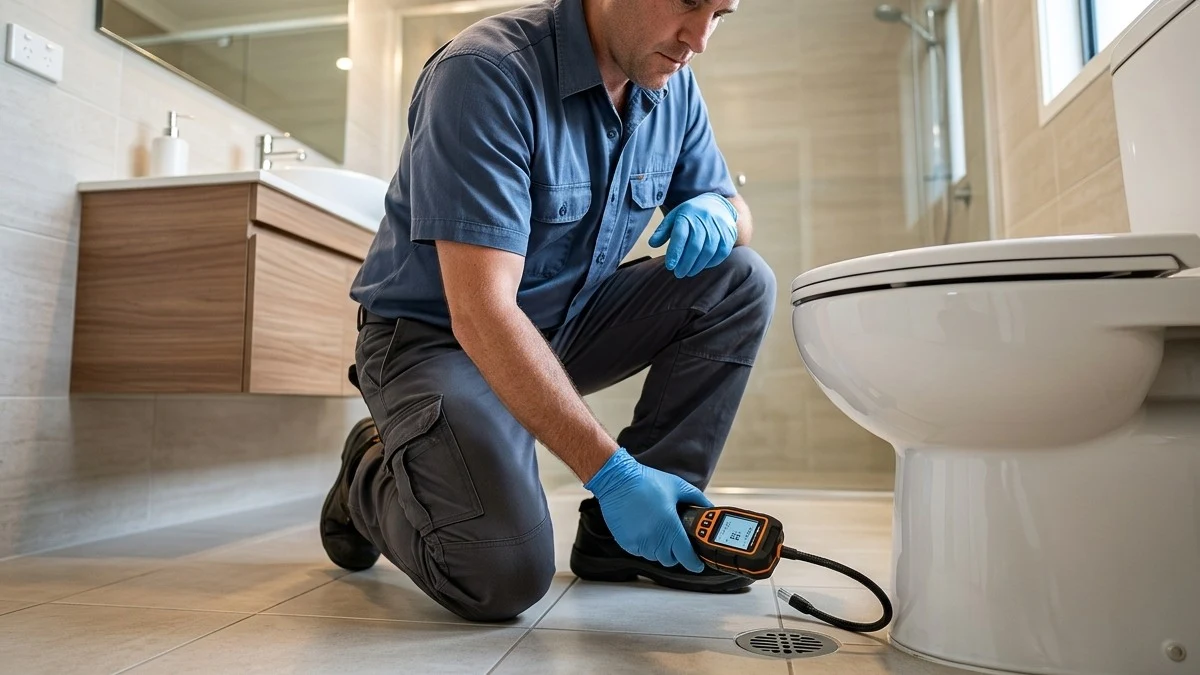
When you drain a bathtub containing 40 gallons of water, that heavy fluid rushes down a 1.5-inch or 2-inch drain pipe at velocities exceeding four feet per second. In fluid mechanics, a continuous cylinder of moving water acts precisely like a solid piston advancing inside an enclosed tube. As the water rushes downward through the pipe, it creates two distinct pressure zones:
- Negative Air Pressure (Vacuum Zone Behind the Flow): As the slug of water travels down the vertical pipe stack, it displaces the air in front of it and pulls a powerful negative pressure vacuum behind it. If the vertical plumbing vent pipe penetrating your roof is completely clear, atmospheric air is drawn effortlessly into the top of the stack, neutralizing the vacuum. However, if the roof vent is blocked by debris, snow, or an ice dam, the vacuum has nowhere to breathe. In desperate search of air to equalize the pressure, the vacuum reaches into the nearest fixture—the toilet bowl—and pulls air straight through the toilet’s water trap. This siphons the water out of the bowl with an audible sucking, gurgling gasp.
- Positive Backpressure (Compressed Air Pocket Ahead of the Flow): Conversely, as that same heavy slug of water travels toward the main sewer lateral, it compresses the air trapped in the pipe ahead of it. Under normal conditions, that air escapes smoothly downstream into the large municipal sewer collector main. However, if your 4-inch main sewer line has developed a partial blockage (caused by tree root intrusion, accumulated grease, or a settled pipe belly), the forward path of the air is blocked. The compressed air is forced backward up the branch line and erupts upward through the toilet’s water trap seal, releasing violent air bubbles and foul sewer gas into your bathroom.
Understanding whether your toilet is experiencing **negative vacuum siphoning** or **positive compressed backpressure** is the critical diagnostic key that separates an inexpensive rooftop vent clearing from an emergency main sewer line intervention.
3. Comprehensive Diagnostic Reaction Matrix: What Each Sound Means
Plumbing acoustics and fixture cross-talk provide clear evidence of what is happening inside the walls. Use this comprehensive diagnostic matrix to map your home’s symptoms to the root mechanical cause:
| Operating Fixture | Observed Toilet Reaction | Water Level Movement | Most Probable Mechanical Cause | Diagnostic Action Required |
|---|---|---|---|---|
| Draining Bathroom Shower / Tub | Toilet bubbles violently; water rocks back and forth | Water level rises slightly, then returns to normal | Shared bathroom wet-vent restriction or localized branch clog | Snake shared 2-inch horizontal branch drain line serving bathroom group. |
| Draining Bathroom Sink | High-pitched whistling or deep sucking sound in toilet | Water level gets sucked downward, breaking trap seal | Clogged vertical vent stack (vacuum siphoning air through bowl) | Inspect rooftop plumbing vent terminal; clear bird nests, leaves, or frost caps. |
| Running Clothes Washing Machine | Loud gurgling during high-speed pump discharge | Bubbles break through; sewage odor fills room | Partial main sewer lateral blockage (pipe cannot handle 20 GPM surge) | HIGH URGENCY; inspect exterior cleanout; perform sewer camera survey. |
| Flushing Toilet Itself | Flush hesitates; bowl fills near brim before slowly draining | Sluggish swirl; incomplete flush cycle | Foreign object lodged in toilet internal trapway or wax ring restriction | Use toilet closet auger; pull toilet and replace wax ring seal if necessary. |
| Running Kitchen Sink Garbage Disposal | Downstairs or basement toilet gurgles steadily | Water level vibrates; sewer gas smell present | Main building drain grease constriction under basement slab | Commercial hydro jetting to scour grease buildup from under-slab building drain. |
4. Roof Vent Stack Failures: Bird Nests, Leaves & Colorado Winter Ice Dams
If your diagnostic symptoms point toward negative pressure (the toilet water is being sucked downward accompanied by a hollow gasping sound), the problem is almost universally located at the very top of your home: the vertical plumbing vent stack penetrating your roofline.

A standard residential plumbing vent stack is a 2-inch to 4-inch open pipe that extends upward from your drainage network and exits through your roof decking. It does not carry water; its sole purpose is to equalize atmospheric air pressure inside your drainage pipes. Because roof vent pipes are completely open to the outdoor elements, they are vulnerable to three primary environmental failures:
- Colorado Winter Frost Capping (Frost Rime & Ice Dams): In the Colorado Front Range, winter temperatures frequently drop into the single digits and below zero for days at a time. The air inside your plumbing drainage system is warm, moist, and humid due to hot showers and dishwasher cycles. As this warm water vapor rises through the vertical vent stack and reaches the freezing sub-zero air at the roof penetration, the moisture instantly condenses and freezes against the cold inner rim of the pipe. Over 48 hours of sustained freezing weather, layers of ice crystals (frost rime) build inward like a frozen doughnut, eventually sealing the 2-inch or 3-inch pipe completely shut. This is why many Colorado homeowners notice their toilets begin gurgling during Arctic cold snaps in January and February.
- Bird, Rodent, and Insect Nests: In spring and summer months, migratory birds (such as starlings and sparrows) and tree squirrels search for safe, warm nesting cavities. An open plumbing vent pipe looks like a hollow tree limb. Birds drop twigs, straw, grass, and mud down into the pipe to build nests. If a bird drops nesting material several feet down a vent pipe bend, the debris packs tightly, creating an airtight biological cork.
- Autumn Foliage & Debris Accumulation: In established Front Range neighborhoods like Shaw Heights in Westminster or Old Town Louisville, towering cottonwoods, maples, and pine trees drop massive amounts of leaves, seed pods, and needles every autumn. Windstorms drive this organic debris directly down open rooftop vent terminals, where it combines with rising moisture to form dense, decomposing sludge plugs.
5. Main Sewer Line Restrictions: The Early Warning Stage of a Major Backup
If your diagnostic symptoms point toward positive backpressure (air bubbles are being pushed violently upward through the toilet water accompanied by foul odors), the issue is far more serious than a simple roof vent clog. You are dealing with an **active restriction in your home’s 4-inch main sewer lateral**.
A main sewer line restriction represents the intermediate warning stage of a total drainage collapse. When a tree root ball, heavy grease accumulation, or settled pipe belly obstructs 70 to 85 percent of the pipe’s internal diameter, water can still trickle slowly past the obstruction during low-volume use (like washing your hands at a bathroom faucet). However, the moment a high-volume fixture discharges—such as a 1.6-gallon toilet flush or a 20-gallon washing machine pump cycle—the surge of water hits the restriction like a brick wall.
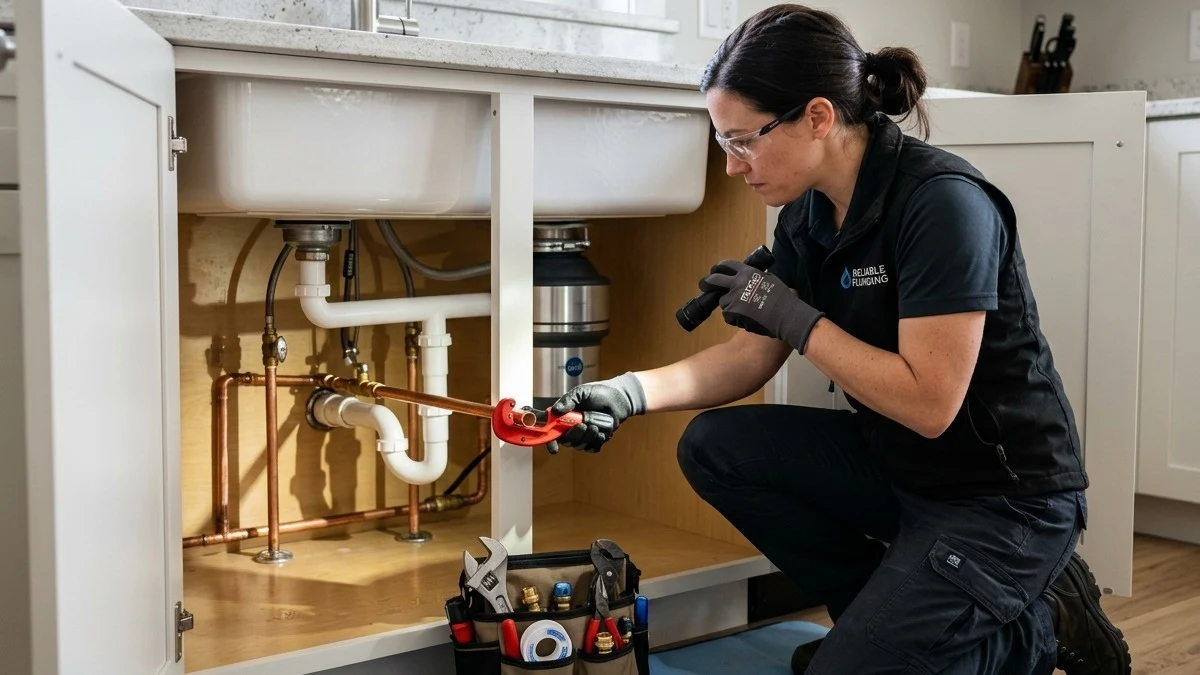
Because the water cannot evacuate rapidly through the restricted opening, the column of moving wastewater compresses the air trapped in front of it. That compressed air must find an immediate exit. The air seeks the path of least physical resistance, traveling backward up the nearest branch lines and exploding outward through the standing water seal of your toilet bowl. **A toilet that gurgles when a washing machine, shower, or other toilet is flushed is an emergency alert that a catastrophic basement sewage backup is imminent.**
6. What Homeowners Can Safely Check: Safe Troubleshooting Protocol
Before calling for emergency dispatch, homeowners can perform these four safe, non-invasive troubleshooting steps to gather critical diagnostic data:
- Step 1: Check All Other Plumbing Fixtures for Drainage Speed: Walk through every room in your home and systematically test fixtures. Does the kitchen sink drain smoothly, or is it sluggish? Does the water in the basement shower pan rise when the upstairs toilet is flushed? If the gurgling is isolated to a single bathroom group, the issue is likely a localized branch line clog. If fixtures across multiple rooms or on different floors are affected, the main sewer line is restricted.
- Step 2: Visually Inspect the Roof Vent Terminal (From Ground Level): Step outside into your yard with a pair of binoculars and locate the plumbing vent pipes penetrating your roofline (typically 2-inch to 4-inch black ABS or white PVC pipes extending 12 to 18 inches above the shingles). During winter months, check whether the pipe is completely capped over with a dome of white frost, snow, or ice. In autumn, check if overhanging tree branches are dropping heavy foliage directly over the terminal opening. *Safety Warning:* Never climb onto a steep, snowy, or icy roof to inspect a vent pipe; leave rooftop clearing to licensed professionals equipped with fall protection harness systems.
- Step 3: Perform the Multi-Fixture Flush Test: Have one person stand in the bathroom observing the gurgling toilet with a flashlight while a second person operates another fixture. First, run the bathroom vanity sink faucet on high for 60 seconds. Note whether the toilet water moves. Next, fill the adjacent bathtub with 4 inches of water and pull the drain plug. Observe if the toilet bubbles continuously as the tub drains. Finally, flush an upstairs or adjacent toilet. Documenting which specific fixture triggers the gurgling allows our diagnostic technicians to immediately trace the exact piping branch involved.
- Step 4: Inspect Exterior Yard Cleanouts: Walk outside to your front foundation landscaping and locate your exterior PVC or cast iron sewer cleanout caps. Gently inspect whether water is weeping from the threaded cap seals or if the soil around the cleanout is soft, saturated, or emitting sewer odors. If sewage is weeping from an exterior cleanout riser, the main lateral is backed up downstream, and immediate professional cabling or hydro jetting is required.
7. Critical Warnings: What NOT to Do When a Toilet Gurgles
When confronted with a gurgling toilet, well-intentioned DIY attempts frequently transform a minor venting or branch issue into an expensive plumbing catastrophe. Strictly avoid these dangerous practices:
- Never Pour Chemical Drain Cleaners Into a Gurgling Toilet: Liquid chemical drain cleaners (containing sulfuric acid or sodium hydroxide/lye) are engineered exclusively for localized sink clogs; they should never be introduced into a toilet bowl. Caustic chemicals generate intense heat through chemical reactions that will crack porcelain toilet bowls, melt wax ring seals beneath the toilet base, and soften PVC drainage fittings. Furthermore, when the chemical fails to clear the downstream blockage, it creates a pool of burning caustic fluid that puts visiting plumbing technicians at risk of severe chemical burns.
- Do Not Repeatedly Flush a Hesitant or Gurgling Toilet: If a toilet hesitates and gurgles during a flush cycle, do not repeatedly press the flush handle hoping it will “force its way through.” Each flush deposits 1.6 to 3.5 gallons of water into an already restricted pipe. Repeated flushing guarantees that the bowl will overflow, sending dirty water cascading across your bathroom floor and through the ceiling below.
- Never Use a Standard Sink Snake Inside a Toilet: Feeding a small, bare-metal hardware store drain snake directly into a toilet bowl will permanently scratch, gouge, and destroy the porcelain glaze inside the bowl. To snake a toilet safely, technicians utilize a specialized **closet auger** equipped with a protective vinyl sleeve that shields the porcelain while navigating the internal trapway.
- Never Pour Boiling Water Into a Cold Toilet: During Colorado winter months, porcelain toilet fixtures are cold. Pouring boiling water directly into a cold porcelain bowl causes rapid thermal shock that will instantly crack the vitreous china bowl from top to bottom, resulting in sudden, expensive flooding.
8. How Master Plumbers Diagnose & Isolate the Gurgle Origin
When our licensed master plumbing specialists arrive to diagnose a gurgling toilet, they follow an established, non-destructive diagnostic procedure designed to isolate the exact mechanical failure point:
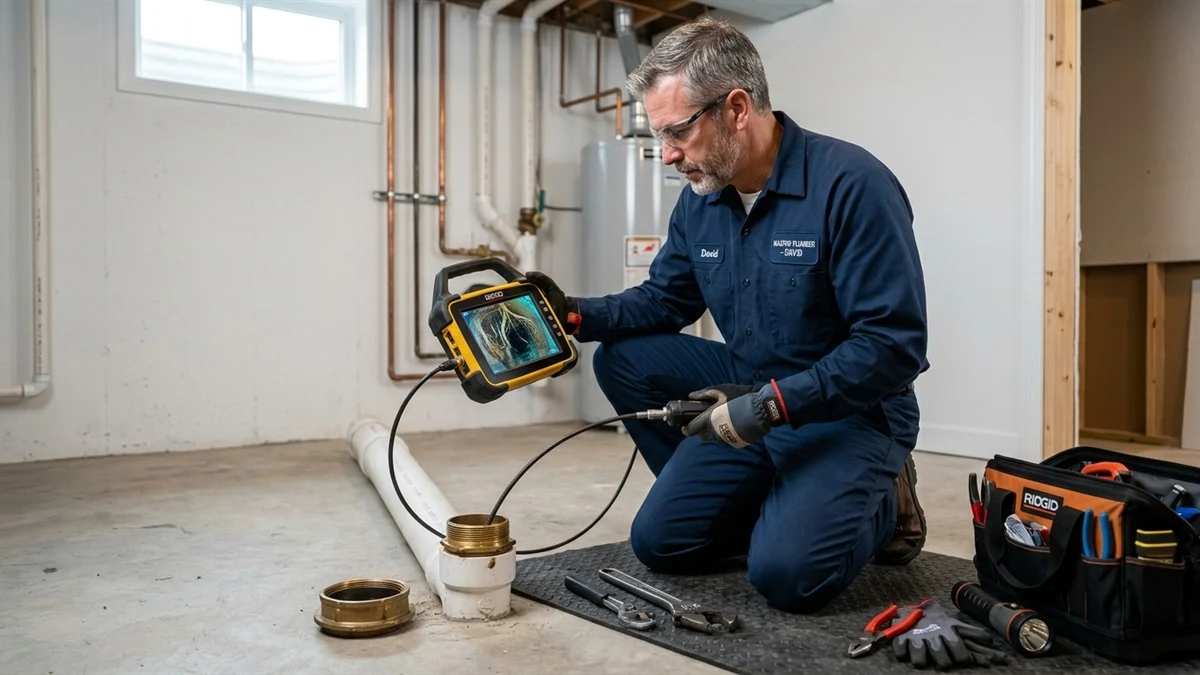
First, the technician tests the entire fixture group to observe hydraulic cross-talk firsthand. Using sensitive digital manometer pressure gauges connected to fixture drain ports, the technician measures the exact positive backpressure or negative vacuum levels generated during drainage cycles.
Second, if negative vacuum siphoning is indicated, the technician inspects the vertical vent stack. Using specialized rooftop access safety gear, the technician drops a high-definition color inspection camera down the vertical vent stack from the roofline, visually mapping any bird nests, frost caps, leaf plugs, or broken vent piping inside the wall framing.
Third, if positive backpressure is detected, the technician accesses the main sewer cleanout. A self-leveling fiber-optic sewer camera equipped with an onboard 512 Hz radio transmitter sonde is fed down the entire 4-inch sewer lateral out to the municipal street tap. The camera survey reveals whether the gurgling is caused by invasive tree roots, heavy culinary grease accumulation, an offset pipe joint, or a settled pipe belly that requires high-pressure hydro jetting or trenchless pipe repair.
9. Front Range Regional Nuances: High Altitude Vents & Bentonite Shifts
Plumbing ventilation and drainage behavior along the Colorado Front Range are shaped by regional environmental and geological factors that differ significantly from lower-altitude markets:
- High-Altitude Barometric Atmospheric Pressure: Cities along the Front Range sit at elevations between 5,000 and 5,500 feet above sea level. At this altitude, atmospheric pressure is roughly 12.2 PSI compared to 14.7 PSI at sea level. This lower barometric density reduces the natural buoyancy of warm sewer air inside vertical vent stacks, making high-altitude drainage systems more sensitive to minor venting restrictions and airlocks than systems in coastal cities.
- Severe Sub-Zero Freeze Cycles (Frost Rime Capping): During Arctic cold fronts sweeping down from Canada across Adams and Boulder counties, prolonged temperatures of -5°F to -15°F cause rapid frost rime accumulation inside rooftop vent terminations. Smaller 2-inch vent stacks freeze closed within 24 to 48 hours, causing sudden, widespread toilet gurgling across entire neighborhoods. Installing code-compliant 3-inch or 4-inch insulated vent increasers through the roof deck prevents frost capping.
- Expansive Bentonite Clay Soil Heaving: Expansive clay soils throughout Broomfield, Westminster, and Thornton continuously swell and contract with seasonal moisture changes. This underground ground movement frequently creates minor sags and reverse-slope “bellies” in horizontal sewer laterals. Water and solid waste pool in these depressions, creating partial hydraulic dams that compress air and trigger recurring fixture gurgling every time laundry or bathtubs drain.
10. Architectural Code Compliance: IPC vs. UPC Wet Venting Diameter Calculations
In residential plumbing design, preventing fixture gurgling begins during initial architectural rough-in through strict adherence to the International Plumbing Code (IPC Section 912) and Uniform Plumbing Code (UPC Section 908) governing horizontal wet venting.
Under sanitary code engineering, a wet vent must be sized proportionally to the total Drainage Fixture Unit (DFU) load connected to the branch. For a typical bathroom group consisting of a water closet (toilet: 3 DFUs), a lavatory vanity sink (1 DFU), and a shower/bathtub combination (2 DFUs), the minimum horizontal wet vent diameter cannot be smaller than 2 inches. If an inexperienced remodeler attempts to connect a shower or laundry standpipe into an undersized 1.5-inch branch arm, the volume of moving water will completely fill the cross-sectional area of the pipe, choking off atmospheric air and causing unavoidable, severe toilet gurgling.
Furthermore, the maximum developed horizontal length between a fixture’s P-trap weir and its protective vent connection (the trap-to-vent distance) is strictly limited by code. For a standard 2-inch drain pipe pitched at 1/4-inch per foot, the vent must connect within 8 feet of the fixture trap. Exceeding this distance allows the liquid waste to form a solid hydraulic slug that siphons trap water seals dry, releasing dangerous sewer gas directly into the bathroom.
10. Transparent Diagnostic & Repair Pricing Breakdown
Resolving a gurgling toilet should never involve predatory diagnostic fees or unexpected upcharges. Below is a transparent breakdown of baseline industry investments across the Colorado Front Range:
- Standard Toilet Augering (Closet Auger Clearing): $175 – $275 (Clears foreign objects or tissue stoppages lodged within the toilet’s internal porcelain trapway).
- Rooftop Plumbing Vent Stack Mechanical Clearing: $250 – $450 (Includes rooftop access safety setup, mechanical cabling down vertical vent stack, and clearing bird nests/ice dams).
- Heavy-Duty Branch Line Snaking: $250 – $475 (Clears localized 2-inch horizontal bathroom or laundry branch drain lines to eliminate fixture cross-talk).
- High-Definition Fiber-Optic Sewer Camera Survey: $250 – $450 (Includes complete narrated color video inspection, digital recording, and 512 Hz radio surface locating).
- Commercial High-Pressure Hydro Jetting: $650 – $1,400 (Scours 100% of grease, scale, and root intrusions from the 4-inch main sewer lateral, completely restoring open-channel airflow).
- Frost-Proof Roof Vent Increaser Installation: $350 – $650 (Upgrades undersized 2-inch vent penetrations to insulated 3-inch or 4-inch terminals to permanently eliminate winter freeze capping).
11. Comprehensive Extended FAQ Section
Q1: Is a gurgling toilet an emergency that requires immediate attention?
Yes. While a gurgling toilet does not immediately flood your home, it is a definitive diagnostic warning that your drainage or venting system has developed a severe restriction. Left unaddressed, a gurgling toilet almost always progresses into a full-scale Category 3 sewage backup that overflows through basement floor drains and lower-level fixtures within days.
Q2: Why does my toilet gurgle only when the washing machine drains?
Modern clothes washing machines discharge dirty wash water at high flow rates—frequently delivering 15 to 20 gallons per minute during the rapid pump-out cycle. This sudden, high-velocity surge of water fills the diameter of your drainage pipe. If downstream piping is partially restricted or if the system is improperly vented, the surge pushes a wave of compressed air backward, which erupts through your toilet trap seal as bubbling gurgles.
Q3: Can a clogged toilet cause the shower drain to gurgle?
Yes. In modern bathroom groups, the toilet, sink, and shower share a common horizontal branch drain and vent line (a configuration known as “wet venting”). If a blockage forms downstream of the toilet and shower junction, flushing the toilet forces air and water into the shower P-trap, causing the shower drain to bubble, gurgle, and emit foul odors.
Q4: How do I know if my roof plumbing vent is clogged?
Common symptoms of a clogged roof vent include: toilets that gurgle or hiss when sinks drain; slow, sluggish drainage across multiple fixtures despite clean P-traps; persistent sewer gas odors inside bathrooms; and toilet bowl water levels that visibly drop or get siphoned dry after a shower runs.
Q5: Can I clear a clogged roof vent myself with a garden hose?
We strongly advise against this. Climbing onto a residential roof carries severe fall hazards, especially during cold or wet weather. Furthermore, inserting a pressurized garden hose down a clogged vent can flood your attic or walls if the pipe has cracked or if water overflows the top of the stack.
Q6: Why does my toilet water rock back and forth on windy days?
On windy days, strong gusts blowing across your roof create localized barometric pressure drops across the open vent stack (the Bernoulli effect). This atmospheric fluctuation acts like a gentle vacuum, causing the water in your toilet bowl to ripple, oscillate, and rock back and forth without any water running in the home.
Q7: What is an air admittance valve (AAV), and can it stop a toilet from gurgling?
An Air Admittance Valve (AAV, or “Studor vent”) is a one-way mechanical valve that allows air to enter a plumbing drainage system to equalize vacuum pressure while preventing sewer gases from escaping. AAVs are frequently installed on kitchen islands and remodel fixtures where connecting to a roof vent is impractical. However, an AAV only relieves negative vacuum; it cannot relieve positive compressed backpressure caused by a main line sewer blockage.
Q8: Can tree roots cause a toilet to gurgle?
Yes, tree root intrusion is the leading cause of toilet gurgling in older homes. Roots penetrate clay and cast iron pipe joints, expanding into dense biological nets that block 80% or more of the pipe’s internal diameter. Air trapped in front of draining water cannot pass the root mass and is forced backward through the toilet bowl.
Q9: Why does my toilet smell like sewage when it gurgles?
The water resting in your toilet bowl forms a physical liquid seal that blocks toxic, flammable sewer gases (methane, hydrogen sulfide) from entering your home. When air bubbles break through that seal or when vacuum siphons the water away, the barrier is broken, allowing concentrated sewer gas to escape directly into your bathroom.
Q10: What is a wet vent in residential plumbing?
A wet vent is a specially engineered drain pipe that serves dual purposes: it conveys liquid wastewater from an upstream fixture (such as a bathroom lavatory) while simultaneously serving as the atmospheric air vent for a downstream fixture (such as a toilet or bathtub). If the wet vent develops a partial clog, both drainage and venting fail simultaneously, causing loud fixture gurgling.
Q11: Will plunging a gurgling toilet fix the sound?
Plunging will only help if the restriction is a localized soft clog lodged directly inside that toilet’s internal porcelain trapway. If the gurgling is triggered by another fixture (like the shower, sink, or washing machine), plunging the toilet will do nothing because the restriction is located deep within the vent stack or main sewer line.
Q12: How do plumbers permanently fix winter vent pipe freeze-ups?
To permanently prevent roof vents from freezing closed during Colorado winter cold snaps, licensed plumbers install an insulated, oversized **frost-proof vent increaser**. The pipe diameter is increased to 3 or 4 inches before penetrating the roof deck, creating a large bore that cannot be bridged by frost rime or ice buildup.
12. Schedule Professional Drain & Vent Diagnostic Service
Is Your Toilet Gurgling or Bubbling Right Now?
Do not ignore your plumbing system’s early warning signal. Stop an imminent sewage backup before Category 3 blackwater floods your basement. Our master diagnostic technicians serve Broomfield, Westminster, Thornton, and the Denver Metro with same-day emergency dispatch.