
Quick Diagnostic Summary:
Opening your monthly municipal water utility bill and discovering your consumption has spiked by 5,000, 15,000, or even 40,000 gallons—despite no visible pooling water, dripping faucets, or running fixtures inside your home—is the definitive symptom of an active subterranean, under-slab, or in-wall pressurized water pipe leak. In residential properties across Broomfield and the Colorado Front Range, unseen water loss is almost universally driven by one of five hidden failures: (1) A silent toilet flapper or overflow siphon wasting up to 200 gallons per day; (2) An underground yard supply line rupture between the city meter pit and your home’s foundation; (3) A pressurized hot or cold copper line pinhole leak buried beneath your concrete foundation slab (a “slab leak”); (4) A stuck irrigation zone solenoid valve or fractured subsurface sprinkler lateral; or (5) A water softener or whole-home humidifier stuck in continuous discharge bypass mode. To verify whether water is leaking right now, execute the 30-Minute Water Meter Sweep detailed below, or call Broomfield Emergency Plumber at (303) 647-3363 for certified non-invasive acoustic and thermal leak detection.
1. The Shock of the Unexplained Water Bill Spike
For most homeowners, monthly water utility bills represent a predictable, minor household operating expense. In typical single-family residences throughout the City and County of Broomfield and surrounding suburban communities, baseline indoor water consumption hovers reliably between 4,000 and 8,000 gallons per month (or roughly 50 to 70 gallons per person per day). Because your family’s daily habits—showering, laundry, cooking, and flushing—remain relatively consistent, billing spikes are immediately jarring.
When a monthly statement suddenly doubles, triples, or leaps into tiered-rate penalties of $400, $800, or $1,500+, the initial reaction is almost always bewilderment, followed quickly by suspicion of municipal billing error or a faulty meter. While electronic meter malfunctions do occasionally happen, municipal water utilities rigorously test and calibrate digital registers. In over 95% of investigated cases, an unexplained surge in water billing reflects real, physical water volume flowing through the meter and disappearing into your property.
The true terror of an invisible water leak is not merely the financial hemorrhage on your monthly utility statement; it is the structural and geological devastation that tens of thousands of gallons of escaped water can inflict beneath your home. Water is the universal solvent. Pressurized water leaking 24 hours a day beneath a foundation erodes structural load-bearing soils, triggers catastrophic heaving in Colorado’s expansive bentonite clays, rots structural sill plates, breeds toxic indoor mold colonies, and compromises concrete foundation footings. Tracking down and eliminating the leak is an urgent structural preservation priority.
2. How Much Water Can a “Silent” Leak Actually Waste?
Many homeowners find it hard to believe that an invisible leak could account for 10,000 or 30,000 gallons of water in a single billing cycle without creating an obvious indoor swamp. To comprehend this volume, one must examine the mathematics of continuous hydraulic flow under pressure:
Unlike an intermittent fixture (like a faucet you turn on for 30 seconds), a pressurized pipe rupture operates under 50 to 80 PSI twenty-four hours a day, seven days a week, sixty minutes an hour. There are 43,200 minutes in a standard 30-day billing month. Consider the cumulative water loss generated by seemingly negligible flow rates:
| Leak Orifice Size | Flow Rate (at 60 PSI) | Gallons Wasted Per Day | Gallons Wasted Per Month | Estimated Monthly Cost Impact |
|---|---|---|---|---|
| Pinhead Hole (1/32 inch) | 0.17 Gallons per Minute | 250 Gallons | 7,500 Gallons | +$65 – $120 |
| Sewing Needle Hole (1/16 inch) | 0.69 Gallons per Minute | 1,000 Gallons | 30,000 Gallons | +$250 – $450 |
| Matchstick Hole (1/8 inch) | 2.75 Gallons per Minute | 3,960 Gallons | 118,800 Gallons | +$900 – $1,800+ (Tier 3/4 Penalties) |
| Silent Running Toilet Flapper | 0.15 – 0.50 GPM | 200 – 720 Gallons | 6,000 – 21,600 Gallons | +$50 – $220 |
As the engineering table above demonstrates, a pinhole leak smaller than the tip of a pencil can easily waste 30,000 gallons of water in 30 days without ever producing a geyser. If that pinhole is located beneath your basement concrete floor slab or inside a gravel-bedded crawlspace, the sandy, porous backfill will effortlessly absorb every drop directly into the ground, completely hiding the evidence while your water meter spins continuously day and night.
3. The 30-Minute Water Meter Diagnostic Sweep
Before spending hundreds of dollars calling out restoration companies or arguing with municipal billing clerks, you can definitively prove whether your home has an active plumbing leak in under 30 minutes using your own water meter:
The Step-by-Step Meter Leak Isolation Test:
Phase 1: Zero Internal Water Consumption
Inform everyone in your household that no water may be used during the test. Ensure all faucets, showers, and hose bibs are tightly closed. Verify that the washing machine, dishwasher, reverse osmosis filtration system, and evaporative swamp cooler are completely powered down. Ensure no toilets have been flushed for at least 15 minutes.
Phase 2: Access the Municipal Water Meter
In Colorado, water meters are typically located in an exterior in-ground pit (meter vault) in your front lawn near the street curb, or mounted in your basement/crawlspace directly where the water service pipe enters the foundation. If in the yard, remove the heavy iron lid using a large screwdriver or pliers. Clean off any dirt or cobwebs from the transparent meter glass.
Phase 3: Inspect the Low-Flow Indicator (The “Leak Detector”)
Examine the face of the meter register. Modern analog and mechanical meters feature a small, highly sensitive flow indicator: typically a small red triangle, black star, gear cog, or silver spinning wheel.
• If the indicator is completely stationary for 60 seconds: There is no continuous pressurized leak active at this moment.
• If the small indicator is visibly spinning or rotating (even slowly): Water is actively moving through the meter right now, proving beyond doubt that an uncontrolled leak exists downstream.
• For Digital Smart Meters (LCD Screens): Look for a flashing faucet icon, a decimal flow rate (e.g., “0.15 GPM”), or check the digital numerical display: record the exact numbers down to the last decimal place, wait 20 minutes without using water, and check if the numbers have advanced.
Phase 4: The House Shutoff Isolation Test (Inside vs. Outside)
If the meter indicator is spinning, you can immediately isolate whether the leak is inside your house or buried outside in your yard:
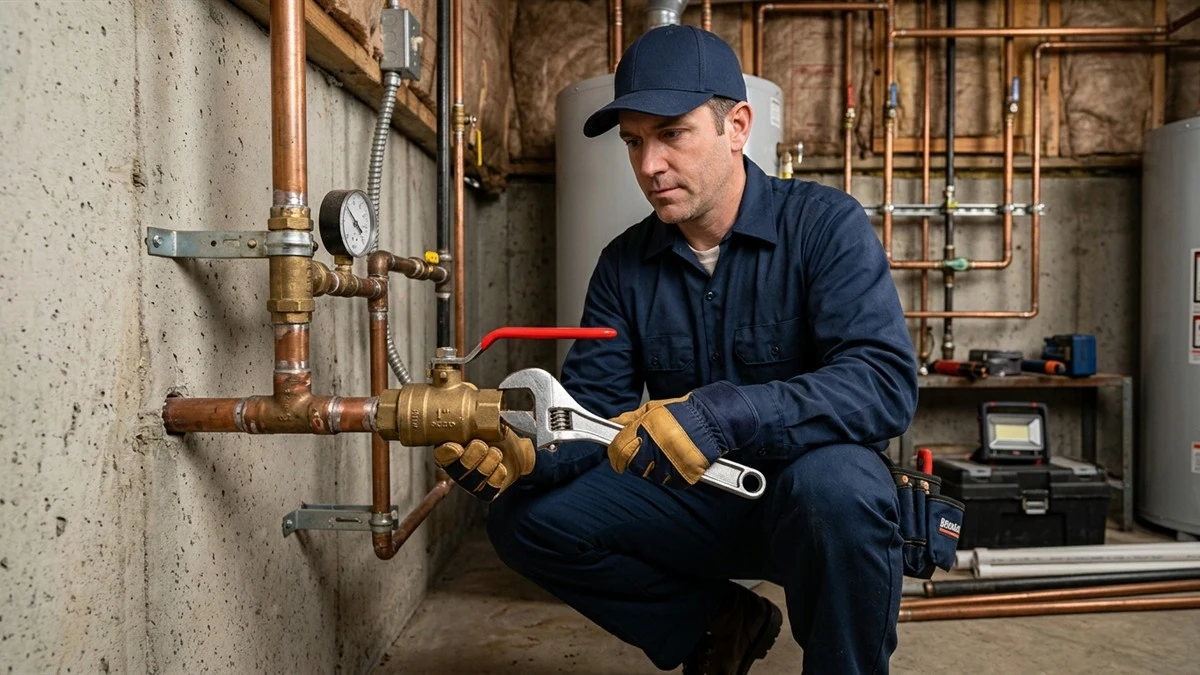
1. Go inside your home and completely turn off your main interior shutoff valve (in the basement or utility room).
2. Walk back out to the street meter pit and observe the leak indicator:
• If the meter STOPS spinning: The leak is located somewhere inside your home’s interior plumbing network (toilets, slab leak, interior walls, or water heater).
• If the meter CONTINUES to spin: The leak is located outdoors underground, buried in the private service supply line between the street meter pit and your foundation wall!
4. The 5 Most Common Hidden Leak Culprits in Residential Plumbing
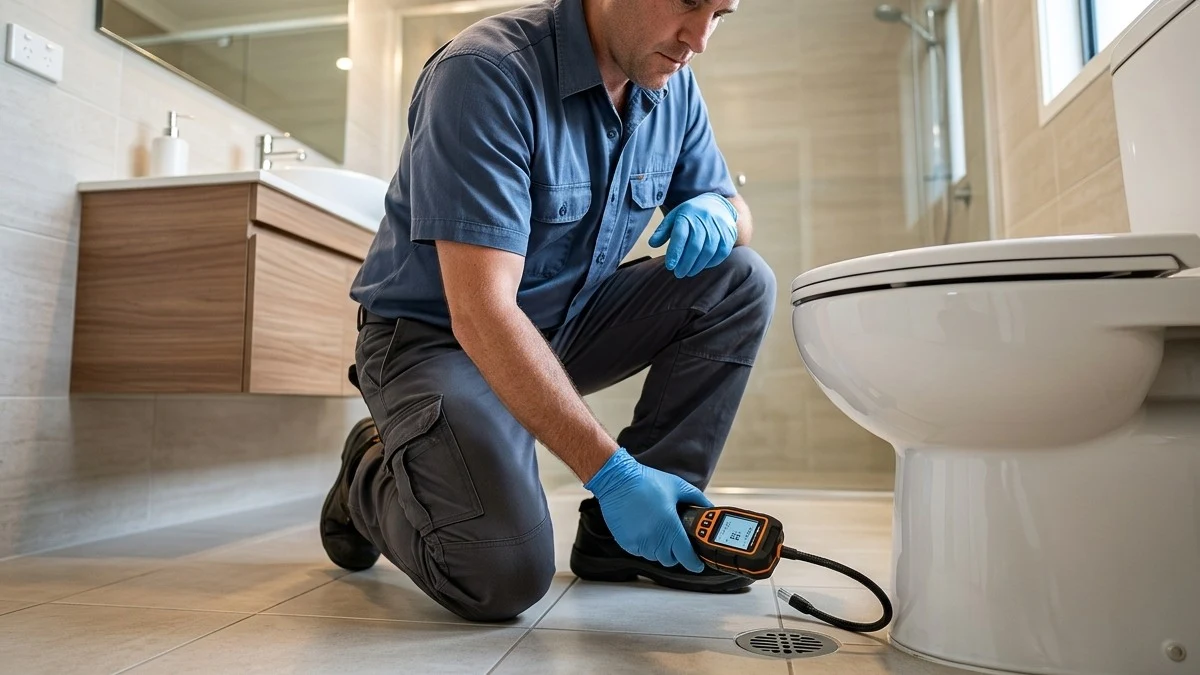
When our certified leak detection specialists investigate sudden water consumption spikes, our diagnostic telemetry systematically evaluates five primary failure categories, ranked here by statistical frequency:
1. Silent Toilet Flapper & Overflow Siphon Leaks (The #1 Culprit)
Statistically, silent toilet leaks account for over 70% of all residential high water bill complaints nationwide. Inside your toilet tank sits a rubber flapper or silicone flush valve seal. Over 3 to 5 years, chlorine, chloramines, and dissolved minerals in municipal tap water degrade the flexible rubber, causing it to curl, blister, or harden.
Water constantly weeps past the compromised flapper, trickling into the bowl. Because this water slips silently down the bowl siphon jet, it produces zero external splashing and virtually no audible sound. Alternatively, a misadjusted or mineral-fouled fill valve can allow water to rise above the overflow tube, continuously spilling excess water down the central drain tube 24 hours a day. A single running toilet can waste between 200 and 1,000 gallons per day, easily adding $150 to $300 to your monthly bill!
2. The Underground Yard Supply Line Rupture (Meter-to-House)
In Colorado, the municipal water main is buried under the street, with your meter pit installed near the sidewalk. From the meter pit, your private underground water service line runs between 40 and 120 feet across your front lawn, buried 4.5 to 5.5 feet deep to stay below the local frost line, before entering your foundation.
Older homes in Broomfield and neighboring areas were plumbed with copper, galvanized steel, or early polybutylene piping. Ground movement from expansive clay soils, heavy vehicle traffic across driveways, rock impingement, or chemical soil acidity can crack or corrode this underground pipe. Because Colorado’s sub-surface soil is frequently sandy or gravelly, thousands of gallons of escaping pressurized water per day will percolate downward into the deep aquifer without ever creating a visible puddle or swamp on your lawn. The only clue is a massive water bill and a continuously spinning meter.
3. Foundation Slab Leaks (Copper Pinhole Corrosion Under Concrete)
A slab leak occurs when a pressurized potable water pipe buried directly beneath or encased within your home’s concrete foundation floor slab springs a leak. In homes constructed with slab-on-grade foundations or concrete basement floors, hot and cold copper lines were frequently installed in the gravel bed before the concrete was poured.
Over decades of thermal expansion and contraction, the soft copper pipe rubs against jagged crushed gravel, wearing away the metal wall through mechanical abrasion. Simultaneously, galvanic reaction between the copper and concrete chemical additives, combined with turbulent water flow, eats microscopic pinholes through the pipe. Slab leaks on hot water lines are especially destructive: they run your water heater continuously (surging both your water bill and your natural gas/electric bill), while generating warm spots on tile or wood floors.
4. Underground Irrigation System Solenoid & Lateral Line Fractures
During the Colorado summer irrigation season (May through October), outdoor sprinkler systems consume substantial water volume. However, subterranean sprinkler lines operate under high pressure up to the zone control valves.
If a zone valve diaphragm fails to seal completely, water will continuously weep through that zone’s sprinkler heads 24 hours a day. Furthermore, freeze damage caused by inadequate autumn sprinkler blowouts frequently splits underground PVC or polyethylene lateral lines. When the automated timer activates the zone at 4:00 AM while the family sleeps, thousands of gallons of water erupt underground into the subsoil, never generating an obvious surface geyser but drastically inflating consumption figures.
5. Whole-House Water Softener & Humidifier Discharge Malfunctions
Modern mechanical equipment installed in your basement or utility room can develop invisible bypass failures. A whole-house water softener uses an automated multiport piston valve to regenerate its resin beads with brine solution every few days. If the internal mechanical valve seals become scored with sediment or the electronic timer hangs up, the softener can become stuck in an endless backwash cycle, dumping 5 to 10 gallons of water per minute directly into your basement floor drain.
Similarly, furnace-mounted bypass or flow-through humidifiers utilize an electric solenoid valve to trickle water over a metal evaporator pad during heating cycles. If mineral lime jams the solenoid valve open, water will flow continuously down the drain tube 24 hours a day, summer and winter alike.
5. How Master Plumbers Locate Hidden Leaks Without Tearing Up Your Home
In decades past, finding a hidden leak beneath a concrete floor or inside a wall required destructive guesswork: smashing open drywall, sledgehammering concrete floors, or trenching entire lawns. Today, Broomfield Emergency Plumber utilizes cutting-edge non-invasive diagnostic telemetry to pinpoint hidden leaks within an accuracy of two inches:
1. Acoustic Ultrasonic Ground Microphones
When water escapes a pressurized pipe through a crack or pinhole under 60 PSI, it generates distinct high-frequency acoustic vibrations as the water strikes the surrounding soil or concrete. Our specialists deploy ultra-sensitive digital ground listening devices and contact microphones connected to multi-frequency amplifiers.
By placing acoustic sensors along floor tiles, baseboards, and yard soil, we isolate the unique decibel frequency of escaping water while filtering out extraneous background noise (such as ambient traffic or wind). As the technician moves closer to the leak source, the signal peak spikes dramatically, allowing us to mark the exact spot on your floor before any concrete is touched.
2. High-Resolution Thermal Infrared Imaging
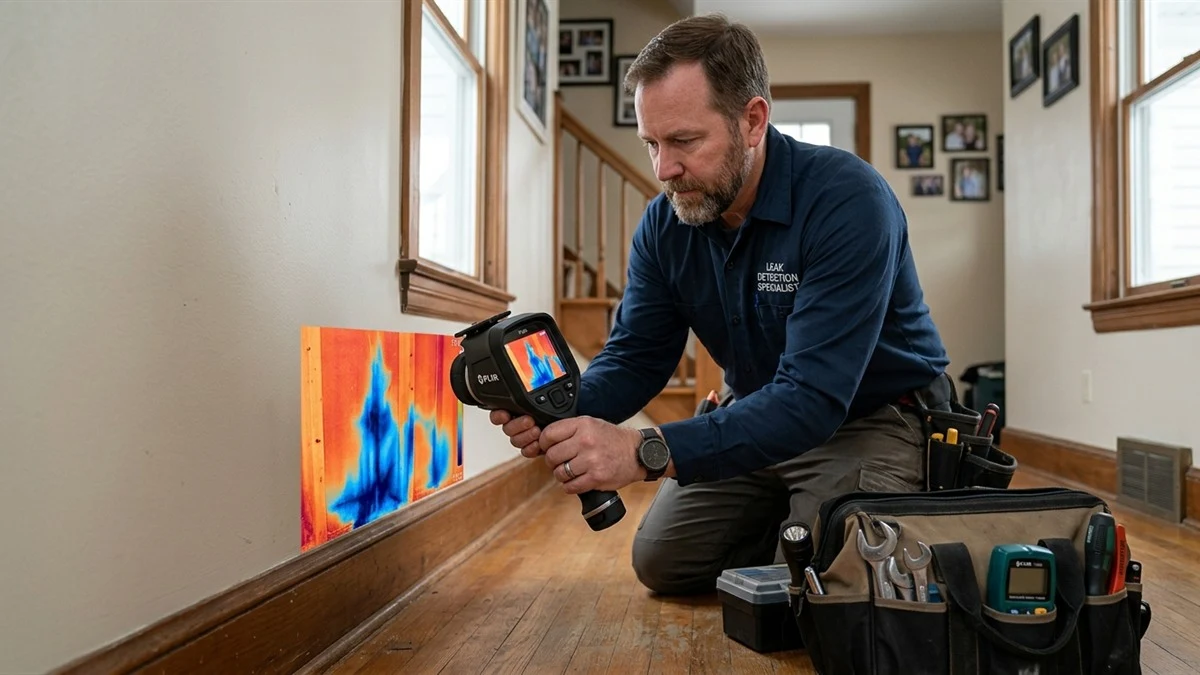
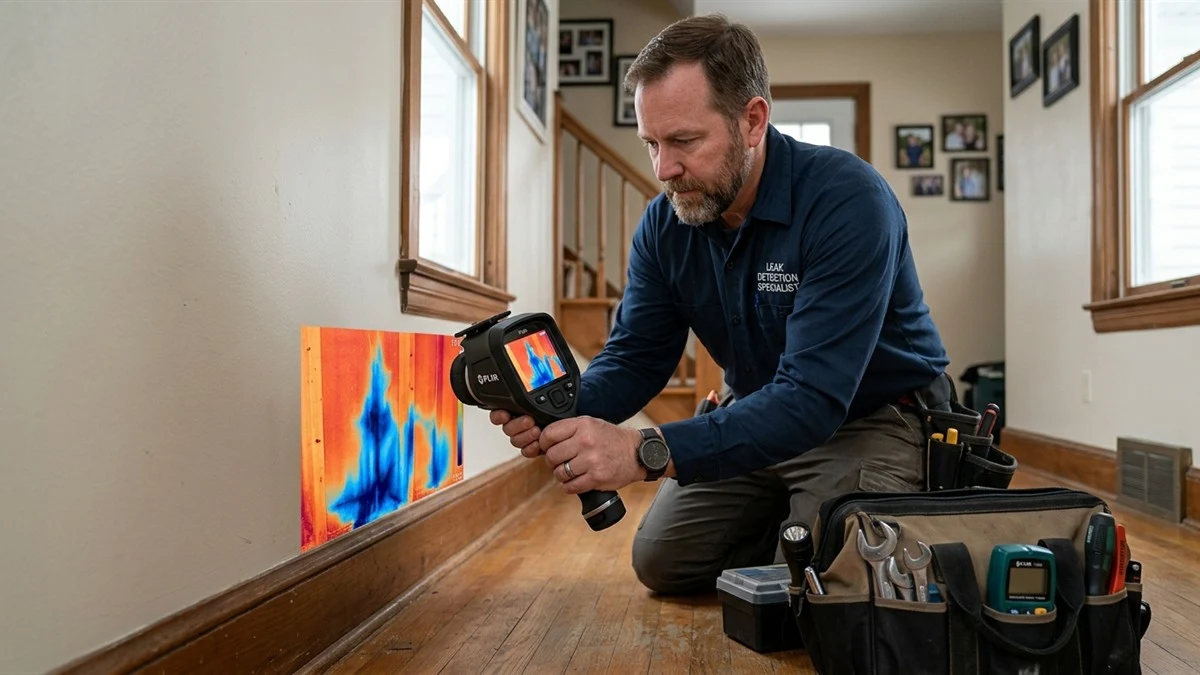
Thermal imaging cameras detect subtle differences in surface temperatures with an accuracy of 0.1°C. When a hot water slab leak occurs, the escaping hot water warms the concrete slab and subfloor, creating a glowing thermal footprint visible on our digital monitors right through hardwood, carpeting, or ceramic tile.
Conversely, cold water leaks inside wall cavities or ceilings create evaporative cooling zones, appearing on our thermal screens as distinctive dark blue moisture boundaries. This allows us to trace the precise pathway of hidden leaks behind finished surfaces without cutting a single square inch of drywall.

3. Helium & Nitrogen Tracer Gas Pressure Decay Testing
For extraordinarily minute micro-leaks or complex underground distribution manifolds where ambient noise interferes with acoustic detection, we deploy tracer gas testing. We isolate the plumbing line, drain the standing water, and charge the line with safe, non-toxic, non-flammable nitrogen or industrial tracer gas under low pressure.
Because tracer gas molecules are smaller than water molecules, the gas escapes through the microscopic pinhole and rises vertically through soil, concrete slabs, and flooring. Our technicians sweep the surface with specialized molecular hydrogen sniffer wands that detect gas concentrations in parts per million (PPM), pinpointing the exact failure location with surgical precision.
6. Professional Repair Methodologies: Spot Fixes vs. Complete Repiping
Once the exact location and nature of the hidden leak is established, our licensed plumbing team presents clear, permanent repair strategies tailored to your home’s structural configuration:
| Failure Type | Standard Repair Methodology | Disruption Level | Long-Term Reliability |
|---|---|---|---|
| Under-Slab Copper Pinhole Leak (Single Defect) | Targeted Concrete Spot Excavation: Precision opening of a small 18×18-inch concrete section directly over the acoustic mark, splicing in new Type-L copper or high-pressure sleeve. | Moderate; confined to a single localized floor tile or carpet zone. | High for the repaired joint; moderate risk of future pinholes elsewhere on aging copper. |
| Under-Slab Systemic Degradation (Multiple Past Leaks) | Overhead Pipe Reroute: Abandon the failing copper pipe buried under the concrete slab entirely. Run a brand-new, continuous Uponor PEX line through the attic, floor joists, or wall cavities to reconnect the fixture. | Low to Moderate; zero concrete floor demolition; small drywall cuts in closets. | Permanent (100%): Eliminates all under-slab leak risk permanently for that line. |
| Underground Yard Main Water Service Rupture | Directional Trenchless Pipe Pulling: Pull a seamless, high-density polyethylene (HDPE) 200 PSI water line from the meter pit directly into the basement using hydraulic cable pullers, avoiding trenching. | Minimal; requires only two small access pits at the street and foundation wall. | Permanent (50+ Years): Continuous joint-free line immune to soil corrosion. |
| Silent Toilet Valve or Flapper Failure | Commercial Rebuild: Remove degraded components; install high-efficiency Fluidmaster Pro45 fill valve and chemical-resistant silicone flapper. | Zero; standard 20-minute clean fixture service. | 5–8 Years before routine rubber maintenance renewal. |
7. How to Request a Water Bill Adjustment from Your Municipal Utility
Once Broomfield Emergency Plumber locates and repairs your hidden leak, you do not necessarily have to absorb the full financial burden of the massive utility bill. Most municipal water providers along the Front Range—including the City and County of Broomfield Water Resources Department, City of Westminster Utilities, and City of Thornton Water—offer an established policy known as a Leak Adjustment Credit:
- Eligibility Window: Utilities typically allow leak adjustment requests within 60 to 90 days of the abnormally high billing statement.
- Required Documentation: You must provide an itemized repair invoice from a licensed plumbing contractor stating: (1) The exact date the leak was detected and repaired; (2) The specific physical location of the leak (e.g., “repaired underground 1-inch copper water service line in front lawn”); and (3) Verification that water consumption has returned to normal baseline.
- Credit Calculation Formula: The utility typically calculates your historical average consumption for that same calendar month over the previous three years. They then credit back 50% to 100% of the excess tiered-rate charges or adjust sewer volumetric charges that were artificially inflated by water that soaked into the ground rather than entering the sewer system.
Our administrative team at Broomfield Emergency Plumber routinely provides certified, pre-formatted leak repair documentation specifically structured to satisfy local municipal utility requirements, helping our customers recover hundreds—and often thousands—of dollars in billing credits!
8. Advanced Diagnostic Science: AMR/AMI Smart Meters & Expansive Soil Shifting
Across the City and County of Broomfield and surrounding Colorado municipalities, public utility departments have transitioned almost entirely from manual meter reading to automated AMR (Automated Meter Reading) and AMI (Advanced Metering Infrastructure) cellular networks. Understanding how these modern electronic registers record flow provides critical diagnostic leverage for homeowners:
Modern AMI smart meters utilize high-precision solid-state electromagnetic or ultrasonic transit-time sensors with no internal moving parts. Unlike older mechanical disc meters that could stick or accumulate friction, ultrasonic meters measure water flow by pulsing sound waves upstream and downstream through the water chamber. These sensors can measure continuous water loss down to a microscopic 0.01 gallons per minute (less than 1.5 cups of water per hour).
The smart register logs hourly consumption data and transmits encrypted radio packets to municipal cellular collectors three times daily. When your utility’s automated analytics platform identifies 24 consecutive hours of non-zero flow, the system flags your account with an automated “continuous consumption” alert. In many cases, homeowners are alerted by a municipal automated email or warning letter before they have even opened their monthly billing statement!
The Geological Mechanism: Why Colorado Bentonite Clay Cracks Water Pipes
A critical factor frequently overlooked by national plumbing guides is the unique geological environment of the Colorado Front Range. A significant percentage of residential developments in Broomfield, Westminster, Superior, and Louisville are constructed over deep bedrock formations containing active bentonite clay minerals.
Bentonite possesses a layered crystal lattice structure that acts as a natural geological sponge. When Colorado experiences heavy spring precipitation or snowmelt, the soil absorbs moisture and swells with monumental expansive power, exerting up to 15,000 pounds of lateral and upward heave per square foot. During dry, arid autumns, the clay dehydrates, shrinks, and fissures.
This continuous seasonal ground heave subjects buried water service lines to extreme mechanical shear stress. Rigid copper pipes and early polybutylene pipes buried under foundations or front lawns are pulled, bent, and stressed at joint couplings until microscopic fatigue cracks develop. These cracks frequently start as tiny hairline weep holes that slowly grow under 60 PSI water pressure into full-blown ruptures. Understanding this local geological reality explains why non-invasive acoustic listening and trenchless polyethylene repiping are so heavily favored across our region.
9. “What We Inspect on an Unexplained High Water Bill Diagnostic Call”
When you schedule an electronic leak detection audit with Broomfield Emergency Plumber, our certified specialists execute an exhaustive 7-phase field protocol:
- Baseline Meter Calibration Sweep: We inspect the physical water meter register, calibrate low-flow indicators, and measure dynamic flow rates down to hundredths of a gallon.
- Fixtures & Toilets Dye Testing: We drop chemical dye tablets into every toilet tank on the property, testing for silent flapper leakage and overflow tube bypass.
- Pressure Decay Static Test: We screw calibrated liquid-filled gauges onto test ports, isolate the building from the street, and monitor for pressure drop over a 15-minute static hold.
- Ultrasonic Acoustic Sweep: We listen to all accessible slab surfaces, foundation perimeters, and yard supply lines with electronic ground microphones.
- Thermal Infrared Envelope Scan: We scan all finished walls, ceilings, and heated floors with thermal imaging to map hidden evaporative cooling or hot water thermal blooms.
- Mechanical Bypass Check: We audit water softeners, reverse osmosis systems, furnace humidifiers, and irrigation manifolds for silent continuous drainage.
- Comprehensive Diagnostic Report & Estimate: We provide you with a written report mapping the exact failure point, accompanied by guaranteed upfront pricing for permanent repair.
9. Frequently Asked Questions (FAQ)
Q1: Can a water meter be faulty and run fast, falsely inflating my bill?
Answer: While homeowners often suspect the meter, mechanical water meters are precision engineering instruments. As mechanical meters age, mineral scale and mechanical friction build up on the internal measuring chamber, which causes the meter to slow down, not speed up. In virtually all independent laboratory tests conducted by municipal utilities, an aging water meter under-reports consumption. If your meter register is showing high volume, real water is almost certainly escaping somewhere downstream of the meter pit.
Q2: What are the primary warning signs of an under-slab water leak?
Answer: Classic warning signs of a residential slab leak include: (1) Unexplained warm or hot spots on tile, hardwood, or vinyl flooring (indicating a hot water line leak); (2) The sound of rushing or hissing water in a quiet house when all fixtures are turned off; (3) Mildew odors or persistent dampness under carpets; (4) Unexplained cracks appearing in basement floor slabs or lower drywall; and (5) A water heater that constantly fires or never stops heating because hot water is continuously escaping into the sub-foundation gravel bed.
Q3: How much does professional electronic leak detection cost?
Answer: Comprehensive non-invasive electronic leak detection for a residential property typically ranges between $250 and $550, depending on the size of the home, whether the leak is interior or buried in the yard, and the specialized equipment required (acoustic listening, thermal imaging, tracer gas). Considering that an undetected 1/16-inch pinhole leak can easily waste $300 to $600 in municipal water charges every single month while eroding your foundation, professional leak detection pays for itself almost immediately.
Q4: Does homeowners insurance cover the cost of locating and fixing a slab leak?
Answer: Standard homeowners insurance policies (HO-3) typically provide coverage under a specific structure: they almost universally cover the “tear-out and access” costs (the labor to jackhammer through the concrete slab to reach the pipe, and the repair of the concrete/flooring afterward), as well as any consequential water damage to your furnishings and drywall. However, the policy often excludes the direct $150 to $350 plumbing mechanical repair of the pipe fitting itself. If an overhead reroute is chosen, insurance adjusters frequently approve the reroute as a cost-effective alternative to concrete floor demolition.
Q5: Can an underground yard leak cause a sinkhole in my lawn?
Answer: Yes. A high-pressure rupture on an underground 1-inch main water line discharging 5 to 15 gallons per minute will eventually wash away fine subterranean sand, silt, and soil particles around the pipe, creating a hollow subterranean cavity. Over weeks or months, the unsupported turf above will suddenly collapse, creating a dangerous sinkhole or depression in your front yard or undermining adjacent concrete sidewalks and driveway slabs.
Q6: Why is my water bill high during the summer months even though I didn’t run sprinklers?
Answer: If your sprinkler controller was turned off but your water bill spiked, check the main backflow preventer assembly (PVB) and the master solenoid zone valves. Underground irrigation valves are under continuous municipal water pressure 24/7. If small sand grains or mineral scale prevent an internal rubber valve diaphragm from closing completely, water will continuously seep past the valve seat into the underground sprinkler line, discharging into the lawn soil unseen day and night.
Q7: What is the benefit of installing a smart automatic water shutoff valve?
Answer: Smart water monitors (such as Flo by Moen or Phyn Plus) are installed directly on your main water service line. They utilize advanced ultrasonic sensors to measure water flow, pressure drops, and temperature down to one single drop per minute. The system learns your family’s normal water consumption patterns. If an abnormal continuous flow is detected (such as a toilet running for 2 hours or an under-slab pipe rupture), the system automatically closes an internal motorized brass ball valve in seconds, preventing water bill spikes and flood damage, while sending an immediate notification to your smartphone. Many insurance companies offer a 5% to 15% discount on homeowner policy premiums for properties equipped with automatic shutoff valves.
10. Related Services & Leak Diagnostic Resources
To protect your property from ongoing water loss and structural damage, explore our specialized leak detection and repair departments:
- Advanced Leak Detection: Learn more about our non-invasive acoustic and thermal imaging protocols at Electronic Leak Detection in Broomfield, CO.
- 24/7 Emergency Dispatch: If a hidden leak has caused an active flood or foundation emergency, access our 24/7 Emergency Plumbing Services.
- Water Heater Diagnostics: If your water bill spike is accompanied by continuous water heater burner firing, visit our Water Heater Repair Hub.
- Fixture & Toilet Rebuilds: Stop silent toilet flapper leaks permanently with our Faucet & Fixture Repair Specialists.
Sudden High Water Bill? Stop Paying For Water You Never Used!
Hidden water leaks don’t fix themselves—they grow larger and more destructive with every passing week. Our certified, licensed Colorado leak detection technicians use advanced acoustic ground listening and infrared thermal imaging to locate your hidden leak without destroying your home. We provide upfront flat-rate pricing and complete documentation for municipal utility bill credits.