
Critical Diagnostic Rule: Top Leak vs. Bottom Leak
When diagnosing a leaking water heater, the physical elevation of the moisture dictates the fate of the appliance. A leak originating from the TOP of the water heater tank is almost always an inexpensive, serviceable mechanical failure—such as a worn dielectric nipple, a loose flexible supply connector, a leaking cold inlet shutoff valve, or a failed thermal expansion tank. In contrast, water pooling at the BOTTOM of the tank with rust-colored staining frequently indicates catastrophic internal tank rupture: the inner glass porcelain lining has cracked, allowing acidic water to corrode through the outer steel pressure vessel. An internal tank rupture cannot be welded, patched, or repaired—it requires immediate emergency replacement before the bottom gives way and discharges 40 to 50 gallons of scalding water onto your floor. Shut off the cold water inlet valve and fuel supply immediately, and call Broomfield Emergency Plumber at (303) 647-3363 for same-day professional diagnostic service.
1. The Anatomy & Hydraulic Pressurization of a Water Heater Tank
The modern residential water heater is the most hard-working mechanical appliance in any residential structure. Operating 24 hours a day, 365 days a year, a standard tank-style water heater maintains between 40 and 75 gallons of domestic water heated to an average operational temperature between 120°F and 140°F. Because municipal water mains deliver cold water under continuous pressures ranging between 50 and 80 PSI, your water heater is fundamentally an active, enclosed thermodynamic pressure vessel.
The exterior of the water heater is an insulated sheet-metal jacket finished with baked enamel paint. Beneath this outer shell lies 2 to 3 inches of high-density polyurethane foam insulation. Underneath the insulation sits the core pressure vessel: a heavy steel tank fabricated from welded carbon steel plate. Because untreated carbon steel oxidizes and rusts rapidly when exposed to hot, oxygenated domestic tap water, manufacturers spray a molten layer of vitreous glass enamel (porcelain) across the interior surface of the steel, baking it at over 1,500°F to create a protective ceramic barrier.
However, this protective glass lining is rigid and brittle, while the outer steel tank expands and contracts continuously with every heating and cooling cycle. Over thousands of thermal cycles, microscopic fractures (crazing) inevitably develop in the ceramic coating. To prevent the exposed steel from rusting, manufacturers thread a sacrificial anode rod (composed of magnesium or aluminum) into the top of the tank. Through basic electrochemical galvanic action, the anode rod corrodes intentionally to protect the exposed steel. When that sacrificial rod is fully depleted—usually within 3 to 6 years—the hot water attacks the raw steel tank, initiating a slow countdown toward catastrophic tank failure.
Understanding this internal engineering is essential when evaluating moisture on or around your water heater. Water travels downhill under the influence of gravity and capillary attraction; therefore, a tiny hairline leak at the top fitting can run down underneath the outer insulating jacket, emerging days later as a puddle on the floor around the base. Determining whether you are dealing with a minor $150 top fitting repair or an irreversible $2,000 tank replacement requires precise diagnostic methodology.
2. Diagnosing Top-of-Tank Leaks: 4 Common Serviceable Failures
If careful inspection with a flashlight and dry paper towel reveals active moisture, weeping droplets, or green/white mineral crusting sitting on the concave top dome of the water heater, you are in luck. Top-mounted leaks are almost universally serviceable without having to replace the water heater:
1. Dielectric Nipples & Galvanic Corrosion
Where your home’s copper water supply pipes connect to the steel water heater tank, an electrochemical reaction known as galvanic corrosion naturally occurs. Whenever two dissimilar metals (such as copper and steel) are placed in direct physical contact inside an electrolyte (water), an electrical current flows between them, rapidly corroding the less noble metal (the steel).
To prevent this, building codes require the installation of dielectric nipples: short steel pipe segments lined with a non-conductive thermoplastic sleeve. Over years of thermal cycling, hard water mineral exposure, and pipe vibration, the internal plastic sleeve can crack or the threaded joint can loosen, causing pressurized water to weep through the threads. Plumbers resolve this by shutting off the water, unthreading the damaged dielectric nipple, and installing a heavy-duty commercial replacement wrapped with high-density PTFE tape and anaerobic pipe thread sealant.
2. Flexible Water Supply Line Degradation
Most modern water heaters are connected to the house piping using flexible corrugated copper, stainless steel braid, or flexible brass connectors. Inside the female swivel nuts of these flexible connectors sit synthetic rubber (EPDM) or silicone sealing washers.
Over 5 to 8 years of continuous exposure to 140°F water, these rubber washers become brittle, lose their elasticity, and develop micro-cracks. Water begins spraying in an invisible aerosol mist or dripping steadily down the exterior of the corrugated pipe onto the top of the tank. Replacing both flexible supply lines with brand-new stainless steel braided connectors is a standard 30-minute professional service.
3. Thermal Expansion Tank Joint Weeping & Bladder Rupture
In compliance with local Colorado building codes, modern residential plumbing systems with backflow preventers or pressure-reducing valves are classified as closed plumbing systems. When 50 gallons of cold water is heated from 50°F to 130°F inside the tank, the water expands in volume by roughly 2.5% (creating nearly half a gallon of excess water volume).
Because water cannot compress and the closed backflow valve prevents it from expanding back into the city water main, an auxiliary thermal expansion tank (a small 2-gallon or 4.5-gallon steel cylinder) must be mounted on the cold water line above the water heater. Inside this expansion tank is a heavy butyl rubber bladder charged with compressed air (calibrated to your home’s water pressure). When water expands, it compresses the bladder, absorbing the dangerous pressure spike.
However, expansion tank bladders have an average lifespan of only 5 to 7 years. When the internal rubber bladder ruptures, the expansion tank fills with solid water, losing all cushioning capacity. The excess weight often strains the threaded pipe joint connecting the tank to the water line, causing the joint to crack and leak water directly onto the top of the water heater.
4. Sacrificial Anode Rod Thread Seepage
The sacrificial anode rod is screwed directly into the top head of the water heater tank using a large 1-1/16-inch hex head plug. During the manufacturing process, this steel-to-steel threaded joint is sealed with thread sealant. Occasionally, high-temperature thermal cycling or severe vibration can loosen the anode plug threads, allowing hot water to seep out around the hex nut. In many cases, our technicians can simply unthread the anode rod, apply fresh gas-rated PTFE tape and liquid thread sealant, and re-torque the plug to factory specifications.
3. Diagnosing Middle-of-Tank Leaks: Safety Valves & Heating Elements
If the top of your water heater is completely dry, but water is running down the side of the tank, the failure is concentrated in the mid-body components:
The Temperature and Pressure Relief (T&P) Valve
The Temperature and Pressure Relief (T&P) valve is the single most critical mechanical safety device on your water heater. Mounted either on the top or upper side of the tank, this brass valve is spring-loaded and calibrated to automatically snap open if water temperature reaches 210°F or if internal tank pressure exceeds 150 PSI. Without a functioning T&P valve, an uncontrolled water heater with a stuck thermostat would transform into a catastrophic high-explosive steam bomb capable of rocketing through the roof of a house.
By code, a 3/4-inch copper or CPVC discharge pipe must extend from the T&P valve down to within 6 inches of the floor or terminate outside the foundation. If you see water dripping or gushing from the bottom of this discharge pipe, one of two conditions is occurring:
- Mechanical Valve Failure (Common): The T&P valve has become fouled with mineral scale, lime, or calcium flakes that prevent the internal rubber seat from sealing tight. Replacing the T&P valve with a brand-new, factory-calibrated unit is a fast, routine repair.
- Dangerous Thermal Over-Pressurization (Emergency): The valve is doing its job! Excessive pressure caused by a failed thermal expansion tank, a failed municipal pressure regulator (pushing 100+ PSI into the home), or a runaway heating thermostat is actively triggering the safety valve to vent scalding water to prevent a tank explosion. Immediate professional diagnosis is vital.
Electric Water Heater Element Gaskets
If your home utilizes an electric water heater, the tank features two removable electrical heating elements: an upper element and a lower element inserted horizontally through the side of the tank. Each element is sealed against the steel tank flange using a thick synthetic rubber O-ring or flat gasket.
Over years of operation, sediment buildup and thermal cycling degrade these rubber gaskets. Water begins weeping around the element mounting bolts or screw-in threads, accumulating inside the electrical thermostat cover box. Extreme Warning: Water leaking onto exposed 240-volt electrical terminals presents an acute electrocution and electrical fire hazard! If you see water dripping from the rectangular metal access panels on the side of an electric water heater, immediately shut off the dual-pole 30-amp circuit breaker at your main electrical panel before approaching the appliance.
4. Diagnosing Bottom-of-Tank Leaks: The Critical Verdict
When water is discovered pooling on the floor beneath a water heater, our master technicians perform a strict three-point differentiation test:
1. Is It Merely Atmospheric Condensation?
In newly installed gas water heaters, or when an entire 50-gallon tank of hot water has been depleted by back-to-back showers, the tank fills with ice-cold winter tap water (often 40°F in Colorado). When the gas burner fires, the hot combustion gases (which contain significant water vapor) hit the freezing-cold steel tank floor.
Just like a cold glass of iced tea sweating on a hot summer afternoon, moisture condenses rapidly on the cold metal surface, dripping down onto the burner pan with a distinctive sizzling sound and running out onto the floor. Atmospheric condensation typically ceases within 60 to 90 minutes once the water temperature inside the tank reaches 110°F. If moisture persists after the water is hot, it is not condensation.
2. Is It the Bottom Drain Valve?
Near the very bottom of the tank sits a threaded drain valve used for annual flushing. Many budget builder-grade water heaters are manufactured with cheap, brittle plastic (nylon) drain valves.
Over time, internal water pressure and heat warp the plastic threads, or calcium sediment jams the internal ball seat, causing a steady drip out of the garden hose threads. If wiping the drain valve spout dry reveals fresh droplets forming at the nozzle, our plumbers can easily replace the failed plastic valve with a heavy-duty commercial brass ball valve, resolving the leak for a fraction of the cost of a new water heater.
3. The Fatal Scenario: Internal Tank Rupture
If the top fittings, T&P valve, and bottom drain valve are bone-dry, but water is seeping steadily out from under the bottom sheet-metal rim or pooling inside the burner chamber, the internal pressure vessel has ruptured.
Once the outer steel shell corrodes through from the inside, the pressurized water breaks into the fiberglass insulation blanket. The water saturates the insulation, migrates around the circumference of the vessel, and trickles out of the lowest seams. Under no circumstances can an internal tank crack be welded, epoxy-sealed, patched, or repaired. A ruptured water heater tank is structurally compromised and must be replaced immediately. Continued operation risks a catastrophic seam tear that will dump 50 gallons of scalding water in minutes, followed by an infinite stream of continuous municipal floodwater until someone manually isolates the shutoff valve.
5. Why Colorado Hard Water Accelerates Water Heater Failure
Homeowners living along the Colorado Front Range—including Broomfield, Westminster, Thornton, and Boulder County—experience uniquely aggressive water chemistry that dramatically accelerates water heater degradation:
The Calcium Carbonate Sediment Blanket
Snowmelt originating in the Rocky Mountains filters through mineral-rich limestone, dolomite, and sandstone formations before entering regional reservoirs. As a result, municipal tap water in our region contains moderate to high levels of dissolved calcium and magnesium carbonates (typically measuring between 7 and 14 grains of hardness per gallon).
When hard water is heated above 120°F inside a water heater, dissolved calcium ions precipitate out of solution, transforming into solid chalky limestone flakes that settle directly onto the bottom of the tank. Over 3 to 5 years, an unmaintained water heater in Broomfield can accumulate between 20 and 50 pounds of solid sediment.
The Thermal Overheating Cycle
In gas water heaters, the 40,000 BTU burner flame fires directly against the exterior underside of the steel tank floor. Under normal conditions, water sitting on the other side of the metal conducts the heat away instantly.
However, when a 4-inch layer of hard mineral sediment blankets the tank floor, it acts as a thermal insulator. The burner must fire significantly hotter and longer to transfer heat through the rock blanket into the water. This traps intense heat inside the bottom steel plate, subjecting the metal to temperatures exceeding 800°F. The extreme heat boils the glass porcelain lining off the steel, causing the metal to fatigue, expand, and fracture. If your water heater makes a loud, violent popping, bubbling, or rumbling noise while heating (often sounding like popcorn popping or bowling balls rolling inside the tank), that is the sound of boiling steam bubbles violently exploding through the dense sediment layer—a definitive warning sign that bottom tank failure is imminent.
6. Emergency Action Plan: How to Safely Shut Down a Leaking Water Heater
If your water heater is actively leaking water onto your floor, follow these emergency shutdown steps immediately to protect your home from devastating flood damage and eliminate combustion hazards:
4-Step Emergency Water Heater Shutdown Protocol:
Step 1: Shut Off the Fuel or Power Supply
- For Gas Water Heaters: Locate the gas control thermostat valve on the lower front of the tank. Rotate the dial from the “ON” position clockwise to the “OFF” position or “PILOT.” If you smell natural gas (rotten egg odor), do not touch light switches; evacuate the home immediately and call 911 and Xcel Energy.
- For Electric Water Heaters: Go to your home’s main electrical service breaker panel. Find the dedicated dual-pole 30-amp circuit breaker labeled “WATER HEATER” and flip it firmly to the “OFF” position.
Step 2: Shut Off the Cold Water Supply
Look above the water heater for the cold water inlet pipe (typically located on the right side). You will see a valve mounted on the pipe:
• If it is a ball valve (lever handle): Turn the lever 90 degrees so it is perpendicular to the pipe.
• If it is a gate valve (wheel handle): Turn the round handle clockwise until it seats firmly closed.
Tip: If the valve is seized, corroded, or spinning freely, immediately shut off your home’s main water supply valve instead.
Step 3: Relieve Tank Pressure & Drain Stored Water
Connect a standard female garden hose to the brass drain valve at the bottom of the water heater tank. Run the other end of the hose out to your driveway, patio, or directly into a basement floor drain. Open a hot water faucet upstairs to allow air into the tank, then use a flathead screwdriver or pliers to open the bottom drain valve, safely discharging the 50 gallons of scalding water away from your interior flooring.
Step 4: Contact Broomfield Emergency Plumber for Same-Day Dispatch
Call our 24/7 emergency dispatch center at (303) 647-3363. Our fully stocked warehouse trucks carry premium Rheem, Bradford White, and Navien water heaters for same-day professional installation across Broomfield and surrounding communities.
7. Repair vs. Replace Decision Matrix: Age, Cost & Efficiency
When confronting a leaking water heater, homeowners must decide whether investing money into repairing an older unit is financially prudent, or whether upgrading to a modern, energy-efficient system represents far superior long-term value:
| Decision Factor | Repair Recommended | Replacement Recommended |
|---|---|---|
| Age of the Water Heater | Under 6–8 years old: The tank lining is generally sound; components are within engineered design lifespan. | Over 8–10 years old: Tank is living on borrowed time; sacrificial anode rod is completely depleted. |
| Physical Leak Location | Top dielectric nipples, flex lines, expansion tank, T&P safety valve, or bottom drain valve. | Bottom tank seam, combustion chamber, or weeping through the outer sheet metal jacket. |
| Repair Cost Percentage | Repair cost is less than 50% of the cost of a brand-new installed unit. | Repair cost exceeds 50% of replacement cost, especially when factoring in past repairs. |
| Water Quality & Corrosion | Water runs crystal clear; minimal sediment discharged during routine annual maintenance flushes. | Water runs rusty/brown from hot taps; heavy rumbling/popping noise during burner firing cycles. |
| Warranty Status | Unit is covered under the original manufacturer’s 6-year, 10-year, or 12-year tank warranty. | Warranty expired; manufacturer parts discontinued or obsolete. |
8. Modern Alternatives: Upgrading to On-Demand Tankless Systems
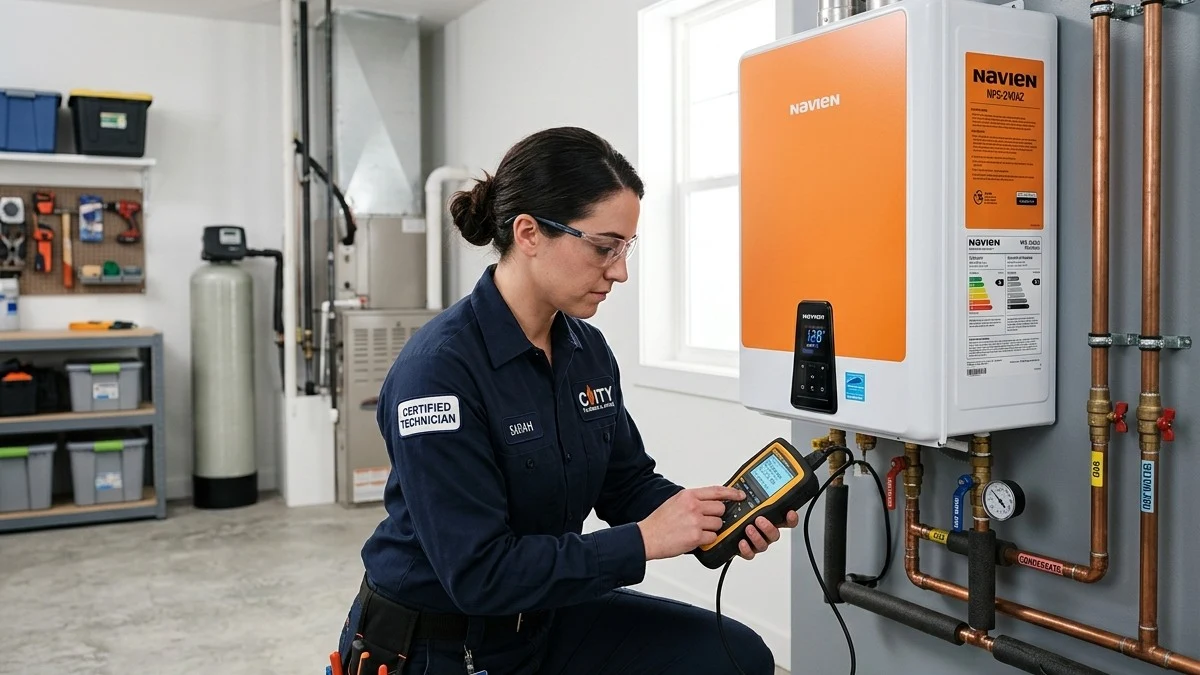
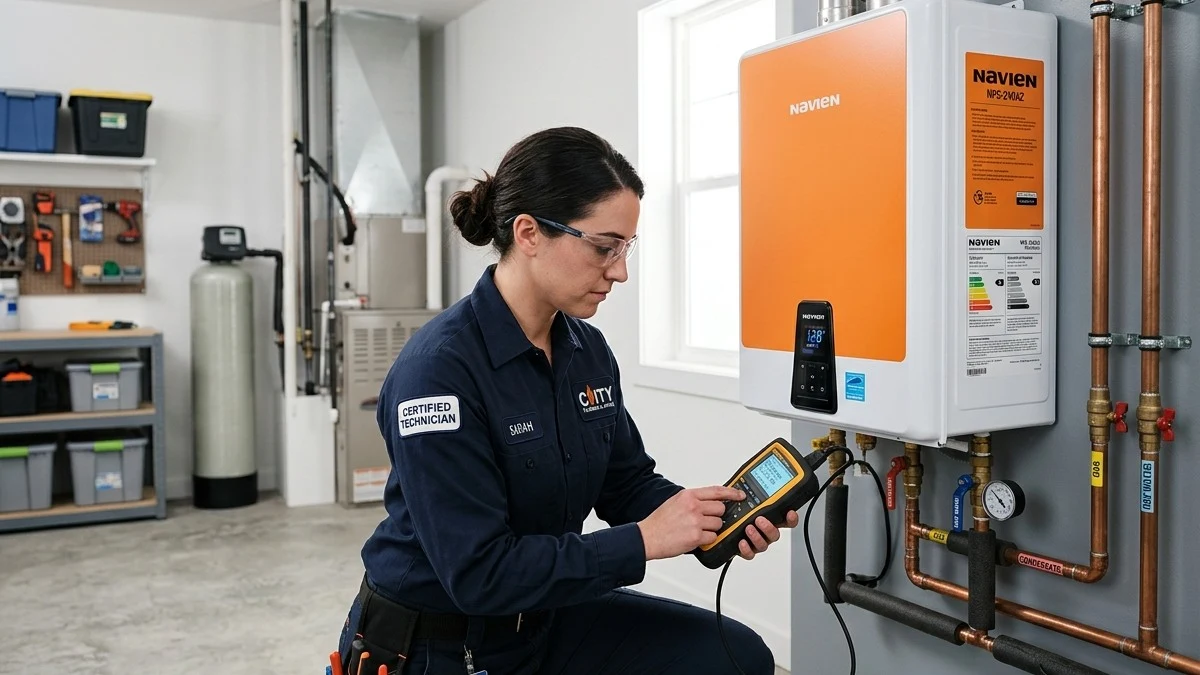
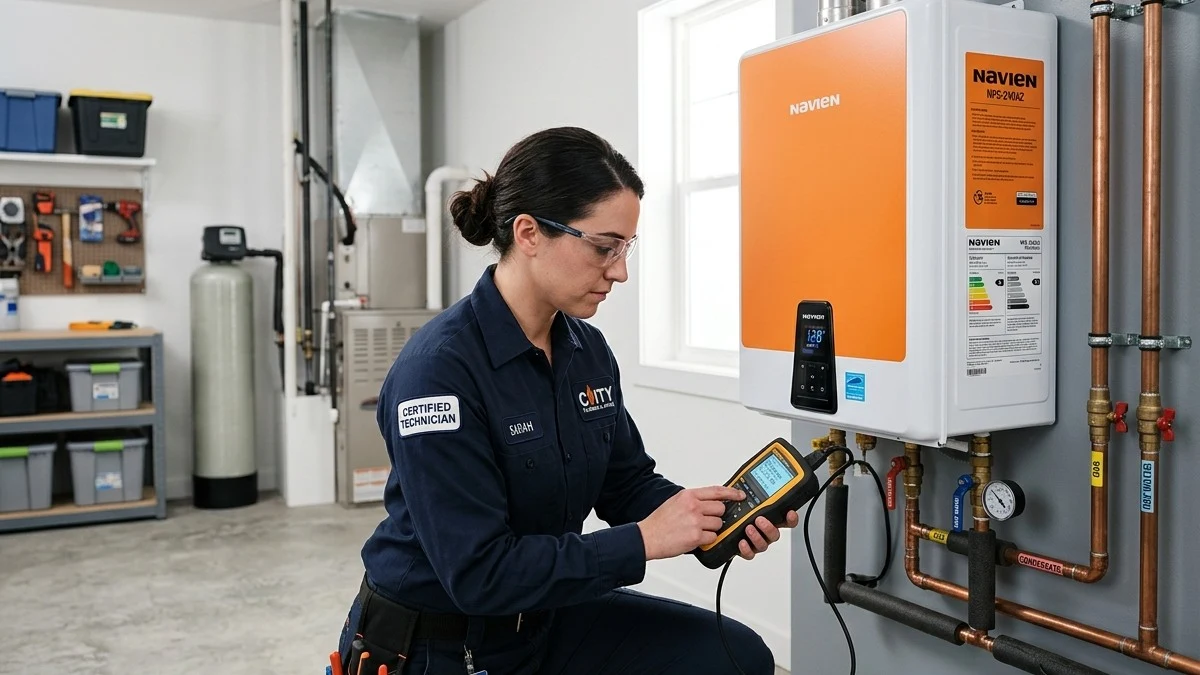
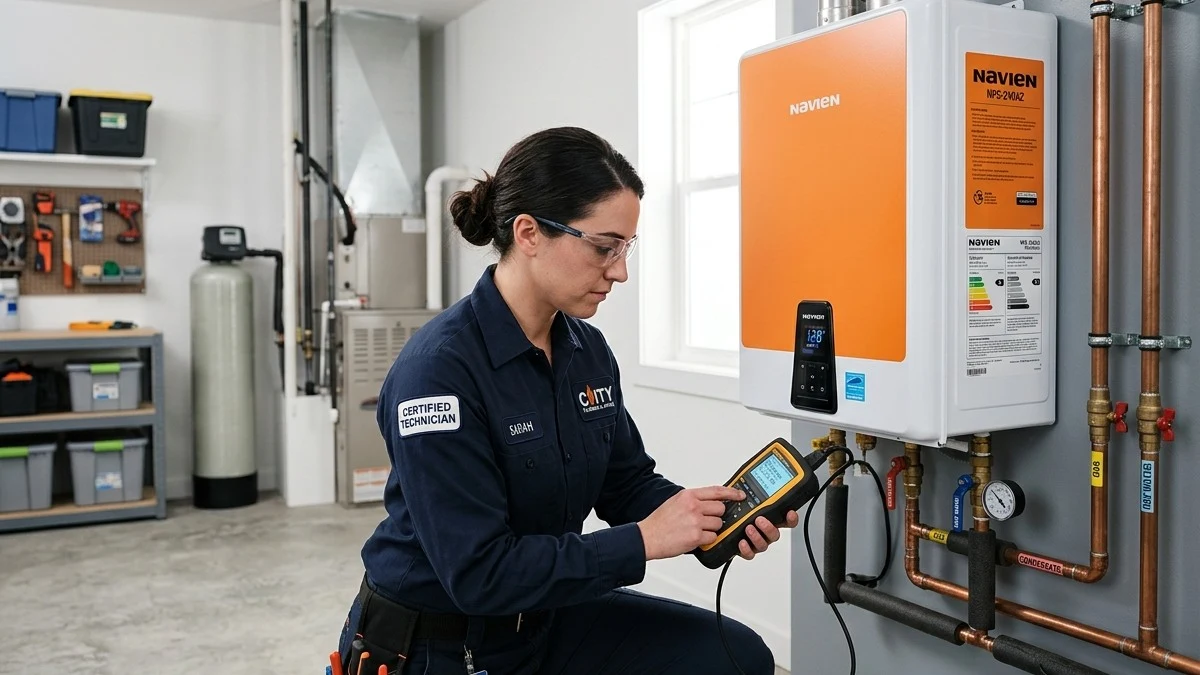
When replacement becomes necessary, an increasing number of homeowners in Broomfield and Boulder County are choosing to permanently abandon storage-tank water heaters in favor of high-efficiency Tankless On-Demand Water Heaters (such as Navien NPE-A2 or Rinnai Sensei series). Understanding the transformative benefits of tankless technology illustrates why it has become the standard in modern residential construction:
1. Total Elimination of Catastrophic Flood Risk
A standard storage tank holds 50 gallons of pressurized water directly above your home’s structural framing at all times. When an old tank ruptures, 50 gallons of water floods out immediately. In contrast, a tankless unit heats water instantly as it flows through a commercial-grade dual stainless steel heat exchanger. There is no massive reservoir of standing water—completely eliminating the threat of a sudden 50-gallon basement flood.
2. Truly Endless Hot Water
With a conventional 50-gallon tank, back-to-back morning showers, running the dishwasher, and washing a load of laundry quickly exhausts the hot water reserve, requiring 45 to 60 minutes of recovery time. A high-output tankless water heater delivers a continuous stream of hot water at up to 9.8 gallons per minute for as long as the faucet remains open. You will never take a cold shower again.
3. Monumental Energy Savings & Space Reclamation
Conventional tank water heaters suffer from continuous standby heat loss: burning gas or electricity 24 hours a day simply to keep 50 gallons of water hot while you sleep or work. Tankless systems burn zero fuel when water is not actively flowing, boasting Energy Star ratings up to 0.96 UEF (Uniform Energy Factor) and slashing domestic water heating utility bills by up to 30% to 40%. Furthermore, tankless units mount cleanly on the wall, freeing up over 12 square feet of prime floor space in your basement or utility room.
9. “What We Inspect on a Leaking Water Heater Diagnostic Call”
When a certified water heater specialist from Broomfield Emergency Plumber arrives at your home, we perform an exhaustive, multi-point diagnostic safety evaluation:
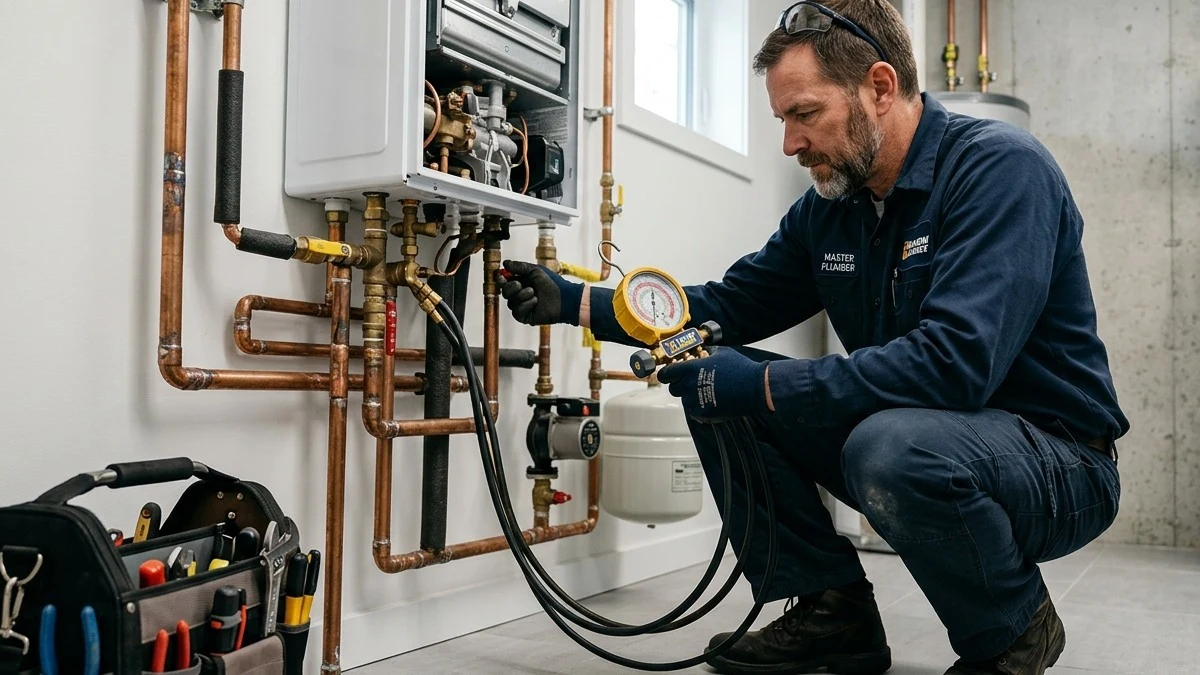
- Incoming Municipal Water Pressure Test: We screw a calibrated liquid-filled pressure test gauge onto an exterior hose bib or drain valve to measure real-time dynamic and static water pressure, ensuring your home does not exceed the IPC safety limit of 80 PSI.
- Thermal Expansion Tank Integrity Check: We test the Schrader air valve on your expansion tank; if water spurts out of the air valve, the internal bladder is ruptured and must be replaced.
- Optical & Thermal Leak Trace: We inspect every threaded fitting, dielectric union, flex connector, and element gasket with thermal cameras to locate the exact source of moisture.
- Gas Line & Vent Draft Analysis: For natural gas water heaters, we test gas supply lines for micro-leaks with combustible gas sniffers, while verifying proper chimney flue draft to eliminate deadly carbon monoxide risks.
- Internal Tank Scope Evaluation: If bottom tank weeping is suspected, we inspect the combustion chamber and burner pan for active dripping, mineral scale degradation, and structural seam rust.
- Transparent Flat-Rate Options: We present clear, upfront repair pricing vs. complete replacement options with no hidden fees or surprise upcharges, allowing you to make an informed, confident decision.
10. Frequently Asked Questions (FAQ)
Q1: Can a leaking water heater explode?
Answer: An actual physical BLEVE (Boiling Liquid Expanding Vapor Explosion) is extraordinarily rare today because all modern water heaters are equipped with a Temperature and Pressure Relief (T&P) safety valve. However, if a water heater has an actively leaking or malfunctioning thermostat that causes runaway heating, and the T&P valve is seized, corroded shut, or improperly plugged, the tank can achieve pressures exceeding 300 PSI, resulting in a catastrophic rocket-like explosion capable of leveling a house. If your water heater is making violent rumbling noises, discharging steam, or venting boiling water from the T&P pipe, treat it as an immediate life-safety emergency: shut off the gas/power and call an emergency plumber immediately.
Q2: What is the realistic lifespan of a water heater in Broomfield, Colorado?
Answer: Due to Colorado’s moderate to high water hardness and mineral content, the average lifespan of a traditional tank-style water heater in Broomfield is between 8 and 12 years. While some units may limp along to 14 or 15 years, their efficiency drops drastically and the risk of sudden catastrophic tank rupture increases exponentially after year 10. In contrast, modern tankless water heaters featuring durable dual stainless steel heat exchangers boast an expected operational lifespan of 20 to 25+ years when maintained with annual vinegar flushes.
Q3: How do I know how old my water heater is?
Answer: Check the large manufacturer rating label on the side of the tank. Look for the serial number (Serial No.). On most major brands (Rheem, Bradford White, A.O. Smith, State), the manufacture date is encoded in the first four digits: the first two numbers typically represent the year (e.g., “16” = 2016), and the third and fourth numbers represent the week or month. For example, a serial number starting with “1534…” was manufactured in the 34th week of 2015. If your water heater is over 10 years old and showing moisture, replacement is strongly advised.
Q4: Does homeowners insurance cover the cost of a new water heater?
Answer: Standard homeowners insurance policies cover the resulting water damage caused by a sudden water heater rupture (such as dry-out, structural repairs, carpet replacement, and baseboard restoration), but they almost universally exclude the cost of purchasing and installing the replacement water heater itself, categorizing the appliance failure as routine wear and tear or maintenance neglect. However, if your water heater is still within its manufacturer warranty period (usually 6 to 10 years), the manufacturer will supply a replacement tank free of charge, with the homeowner paying only for plumbing labor and code-upgrade permit fees.
Q5: Can I replace a sacrificial anode rod myself to stop a leak?
Answer: Replacing a sacrificial anode rod is excellent preventative maintenance if done before a leak begins (ideally every 4 to 5 years). However, once an internal tank lining has cracked and water is actively leaking out of the bottom of the heater, inserting a new anode rod will do nothing to stop the leak. The steel pressure vessel has already been permanently compromised. Anode rods only prevent future corrosion on intact tanks—they cannot magically reverse structural rust holes.
Q6: Why is my water heater making a loud popping or boiling sound?
Answer: That popping or knocking noise is a classic symptom of severe mineral sediment accumulation. A thick blanket of hard calcium carbonate sediment has formed at the bottom of the tank directly over the gas burner. Water gets trapped underneath this rock blanket, superheats past the boiling point, and turns into high-pressure steam pockets that violently bubble up through the sediment, creating an acoustic knocking sound. If left unaddressed, this localized superheating destroys the bottom tank lining and leads directly to a bottom tank rupture.
Q7: How long does it take to replace a water heater in an emergency?
Answer: When you call Broomfield Emergency Plumber, our technicians can typically arrive on-site within 30 to 60 minutes with a new water heater on our truck. A standard residential tank replacement—including draining the old tank, hauling it away, installing the new unit, upgrading dielectric fittings, installing a new thermal expansion tank, connecting gas and flue venting, and testing for carbon monoxide—is completed in approximately 3 to 4 hours, restoring full hot water to your home the very same day.
11. Related Services & Mechanical Plumbing Hubs
To continue exploring our certified water heating, pressure regulation, and emergency plumbing solutions, visit our dedicated service centers:
- Complete Water Heater Department: Explore warranty terms, pricing, and models at our Water Heater Repair & Replacement Hub.
- 24/7 Rapid Emergency Response: If your leaking water heater is causing an active flood, connect with our 24/7 Emergency Plumbing Dispatch.
- Electronic Leak Detection: If you see water on your floor but the water heater seems dry, schedule an audit with our Under-Slab & Wall Leak Detection Team.
- Main Drain & Sewer Solutions: Ensure your basement floor drain is flowing properly to handle relief runoff at our Drain Cleaning Department.
Water Heater Leaking Right Now? Get Same-Day Expert Replacement!
Don’t let a leaking water heater turn into a devastating 50-gallon flood. Our licensed Colorado master plumbing technicians are stocked with top-tier Rheem, Bradford White, and Navien tank and tankless systems. We offer upfront pricing, same-day installation, and 24/7 rapid emergency dispatch across Broomfield and surrounding communities.