
It is seven-thirty on a Friday evening. Your restaurant dining room is packed with a seventy-cover dinner rush. Ticket printers are screaming, tickets are hanging from the pass, and the dish pit is running at maximum throttle. Suddenly, the dishwasher operator shouts. Opaque, scalding dishwater and rancid food sludge are bubbling up out of the stainless steel floor sink beneath the prep line. Within ninety seconds, greasy greywater is cascading across the quarry tile, creeping past the cook line, and threatening to seep directly out into the front dining room. A sewer backup during service is a restaurant owner’s ultimate nightmare: one visit from a county health inspector and your doors are padlocked shut on your highest-revenue night of the week.
Commercial food service plumbing is an entirely different beast from residential plumbing. The volumes of scalding water, emulsified animal fats, caustic cleaning sanitizers, and continuous hydraulic loads will pulverize residential-grade piping in weeks.
Across Colorado’s Front Range—from bustling commercial corridors in Broomfield and Interlocken to Boulder County dining districts—commercial kitchens operate under strict regulatory scrutiny. The Colorado Department of Public Health and Environment (CDPHE), local municipal health inspectors, and the International Plumbing Code (IPC) enforce zero tolerance for cross-connections, backflow hazards, and drainage failures.
When a commercial kitchen drain chokes or a high-temp booster line blows, you cannot wait until Monday morning for a service truck. You need an emergency commercial master plumber who understands grease traps, indirect air gaps, and health code compliance inside and out. Let’s step behind the line, examine the high-stakes engineering, and break down the critical systems that keep Colorado commercial kitchens operational and code-compliant.
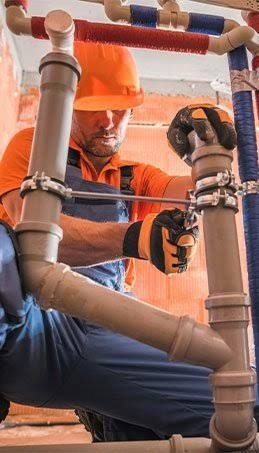
1. The Sacred Rule: Indirect Waste Air Gaps (IPC Section 802)
If a health inspector or plumbing inspector walks into your commercial kitchen and spots a single food-prep sink connected directly to a sanitary sewer pipe with a solid, continuous slip-joint or glued connection, you will receive an immediate red tag violation.
Why?
Imagine your municipal sewer main backs up or your kitchen line chokes downstream. If your vegetable wash sink, three-compartment sink, or ice machine drain is hard-piped directly into the drainage system, pressurized sewage will push backward straight up through the sink drain basin. Raw fecal coliform and blackwater will contaminate the very basin where salad greens, raw seafood, and cocktail ice are prepped.
IPC Section 802.1 & CDPHE Food Code: Indirect Waste Mandates
“All food-handling equipment, including sinks used for the preparation, washing, and culinary processing of food, ice-making machines, steam tables, food warmers, and warewashing machines, shall discharge through an indirect waste pipe by means of an air gap into an approved receptor.”
The Physics of an Approved Air Gap
An indirect waste air gap is a completely unobstructed vertical physical air separation between the bottom of the fixture discharge pipe and the flood level rim of the receiving floor sink or hub drain.
\text{Minimum Air Gap Dimension} = 2 \times \text{Effective Diameter of Discharge Pipe} \quad (\text{Minimum } 1.0 \text{ Inch})
If your ice machine or three-compartment sink drains through a 1-1/2-inch copper or PVC pipe, the vertical air gap between the cut pipe end and the top rim of the porcelain floor sink must be a minimum of 3.0 inches.
Even if the floor sink clogs solid and wastewater overflows onto the kitchen floor, the rising contaminated water can never bridge that vertical physical air gap. Atmospheric pressure prevents siphonage, completely isolating food-contact surfaces from municipal sewage.
2. High-Temperature Commercial Dishwashing Lines: 180°F Booster Physics
Sanitation in commercial kitchens requires eliminating biological pathogens without chemical residues. To meet FDA and Colorado food safety standards, high-temperature commercial dishwashers (such as Hobart, CMA, or Jackson conveyor units) must execute a final sanitizing rinse cycle at a blistering 180°F (82°C).
Standard residential water heaters cannot deliver water above 140°F (and doing so voids their warranty and creates severe scald liabilities). Commercial kitchens utilize dedicated electric or gas booster heaters to elevate 120°F primary domestic water up to 180°F.
| System Component | Material Engineering Requirement | Thermal Stress Hazard | Failure Prevention Protocol |
|---|---|---|---|
| Rinse Feeder Piping | Type L Hard-Drawn Copper or Stainless Steel | Standard PVC and ABS soften and deform at temperatures above 140°F. Standard PEX-B degrades under continuous 180°F pressurized loads. | Must be rigid copper or CPVC Schedule 80 rated for high-temperature service. |
| Booster Relief Valves | ASME Section IV Rated 150 PSI / 210°F T&P Valve | Rapid cycling generates intense thermal expansion surges up to 160+ PSI. | Dedicated commercial high-temp thermal expansion tanks installed upstream. |
| Drain Quenching Valves | Thermostatic Cold Water Tempering Injection | Dumping raw 180°F water into underground PVC drainage softens DWV pipe glue and warps Schedule 40 sewer pipes. | Automatic cold water quench valve injects cold tap water to cool discharge below 140°F before pipe entry. |
3. The Friday Night Choke: Emergency Grease & Floor Sink Stoppages
Why do restaurant plumbing lines always back up during the peak dinner rush?
Because plumbing systems operate on a cumulative thermal and hydraulic curve. During a busy service, high-temperature water from commercial dishwashers liquefies animal fats, vegetable shortenings, and emulsified cooking oils in the dish sink. As that scalding wastewater flows into cooler underground cast iron or PVC sewer pipes 30 feet downstream, the water cools.
The fats, oils, and grease (FOG) instantly solidify, coating the pipe walls with a sticky, waxy film. Food particulates—rice, shredded lettuce, coffee grounds, and flour slurry—act like aggregate in concrete, binding with the grease to form an impenetrable plug.
The Snaking Trap: Why Cables Fail on Restaurant Lines
When an amateur handyman arrives at a flooded restaurant kitchen with a standard mechanical drain snake, they feed a 3/4-inch steel cable down the cleanout. The spinning cutting head punches a narrow 1-inch pencil hole through the soft grease clog. Water drains momentarily. The plumber packs up his tools, collects his check, and leaves.
Within forty-eight hours, the soft grease slumps back together, closing the hole completely. The kitchen backs up again.
The Master Solution: 4,000 PSI Hot-Water Hydro-Jetting
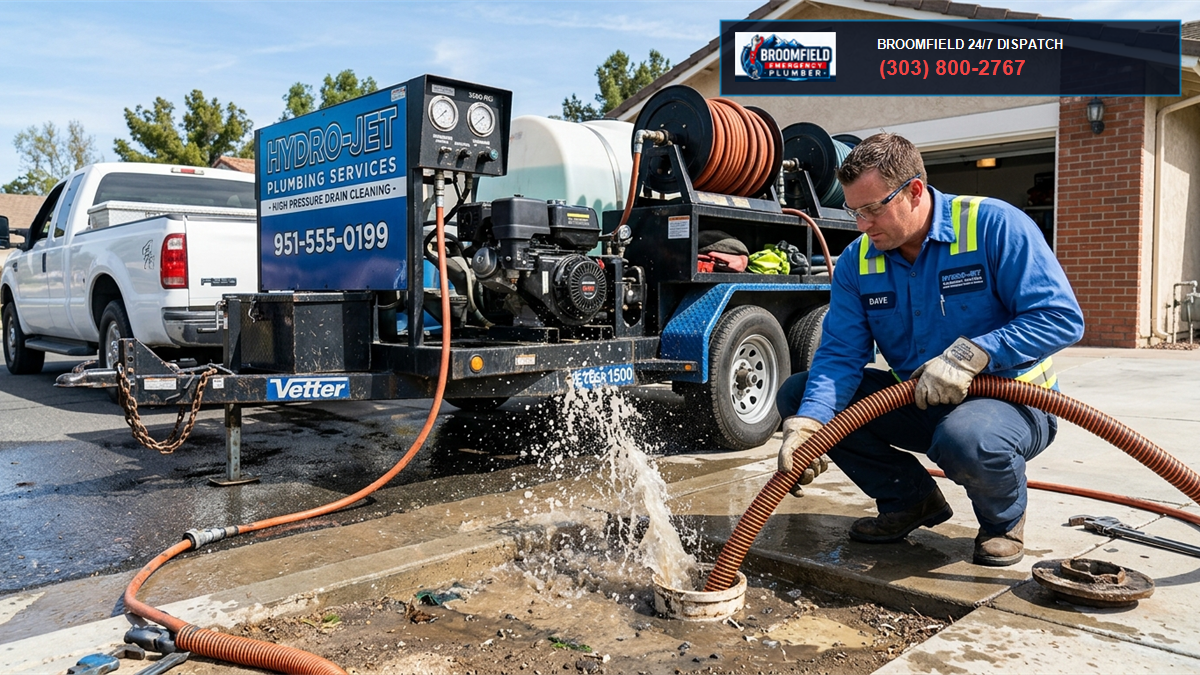
Commercial kitchen lines must be scoured with a heavy-duty commercial hydro-jetter operating at 3,500 to 4,000 PSI with a delivery volume of 8 to 12 gallons per minute.
Specialized spinning ceramic nozzle heads blast high-velocity water backward at a 45-degree angle. The razor-sharp water jets liquefy and shear grease off the pipe walls, scouring the pipe 360 degrees back to its original raw diameter, flushing the emulsified sludge out into the exterior grease interceptor.
4. Cross-Connection Control: ASSE 1013 Reduced Pressure Zone (RPZ) Valves
A commercial kitchen contains dozens of toxic chemicals, carbonated water streams, and boiler additives operating in close proximity to potable drinking water. Preventing back-siphonage into the municipal water grid is a legal mandate enforced by the Colorado Primary Drinking Water Regulations (5 CCR 1002-11).
The Carbonator Backflow Danger
Soda fountain carbonators pump high-pressure carbon dioxide (\( \text{CO}_2 \)) gas into potable water to create sparkling soda water. If a sudden drop in city water pressure occurs, carbon dioxide can back-siphon into upstream copper water pipes.
Carbon dioxide and water form carbonic acid (\( \text{H}_2\text{CO}_3 \)), which violently corrodes copper piping, leaching toxic levels of copper salts into the drinking water. Ingesting this water causes acute copper poisoning!
Plumbing code mandates the installation of certified ASSE 1013 Reduced Pressure Zone (RPZ) backflow preventers or specialized stainless steel double-check valves with intermediate atmospheric vents (ASSE 1022) on all beverage dispensing systems, combi-ovens, and commercial espresso lines.
Under Colorado law, all RPZ backflow preventers must be tested and certified by a state-licensed ASSE Backflow Cross-Connection Control Technician upon installation and annually thereafter, with inspection documentation filed directly with the municipal water department.

5. Preventive Maintenance Checklist: Keeping Your Doors Open
In the restaurant industry, emergency plumbing repairs during peak hours are five times more expensive than planned preventive maintenance—not counting lost revenue and reputation damage from a forced closure.
| Frequency | Critical Kitchen System | Technician Maintenance Task | Health / Code Impact |
|---|---|---|---|
| Daily | Floor Sink Strainer Baskets | Empty, scrub, and replace all fine-mesh stainless steel drain baskets. | Stops 90% of raw food solids from ever entering the drainage line. |
| Monthly | Indoor Under-Sink Grease Traps | Pump, scrape, and measure grease and solids blanket (must never exceed 25% rule). | Prevents foul sewer odors in dining areas and grease bypass. |
| Quarterly | Main Line Hydro-Jetting | High-pressure jetting of cookware line, dish line, and lateral to street interceptor. | Eliminates dinner-rush emergency backups completely. |
| Annually | RPZ Backflow & Booster Audits | Certified differential gauge pressure testing of all RPZ assemblies; flush booster heat exchangers. | Maintains Colorado municipal operating permits and prevents boiler blowouts. |
Frequently Asked Questions (FAQs)
Can we use chemical drain cleaners or lye to clear commercial kitchen line clogs?
Never! Pouring chemical drain openers, caustic sulfuric acid, or heavy lye into commercial kitchen drains is illegal under most municipal environmental sewer ordinances and disastrous for plumbing infrastructure. Caustic chemicals generate extreme heat that warps PVC pipe, corrodes commercial cast iron, and does not dissolve heavy grease masses. Furthermore, if a plumber has to hydro-jet the line later, that chemical slurry poses an extreme chemical burn hazard to service technicians.
What is the “25% Rule” for commercial grease interceptors in Colorado?
Under standard municipal sewer regulations and IPC Appendix G, a grease interceptor must be professionally pumped and cleaned when the combined thickness of the floating grease cap and the settled bottom solids layer reaches 25% of the total liquid operating depth of the tank. Beyond 25%, the hydraulic retention time (HRT) drops below code minimums, allowing emulsified grease to bypass the baffle directly into the public sewer main, triggering heavy municipal fines.
Why does our commercial dishwasher leave mineral spots on glassware even with softeners?
In high-temp commercial dishwashers operating at 180°F, rapid flash-drying causes any remaining Total Dissolved Solids (TDS) in the rinse water to precipitate instantly on hot glass surfaces. Standard ion-exchange water softeners remove calcium and magnesium but replace them with sodium salts, which still leave powdery white sodium spots. High-end food service operations pair softeners with commercial Reverse Osmosis (RO) systems feeding the final 180°F rinse booster to eliminate all mineral spotting.
Can an ice machine drain share an air gap floor sink with a dish sink?
Yes, provided the floor sink is properly sized to handle the combined fixture unit discharge without splashing or flooding, and each indirect waste line maintains its own independent physical air gap (minimum 1 inch or twice the pipe diameter) above the floor sink rim. However, the ice machine drain line should never terminate beneath food-prep surfaces or touch the floor sink grate.
How quickly can your commercial team respond to a kitchen drain emergency?
We maintain dedicated commercial emergency response trucks on active standby 24/7 across Broomfield, Westminster, Thornton, and Boulder County. Our average on-site arrival time for commercial restaurant emergencies is between 30 and 45 minutes, fully equipped to jet lines and get your dish pit operational before dinner service is compromised.