
Critical Plumbing Advisory: Aging Polybutylene Water Infrastructure
Between 1978 and 1995, an estimated six to ten million residential homes across North America — including tens of thousands of suburban properties constructed in Broomfield, Westminster, Thornton, Arvada, Longmont, and Boulder County — were plumbed with polybutylene (PB-2110) plastic piping, commonly marketed under the trade name Quest. Marketed by petrochemical manufacturers as the “pipe of the future” due to its low material cost and flexible installation properties, polybutylene is now universally recognized within forensic engineering as one of the most catastrophic material failures in modern construction history. Chemical reactions between municipal disinfectant oxidizers (chlorine and chloramine) and the internal molecular polymer chains trigger severe micro-fracturing, embrittlement, and catastrophic blowout failures of plastic acetal fittings. Today, major property insurance underwriters across Colorado routinely cancel policies, exclude water damage riders, or mandate full plumbing replacement upon home resale. This technical engineering guide details the degradation kinetics, diagnostic identification protocols, insurance implications, and surgical PEX-A repiping methodologies required to permanently secure affected properties.
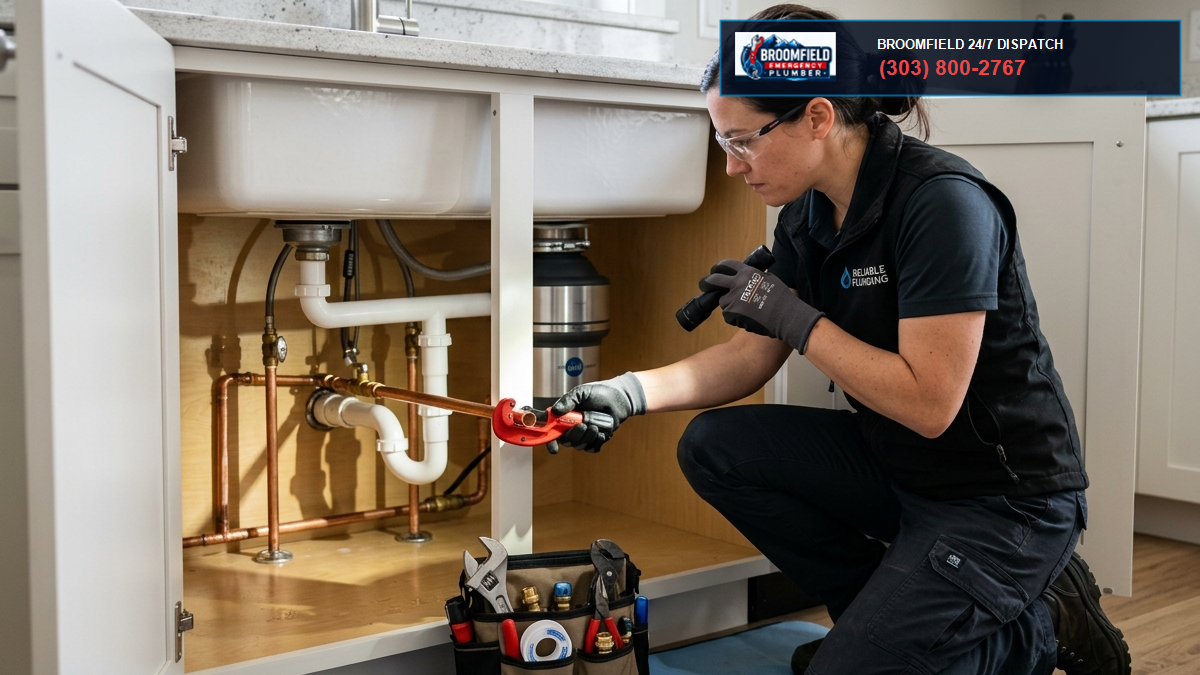
1. The Rise and Catastrophic Fall of Polybutylene (Quest) Plumbing in Colorado
The rapid suburban expansion of the Colorado Front Range during the 1980s and early 1990s coincided precisely with the height of polybutylene popularity. As residential construction boomed across master-planned subdivisions in Broomfield, Adams County, and Jefferson County, building developers faced escalating copper prices and severe labor shortages. Polybutylene, extruded from polybutene-1 thermoplastic resin developed by the Shell Chemical Company, offered an irresistible economic alternative. Plumbers could unroll lightweight, highly flexible 1/2-inch and 3/4-inch gray coils through floor joists and stud cavities with minimal jointing, drastically cutting rough-in labor times by up to 50 percent compared to sweating rigid copper tubing.
However, within five to ten years of commissioning, reports of unexpected, high-volume domestic water line blowouts began flooding municipal building departments and insurance registries. The subsequent class-action lawsuits (such as the landmark Cox v. Shell Oil Co. settlement totaling over billion) definitively established that polybutylene was inherently defective when exposed to standard municipal drinking water supplies. By 1996, polybutylene was quietly stripped from all major model building codes, including the International Plumbing Code (IPC) and Uniform Plumbing Code (UPC), making it illegal for new construction. Despite its decertification thirty years ago, thousands of occupied residences across the Front Range still rely on these rapidly degrading piping networks, effectively functioning as hydraulic ticking time bombs behind finished drywall and beneath subfloors.
2. Chemical Degradation Kinetics: Chlorine, Chloramine & Acetal Fitting Micro-Fracturing
Understanding why polybutylene fails requires examining the microscopic polymer degradation mechanisms occurring at the boundary layer between the fluid column and the pipe interior wall. To maintain public health standards and suppress microbial pathogens like Giardia, Cryptosporidium, and coliform bacteria, Front Range municipal water treatment facilities (including Broomfield’s 144th Avenue Water Treatment Plant and Denver Water facilities) utilize free chlorine and chloramine compounds as residual disinfectants.
While chlorine concentrations ranging between 0.5 and 2.5 parts per million (PPM) are safe for human consumption, these halogen oxidizers are violently aggressive toward polyolefin thermoplastics. Chlorine molecules actively attack the tertiary carbon atoms within the polybutylene polymer chain through free-radical oxidation. This chemical attack shears the long-chain macromolecules, reducing the material molecular weight and inducing micro-crystallinity. Over time, the smooth, flexible interior lumen develops microscopic longitudinal fissures and micro-cracks that slowly propagate outward through the pipe wall under continuous hydrostatic line pressure.
Even more volatile than the pipe tubing itself were the early-generation connection fittings. During the late 1970s and 1980s, installers coupled polybutylene tubing using insert fittings molded from acetal resin (polyoxymethylene or POM, commonly known by the DuPont trade name Delrin) secured by aluminum or copper crimp bands. Acetal polymers undergo rapid acid-catalyzed hydrolysis and chlorine-induced stress corrosion cracking (SCC). The sharp barb ridges of the insert fitting create localized hoop stress concentrations. As chlorine attacks the acetal material, it becomes chalky, brittle, and structurally compromised. Eventually, the barbed shank completely shears off inside the pipe, or the fitting body splits longitudinally from end to end, resulting in an instantaneous, full-bore 3/4-inch pressurized water release delivering 10 to 20 gallons of water per minute into finished living spaces.
| Component Type | Material Composition | Primary Failure Mode | Average Time to Catastrophic Failure |
|---|---|---|---|
| 1st Generation Fittings | Molded White/Gray Acetal Resin (Delrin) | Hydrolytic stress cracking, barb shearing, body splitting | 8 to 15 years (Over 90% have failed or are near failure) |
| 2nd Generation Fittings | Cast/Machined Yellow Brass with Copper Rings | Dezincification corrosion, pipe hoop stress fracturing | 15 to 25 years (Degradation accelerated by hard water) |
| PB-2110 Pipe Tubing | Polybutene-1 Thermoplastic Resin | Internal micro-fissuring, longitudinal burst, pinhole leaks | 20 to 30 years (Current Front Range infrastructure age) |
| Aluminum Crimp Bands | Extruded Aluminum Alloy | Galvanic oxidation, mechanical crimp relaxation, joint blow-off | 10 to 18 years in humid or unconditioned crawlspaces |

3. Forensic Identification: How Master Plumbers Verify Polybutylene on Site
Because polybutylene was frequently mixed with copper stub-outs under sinks and behind toilets to create the illusion of copper plumbing, visual surface inspections can be deceptive. A comprehensive master plumber inspection involves inspecting critical service entry points and mechanical terminations:
- Water Heater Mechanical Connections: Inspect the cold water inlet and hot water outlet piping directly above the water heater. In many installations, copper flex connectors transition into gray polybutylene tubing within the first 18 to 24 inches of ceiling space.
- Basement Ceiling Joists & Unfinished Mechanical Spaces: Inspect exposed floor joists in unfinished basements or crawlspaces. Polybutylene is instantly recognizable by its dull, matte gray exterior color (though rare variants in blue or black exist for underground service lines) and external diameter stamping:
PB2110,ASTM D-3309, orQest. - Main Service Water Entry: Locate the main domestic shutoff valve where the municipal water service enters the foundation slab or basement wall. Look for blue polybutylene (“Big Blue”) or gray piping transitioning to a brass ball valve.
- Under-Sink Cabinet Penetrations: Examine behind vanity cabinets and kitchen sink bases. In many subdivisions, builders ran gray polybutylene through the drywall and used compression transition fittings directly onto chrome shutoff angle stops.
- Fitting Stamping and Color Verification: Inspect the fittings joining the pipes. White or off-white plastic fittings secured with black, silver, or copper crimp bands confirm original, highly dangerous 1st-generation acetal fittings. Brass fittings with copper crimp rings indicate 2nd-generation retrofits, which still carry high failure risks due to tube degradation and dezincification.
4. Insurance Underwriting Crises & Real Estate Impact in Colorado
The presence of polybutylene piping has transcended mechanical engineering to become a major financial and legal liability for Colorado property owners. Over the past decade, property and casualty insurance companies (including State Farm, Allstate, Travelers, and Liberty Mutual) have dramatically tightened underwriting guidelines across the Denver metro area:
- Policy Cancellation and Non-Renewal: Insurance carriers routinely review municipal property records and home inspection databases. When an active polybutylene system is discovered, carriers frequently issue 30-day notices of cancellation unless the homeowner provides proof of a complete whole-house repipe performed by a licensed master plumbing contractor.
- Water Damage Exclusions & Sky-High Deductibles: Insurers that agree to write coverage on homes with polybutylene frequently attach an explicit “Plumbing Water Damage Exclusion” endorsement or raise water damage deductibles to ,000 or ,000, leaving the homeowner completely unprotected if a pipe bursts inside a wall.
- Real Estate Transaction Disruption: During home sales in competitive Front Range markets, buyer home inspectors universally flag polybutylene as an urgent material defect. Lenders routinely halt underwriting approval, mortgage escrow accounts demand holdbacks, and buyers demand full financial concessions (,000 to ,000) or walk away from contracts. Proactive repiping is now a prerequisite for protecting property equity and market liquidity.
5. Why “Spot Repairs” Are a Dangerous Fallacy
When a polybutylene pipe develops a pinhole leak or an acetal tee blows apart, homeowners frequently ask: “Can’t you just cut out the broken piece and install a push-to-connect SharkBite or crimp coupler?”
While mechanical transition couplers (such as brass polybutylene-to-PEX transition couplings) exist for temporary emergency stabilization, treating polybutylene with localized spot repairs is a disastrous strategy. Because the chemical attack by chlorine and chloramines occurs continuously throughout the entire water column, degradation is uniform and systemic. When one fitting or pipe segment bursts, every other fitting and foot of tubing throughout the building has endured the exact same chemical exposure and mechanical fatigue.
Furthermore, cutting into brittle, micro-fractured polybutylene to install a mechanical repair fitting imparts intense radial and torsional stress onto adjacent pipe sections, frequently initiating secondary stress fractures several inches away that burst within days or weeks of the original repair. The only permanent, code-compliant, and insurable solution is a total, whole-structure water piping replacement.
6. Modern Repiping Materials: Why Uponor PEX-A Is the Gold Standard
When executing a whole-house repipe across the Front Range, selecting the replacement piping material is critical. Master plumbers evaluate three primary options:
Option 1: Uponor AquaPEX (PEX-A) with ProPEX Cold-Expansion Fittings (The Master Plumber Choice)
PEX-A is manufactured using the Engel method, where peroxide molecules cross-link polyethylene polymers during the extrusion process while the material is in an amorphous, liquid state. This produces the highest degree of cross-linking (over 85 percent), endowing PEX-A with extraordinary thermal flexibility, zero mechanical memory, and unrivaled freeze-burst tolerance. PEX-A pipes can expand up to three times their normal diameter during catastrophic Colorado freeze events without rupturing, snapping back to original dimensions upon thawing.
Crucially, PEX-A utilizes ASTM F1960 ProPEX cold-expansion fittings. Rather than inserting a restrictive undersized fitting and crimping it from the outside, the pipe end and an engineered PEX ring are expanded using an electric tool, the full-port fitting is inserted, and the pipe natural shape memory shrinks tightly around the fitting. This design eliminates flow restriction, delivers maximum hydraulic volume, and creates a permanent connection that becomes stronger over time.
Option 2: PEX-B (Silane Crimp Method)
PEX-B is cross-linked after extrusion using a moisture-curing silane process (65 to 70 percent cross-linking). While highly durable and resistant to chlorine degradation, PEX-B is significantly stiffer than PEX-A, making retrofitting through tight finished drywall cavities more challenging. PEX-B relies on ASTM F1807 insert fittings secured by copper crimp rings or stainless steel clamps, which reduces the internal lumen diameter by 20 to 25 percent at every joint, causing minor pressure drops across multi-fixture runs.
Option 3: Type L Rigid Copper Tubing
Rigid copper remains a revered traditional material, offering exceptional mechanical rigidity, fire resistance, and antimicrobial properties. However, installing copper in an existing finished home requires extensive demolition of drywall, soldering with open flames inside enclosed wooden wall framing, and significantly higher material and labor costs. Furthermore, in communities with slightly acidic well water or aggressive soil conditions, copper can suffer from pinhole pitting corrosion over a 20 to 25-year timeline.
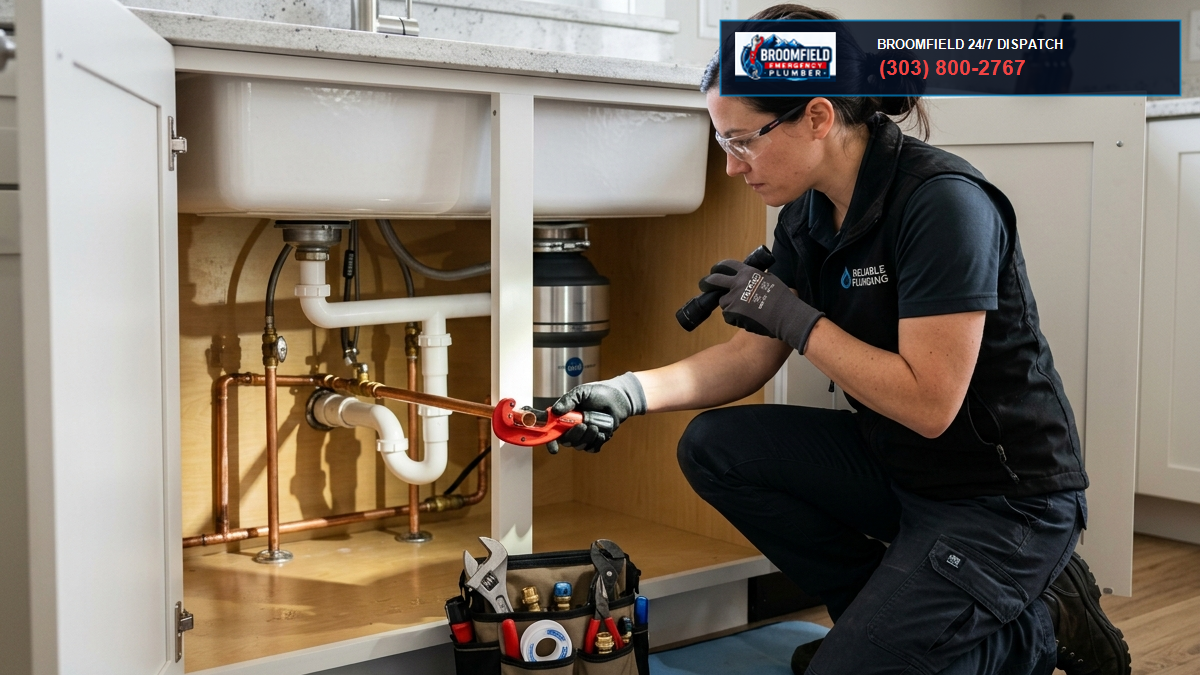
7. The Surgical Repipe Methodology: Step-by-Step Field Execution
A professional whole-home repipe executed by our licensed master plumbers is an art of surgical precision designed to minimize disruption to home life. The complete project is executed across four structured phases:
- Phase 1: Architectural Mapping & Pre-Planning: Before making a single cut, master plumbers trace the home complete plumbing layout using non-invasive thermal imaging cameras and acoustic pipe locators. We map out the main cold water trunk, domestic hot water distribution lines, fixture drop locations, and structural joist pathways through basements, crawlspaces, and attics.
- Phase 2: Surgical Drywall Access Windows: Rather than tearing down entire walls, our technicians cut small, neat 5×5-inch or 8×8-inch inspection access windows directly behind fixture locations (such as under vanity cabinets, behind toilet supply stops, or along basement drop ceilings). Every piece of removed drywall is labeled and preserved for seamless re-installation.
- Phase 3: Overhead Routing of Continuous PEX-A Lines: New, continuous coils of Uponor PEX-A (color-coded red for domestic hot water and blue for domestic cold water) are pulled from a central basement mechanical manifold through pre-drilled framing pathways to each individual bathroom, kitchen, laundry, and outdoor hose bibb. Crucially, zero concealed fittings are placed inside inaccessible wall cavities; connections occur only at the manifold and at the final fixture stub-outs, eliminating hidden leak risks forever.
- Phase 4: Fixture Cutover, Static Hydrostatic Testing & City Inspection: On the final day, the municipal water is shut down for approximately 4 to 6 hours while technicians connect the new PEX-A network to all sinks, showers, toilets, and water heaters, installing brand-new quarter-turn ball valve angle stops and braided stainless steel supply lines. The entire system is pressurized to 100 PSI with compressed air or water and held under static pressure for 24 hours to prove 100 percent zero-leak integrity for the municipal building inspector.
8. Comprehensive Field Case Study: 1989 Broadlands Subdivision Repipe (Broomfield, CO)
In November 2025, our master plumbing emergency division received an urgent dispatch call from a 3,400-square-foot two-story single-family residence in the Broadlands golf community of Broomfield. Built in 1989, the home was occupied by a family who had lived there for six years without plumbing incidents.
At 2:15 AM on a Sunday morning, an original 3/4-inch acetal plastic tee fitting located inside the second-floor master bathroom vanity wall cavity fractured completely under standard 65 PSI municipal pressure. The barbed shank sheared off, releasing a continuous high-volume deluge of hot water that cascaded through the second-floor subfloor, saturated ceiling drywall, and flooded the newly remodeled kitchen below, destroying custom hardwood cabinetry, quartz countertops, and finished hardwood floors. Total property remediation costs exceeded ,000.
Following emergency extraction and structural drying, the homeowner insurance company notified them that coverage for any future water damage would be completely rescinded unless all polybutylene plumbing was eradicated within 45 days. Our master plumbing repiping division was contracted to perform a complete turnkey replacement:
- Scope of Work: Removal of 850 linear feet of degraded 1/2-inch and 3/4-inch gray polybutylene piping servicing 3.5 bathrooms, kitchen, laundry room, wet bar, and three exterior frost-free hose bibbs.
- Material Engineered: Complete installation of Uponor AquaPEX (PEX-A) utilizing ASTM F1960 ProPEX cold-expansion brass and engineered polymer fittings, routed from a new central brass manifold in the basement utility room.
- Timeline & Disruption: Our crew of four master plumbers completed all pipe routing, fixture drop cutovers, and hydrostatic pressure testing in just 2.5 days. The family remained in their home throughout the project, experiencing only one single 5-hour scheduled water interruption during final fixture cutovers.
- Final Verification: The City and County of Broomfield chief plumbing inspector conducted the rough-in and final pressure test inspection, signing off on the permit with zero corrections. We provided the homeowner with a certified Master Plumber Certificate of Repiping, which was submitted to their insurance provider, resulting in full policy reinstatement and a 15 percent reduction in their annual homeowner insurance premium.
9. Permitting, Municipal Inspections & Colorado State Plumbing Board Compliance
Performing a whole-house repipe without a municipal building permit is an illegal and hazardous practice. In Colorado, plumbing installations are governed by the State Plumbing Board (DORA) and municipal building codes adopted by the City and County of Broomfield, City of Westminster, and Boulder County.
A legitimate master plumbing contractor will always pull an official plumbing permit prior to commencing work. The permit process ensures two independent levels of quality assurance:
- Rough-In Pressure Test Inspection: Before any drywall access holes are patched, the municipal building inspector inspects every visible pipe pathway, verifies proper pipe support spacing (PEX-A must be supported every 32 inches horizontally), verifies nail plates are installed on framing studs where pipes pass within 1.25 inches of the stud edge, and checks that the system holds a static test pressure of at least 80 to 100 PSI on an independent inspection gauge.
- Backflow & Water Quality Verification: The inspector verifies that proper thermal expansion protection, pressure reducing valves, and backflow prevention devices are active and certified.
- Final Code Closeout: Upon successful testing, the inspector issues an official Certificate of Final Inspection, creating a permanent public record that protects the homeowner against real estate disclosure disputes during future property sales.
10. Complete Cost Breakdown & Financial ROI of Whole-Home Repiping
Investing in a whole-home repipe is one of the highest-yield infrastructure improvements a homeowner can execute on an older Front Range residence:
| Home Size & Fixture Count | Average PEX-A Repipe Cost | Drywall Patch & Texture | Typical Completion Timeline |
|---|---|---|---|
| Townhome / Condo (1-2 Bath, 1,200 sq ft) | ,500 — ,500 | ,000 — ,800 | 1 to 2 Days |
| Standard Ranch (2-2.5 Bath, 2,000 sq ft) | ,500 — ,500 | ,500 — ,500 | 2 to 3 Days |
| Two-Story Family Home (3-3.5 Bath, 3,200 sq ft) | ,500 — ,000 | ,000 — ,500 | 3 to 4 Days |
| Luxury Custom Estate (4+ Bath, 4,500+ sq ft) | ,000 — ,000+ | ,500 — ,500 | 4 to 6 Days |
When compared against the catastrophic cost of a single major water leak — which routinely exceeds ,000 to ,000 in structural repairs, mold remediation, temporary housing, and destroyed personal heirlooms — proactive PEX-A repiping delivers peace of mind, ensures full insurability, and directly increases property resale value dollar-for-dollar.
11. Hydraulic Flow Dynamic Modeling: Friction Loss & Hazen-Williams Analysis
When designing a modern residential repiping layout, master plumbers calculate fluid velocities and pressure drops utilizing the classical Hazen-Williams hydraulic formula:
h_f = 0.2083 \times \left(\frac{100}{C}\right)^{1.852} \times \frac{Q^{1.852}}{d_i^{4.8655}}
Where:
- $ = Friction head loss in feet of water per 100 feet of pipe run.
- $ = Hazen-Williams roughness coefficient (Higher values represent smoother pipe walls and less turbulent friction drag).
- $ = Volumetric flow rate in gallons per minute (GPM).
- $ = Exact internal pipe diameter in inches.
A critical comparison of hydraulic roughness demonstrates why PEX-A excels over aged polybutylene and corroded metallic systems:
- Aged Polybutylene (PB-2110): While newly manufactured polybutylene initially claimed a $ factor of 150, decades of oxidative chlorine degradation create severe internal micro-fissuring, pitting, and delamination. Actual field measurements of 30-year-old Quest tubing reveal effective roughness coefficients dropping to = 120 – 130$, with internal fitting barbs causing substantial turbulent head loss.
- Type L Hard Copper: New copper exhibits = 150$. However, in Front Range municipal supplies carrying dissolved minerals, internal copper pipe walls develop oxide scales and carbonate patinas that reduce the effective coefficient to = 130 – 140$ over a 20-year span.
- Uponor PEX-A: PEX-A maintains a permanent, glassy interior surface that completely resists mineral scale adherence and biofilm attachment, retaining a pristine = 150$ throughout its entire 50-year engineering design life. Coupled with full-port ProPEX expansion fittings that mirror the pipe inside diameter, PEX-A delivers up to 25 percent higher dynamic flow rates at upper-floor shower heads and multi-fixture master bathrooms compared to crimp-style PEX-B or degraded polybutylene.
12. Manifold “Home-Run” vs. Modified Trunk-and-Branch Piping Architecture
During a whole-house repipe, homeowners have the unique opportunity to modernize their water delivery architecture. Licensed plumbing contractors engineer one of two high-performance piping topologies:
Topology A: Dedicated Central Manifold (“Home-Run” System)
In a home-run architecture, a central multi-port brass or engineered polymer manifold is mounted in the basement mechanical room directly adjacent to the main water shutoff and water heater. From this central distribution hub, individual, dedicated 1/2-inch PEX-A lines run continuously to each plumbing fixture in the home without a single intermediate tee fitting.
Key Advantages:
- Zero Concealed Joints: Absolutely zero mechanical or soldered connections exist behind drywall, inside ceiling cavities, or under floors. Every single connection is exposed and visible at the manifold or directly under the sink.
- Individual Fixture Isolation: If a guest bathroom toilet fill valve needs replacement, the homeowner can turn off the dedicated red or blue shutoff valve on the central manifold without interrupting water service to the rest of the residence.
- Pressure Drop Elimination: Operating a dishwasher or flushing a toilet causes zero noticeable pressure or temperature fluctuations at adjacent shower fixtures.
- Rapid Hot Water Delivery: Because dedicated 1/2-inch lines hold significantly less fluid volume than a 3/4-inch trunk line, hot water arrives at distant second-floor fixtures in half the standard wait time.
Topology B: Engineered Reduced Trunk-and-Branch with Sub-Manifolds
For expansive two-story residences or homes with complex architectural layouts where running 20 individual lines back to the basement is physically constrained, master plumbers install a continuous 3/4-inch main trunk with dedicated mini-manifolds located in localized plumbing wet walls (e.g., an accessible utility panel servicing the master bathroom suite). This hybrid approach provides excellent flow balancing, minimizes drywall penetrations, and optimizes hot water circulation efficiency.
13. Pre-Purchase Homebuyer & Real Estate Due Diligence Checklist (1978–1996 Homes)
If you are touring or considering purchasing a home constructed between 1978 and 1996 in Broomfield, Westminster, Boulder, Lafayette, Louisville, or surrounding communities, follow this essential buyer due diligence protocol:
- Request a Dedicated Master Plumber Plumbing Inspection: Standard real estate home inspectors possess generalist knowledge and routinely miss concealed polybutylene stub-outs or fail to inspect water heater crawlspaces. Hire an independent licensed master plumber to conduct an exhaustive visual, acoustic, and thermal diagnostic inspection.
- Verify the Exterior Municipal Service Lateral: The exterior underground line from the street water meter pit to the home foundation can also be polybutylene (“Big Blue”). An underground lateral rupture can cost ,000 to ,000 in excavation and directional boring. Plumbers inspect the water pit to verify service pipe material.
- Demand Seller Property Disclosures on Past Water Losses: Review Section 8 of the Colorado Real Estate Commission Seller Property Disclosure form for any history of leaks, subfloor repairs, drywall patches, or insurance claims. Past water repairs in homes of this vintage are overwhelmingly polybutylene-related.
- Obtain Insurance Binding Prior to Inspection Deadlines: Contact your insurance agent immediately with the property address and request written underwriting confirmation that the carrier will write comprehensive homeowner coverage without a polybutylene exclusion rider. If exclusions apply, negotiate an immediate seller concession for a complete PEX-A repipe prior to closing.
14. Emergency Master Plumber Protocols: What to Do If Polybutylene Bursts Right Now
If you experience an active polybutylene pipe or fitting blowout in your home, every second counts to minimize structural water damage:
- Immediately Shut Off the Main Water Valve: Run to your main domestic shutoff valve (typically located in the basement near the water meter or in a ground floor utility closet) and rotate the handle 90 degrees clockwise until it is perpendicular to the pipe. If you have an older gate valve, turn the wheel clockwise until it seats completely.
- Depressurize the Plumbing System: Immediately open the lowest cold water faucet in the house (such as a basement laundry sink or exterior garden hose bibb) and open the highest hot water faucet upstairs. This drains standing water out of the pipes and stops pressurized water from feeding the leak.
- Cut Power to Flooded Zones: If water is cascading through ceilings, light fixtures, or near electrical outlets, go directly to your electrical breaker panel and shut off the main breaker or the individual breakers feeding the flooded rooms to eliminate electrocution hazards.
- Turn Off the Water Heater: Switch your gas water heater control valve to “PILOT” or “OFF” (or flip the 240V double-pole circuit breaker on an electric water heater). Heating an empty water tank will burn out heating elements or crack the glass tank lining.
- Call Our 24/7 Emergency Dispatch: Contact our emergency master plumbers immediately. We dispatch fully equipped diagnostic trucks across Broomfield, Westminster, and Boulder County within 60 minutes to stabilize the line, execute emergency isolation, and provide a turnkey repiping plan.
24/7 Polybutylene Repiping & Emergency Leak Specialists in Broomfield
Do you suspect your home has gray Quest polybutylene piping? Has your insurance company threatened cancellation, or did you discover a hidden wall leak? Protect your family home and property equity with an engineered, whole-house Uponor PEX-A repipe from Colorado licensed master plumbers.