
1. Executive Summary & Front Range Colorado Water Distribution Dynamics
For homeowners, building contractors, and commercial facility managers across the Colorado Front Range — spanning Broomfield, Westminster, Boulder, Arvada, and Centennial — selecting the optimal piping material for whole-house repiping or new construction is one of the most critical long-term capital investments in a building’s lifespan. Over the past five decades, plumbing engineering standards have evolved from galvanized steel to rigid copper tubing (Types K, L, and M), and ultimately to advanced cross-linked polyethylene (PEX-A, PEX-B, and PEX-C). Each material presents radically different mechanical properties, chemical degradation pathways, hydraulic friction coefficients, and thermal expansion dynamics.
The choice between PEX-A (Engel method expansion), PEX-B (Silane method crimp/clamp), and traditional Rigid Copper is intensified by Colorado’s unique environmental and geographic operating envelope. The Front Range climate delivers severe meteorological swings, characterized by sub-zero winter arctic blasts where ambient temperatures plummet below minus 15 degrees Fahrenheit, subjecting domestic water lines within exterior walls, unconditioned crawlspaces, and cantilevered floors to extreme freezing pressures. Simultaneously, regional municipal water chemistry exhibits distinct localized variables: Front Range water utilities (such as Denver Water, City of Boulder, and Broomfield Utilities) utilize chloramines (monochloramine) and free chlorine for secondary disinfection, maintain water pH levels between 7.4 and 8.5, and deliver water containing moderate-to-high dissolved mineral hardness. In older neighborhoods constructed between 1960 and 1995, thousands of homes built on expansive bentonite clay soils suffer from systemic underground copper slab leaks caused by abrasive soil friction and exterior electrolytic pitting.
When evaluating a whole-house repiping project, property owners must look beyond superficial material costs. A true engineering evaluation demands an exhaustive analysis of cross-linking molecular density, hydraulic equivalent length restrictions across insert fittings, oxidative degradation kinetics under continuous chlorine exposure, and freeze-expansion burst elasticity. This comprehensive technical guide delivers an authoritative engineering comparison of PEX-A, PEX-B, and Copper, empowering Front Range homeowners to make informed, lifelong plumbing decisions.
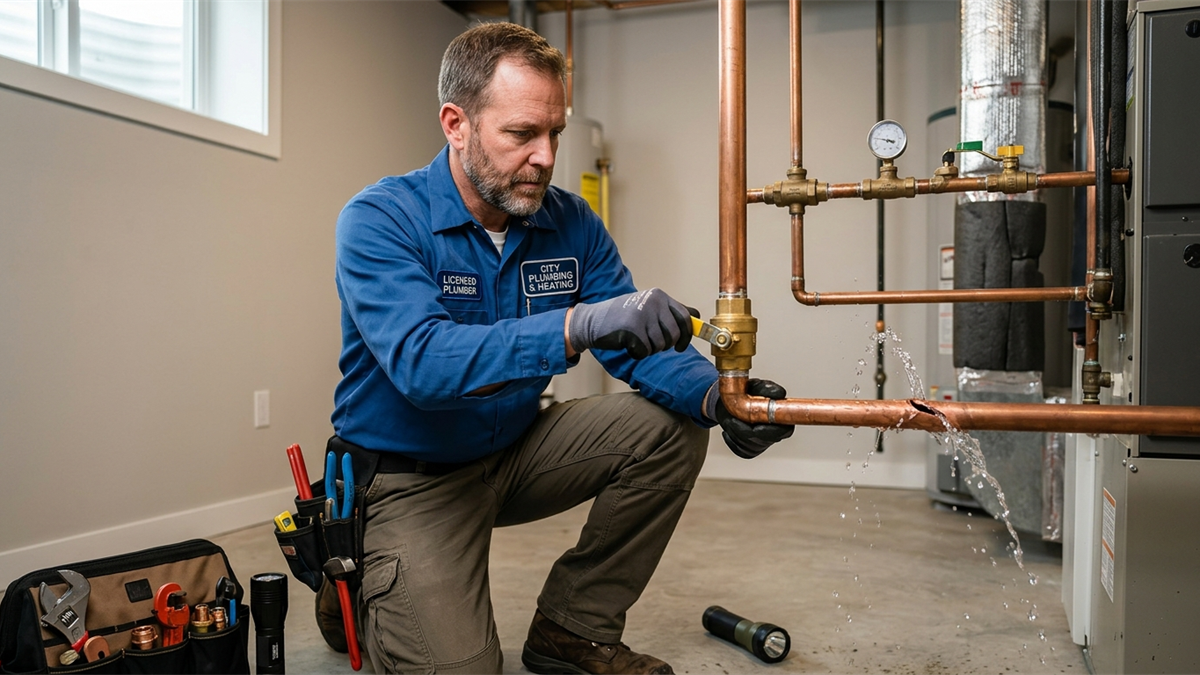
2. Molecular Chemistry & Manufacturing Physics: Cross-Linked Polyethylene vs. Copper
To understand why PEX-A and PEX-B behave so differently under mechanical stress, one must examine their molecular polymer architectures at the chemical bond level alongside the metallurgical properties of commercial copper tubing.
2.1 PEX-A: The Engel / Peroxide Method & Thermal Shape Memory
PEX-A is manufactured utilizing the Engel (peroxide) method, governed by ASTM F876 and ASTM F877 standards. During the extrusion process, organic peroxides are introduced into high-density polyethylene (HDPE) resin while the polymer is maintained in a completely molten liquid state above its crystalline melting point (typically exceeding 390 degrees Fahrenheit). Under immense hydraulic extrusion pressures, peroxide radicals cleave hydrogen atoms from the polyethylene carbon backbone, forming strong carbon-to-carbon (C-C) covalent cross-links between adjacent polymer chains.
The defining characteristic of PEX-A is its exceptional cross-linking density, strictly exceeding 85% (typically 85% to 89%). Because cross-linking occurs while the polymer is completely amorphous and molten, the resulting molecular matrix is remarkably uniform, homogeneous, and isotropic. This dense molecular lattice imparts two extraordinary physical properties to PEX-A:
- Unsurpassed Flexibility: PEX-A exhibits the lowest bend radius of any flexible plumbing material (as tight as 3 to 4 times the outside pipe diameter), allowing it to snake effortlessly through wall cavities and floor joists without requiring intermediate directional 90-degree elbow fittings.
- Thermal Shape Memory: If PEX-A is accidentally kinked during cold-weather installation, it does not need to be cut out and repaired with a coupling. Applying gentle, indirect hot air from an industrial heat gun (approximately 260 degrees Fahrenheit) causes the polymer crystals to relax; the cross-linked covalent bonds instantaneously snap the pipe back to its original cylindrical extruded shape with zero loss of structural integrity or pressure rating.
2.2 PEX-B: The Silane / Moisture-Cure Method
PEX-B is produced via the Silane (moisture-cure) method, standardized under ASTM F876/F877. In this process, organosilane molecules with hydrolyzable groups are grafted onto the polyethylene backbone during extrusion. However, actual cross-linking does not occur inside the extruder. Instead, after the pipe is extruded into its final cylindrical profile, it is subjected to an accelerated post-extrusion curing process — immersed in hot-water baths or steam saunas for several hours.
Moisture triggers a condensation chemical reaction, creating silicon-oxygen-silicon (Si-O-Si) siloxane bridges between polymer chains. Industry standards require PEX-B to achieve a cross-linking density between 65% and 70%. Because cross-linking occurs post-extrusion in a solid crystalline state, the molecular matrix is non-uniform, resulting in distinct rigid crystalline and amorphous zones. Consequently:
- Increased Rigidity & Coil Memory: PEX-B is noticeably stiffer than PEX-A, exhibiting heavy ‘coil memory’ that resists unrolling in cold weather and demanding a wider bend radius (typically 6 to 8 times outside diameter).
- Zero Shape Memory: If PEX-B is kinked, the rigid crystalline lattice suffers permanent micro-fracturing along the fold. Heating PEX-B will not repair the kink; the compromised section must be physically severed and spliced with an insert coupling and mechanical crimp rings.
2.3 Rigid Copper Tubing: Metallurgy & Annealing Classifications
Commercial copper tubing utilized in residential plumbing is manufactured from 99.9% pure deoxidized high-residual phosphorus copper (Alloy C12200), conforming to ASTM B88 standards. Copper is classified by wall thickness and temper:
| Copper Type | Wall Thickness (3/4″ Nominal) | Color Code | Standard Engineering Application |
|---|---|---|---|
| Type K (Heavy Wall) | 0.065 Inches | Green | Underground water service mains; severe commercial environments. |
| Type L (Medium Wall) | 0.045 Inches | Blue | The master plumber standard for interior domestic water & heating. |
| Type M (Thin Wall) | 0.032 Inches | Red | Budget residential branch piping; hydronic baseboard loops (non-potable). |
Copper is an extraordinary conductor of heat and exhibits high tensile strength (over 30,000 PSI). However, its metallic rigidity means it possesses zero volumetric elasticity: when water freezes inside copper pipe, the resulting hydrostatic ice pressure ruptures the thin metal wall catastrophically.
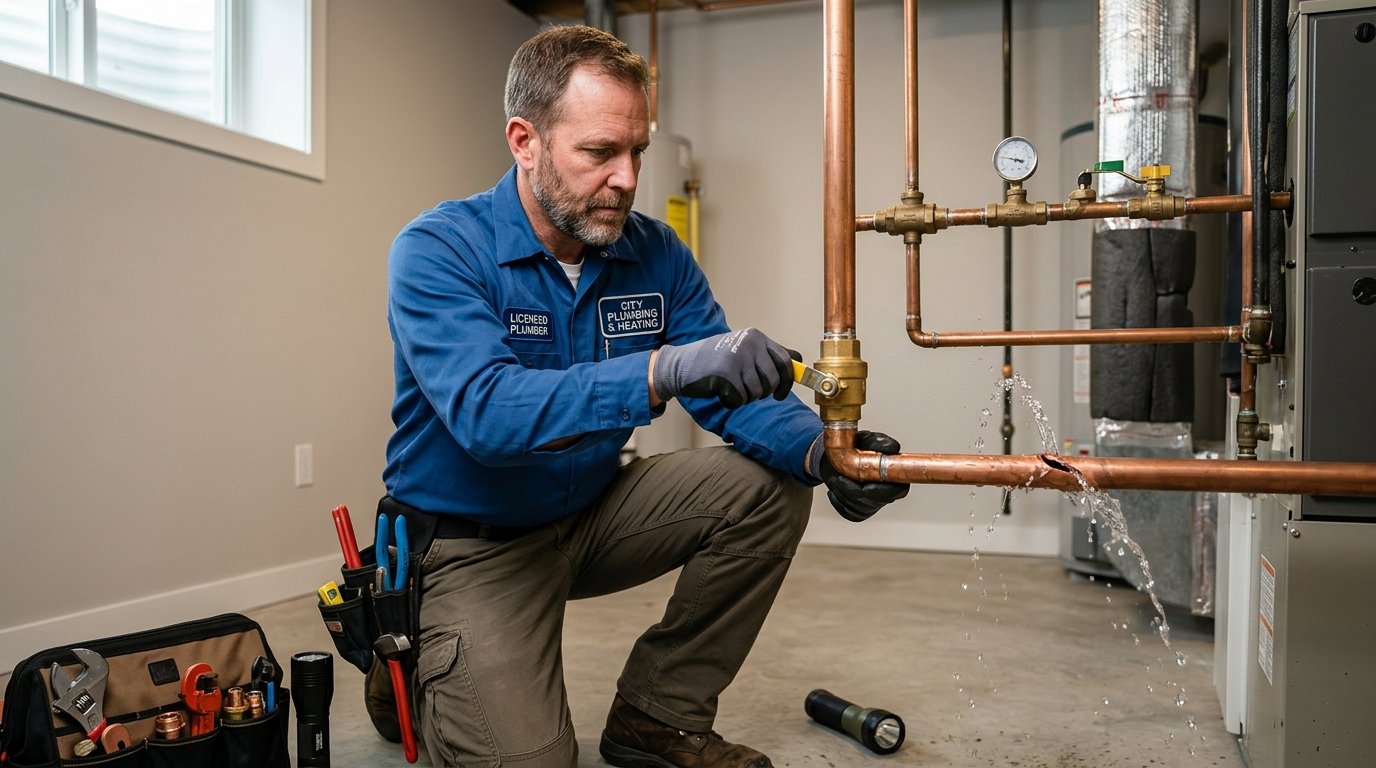
3. Fitting Systems & Fluid Dynamics: Expansion vs. Crimp vs. Sweat
The true hydraulic and structural differentiator between piping systems lies in their joint connection technologies. Over 90% of plumbing leaks do not occur within the continuous pipe wall; they originate at fitting interfaces.
3.1 PEX-A Cold Expansion Fittings (ASTM F1960 – Uponor ProPEX)
PEX-A utilizes the ASTM F1960 Cold Expansion System. A PEX-A expansion ring is slid over the cut pipe end, and an engineered mechanical expansion tool (Milwaukee or DeWalt ProPEX tool) expands the pipe and ring simultaneously. The technician inserts an oversized, high-flow engineered plastic (polyphenylsulfone – PPSU) or lead-free brass fitting. Within seconds, the natural radial elastic memory of the PEX-A polymer contracts forcefully against the barbed fitting body, creating a permanent, watertight mechanical compression seal that grows stronger over time.
The Hydraulic Advantage: Because the pipe is expanded outward before the fitting is inserted, the internal diameter (ID) of an ASTM F1960 fitting is virtually identical to the pipe lumen itself. There is virtually zero flow constriction or pressure drop across the fitting. Under high domestic flow velocities (8-10 feet per second), F1960 fittings generate negligible turbulence, preventing localized erosion-corrosion.
3.2 PEX-B Insert Crimp & Clamp Fittings (ASTM F1807 / ASTM F2159)
PEX-B cannot be cold-expanded; attempting to expand PEX-B over an F1960 fitting causes longitudinal micro-cracking and catastrophic joint blowout under pressure. Instead, PEX-B relies on ASTM F1807 (brass) or ASTM F2159 (poly) insert fittings secured externally by an annealed copper crimp ring (crushed with a manual toggle tool) or a stainless steel pinch clamp (ASTM F2098).
The Hydraulic Restriction: Because the fitting must slide inside the unexpanded PEX-B pipe, the fitting’s internal bore is significantly narrower than the pipe itself. A standard 1/2-inch ASTM F1807 brass insert fitting exhibits an internal diameter of only 0.350 inches, compared to the pipe’s internal diameter of 0.485 inches. This represents an astounding 48% reduction in cross-sectional flow area at every single fitting! In a complex home with dozens of crimped 90-degree elbows and tees, cumulative friction head loss severely depresses dynamic water pressure at upstairs master bathroom fixtures.
3.3 Copper Sweat & Press Systems (ASTM B88 / ASME B16.22 / Viega ProPress)
Copper tubing is joined via traditional solder capillary brazing (sweating with 95/5 lead-free tin-antimony solder) or modern mechanical press fittings (Viega ProPress). Like PEX-A, copper fittings are external slip-hub connections, preserving the full interior diameter of the pipe. However, copper sweat joints demand open oxy-acetylene or propane torches inside wall cavities — posing severe structural fire risks during residential retrofits — and require corrosive chemical acid flux that must be thoroughly flushed to avoid pinhole pitting.
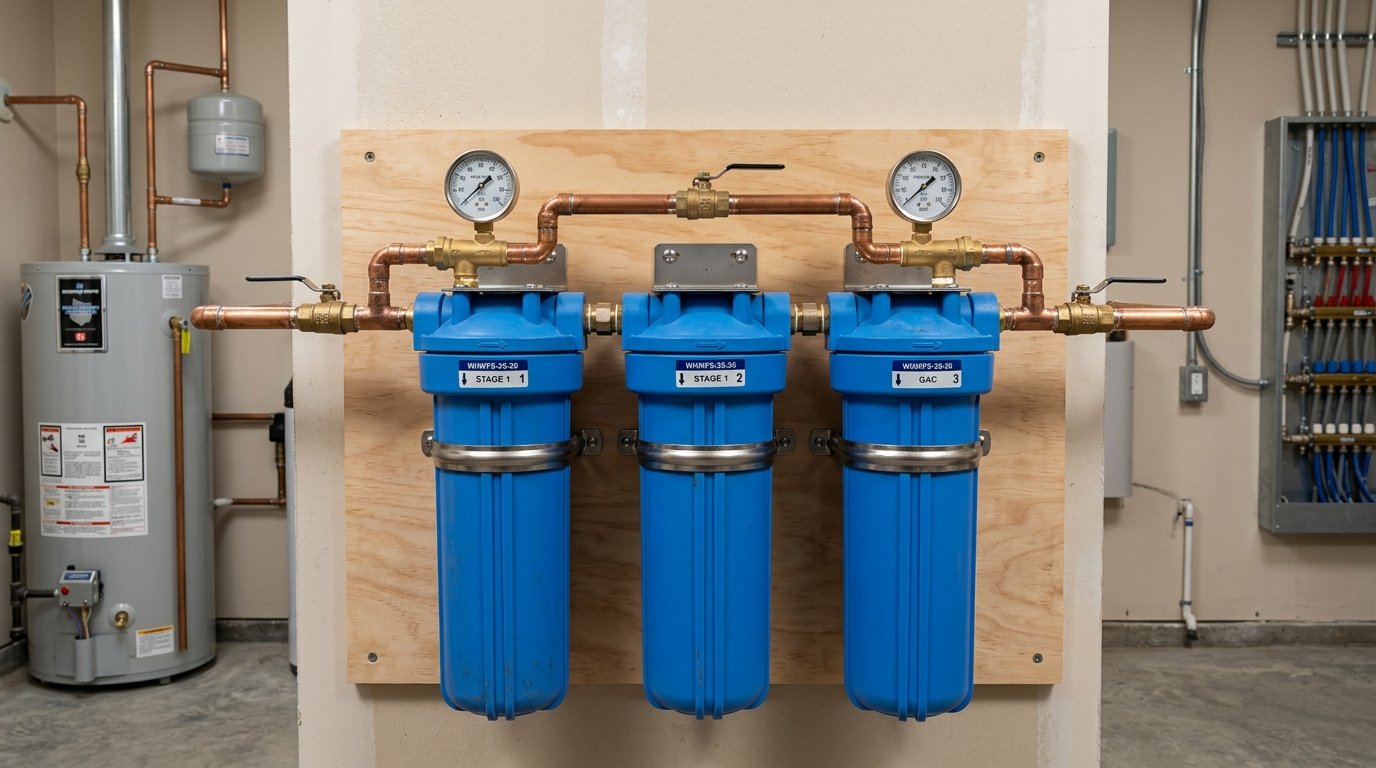
4. Colorado Front Range Freeze-Thaw Physics & Burst Resilience
Winter in the Colorado Front Range represents the ultimate crucible for domestic plumbing systems. Sub-zero arctic air masses frequently drive outdoor temperatures down to minus 10 to minus 20 degrees Fahrenheit. When plumbing runs through cantilevered architectural bump-outs, exterior kitchen sink walls, unheated crawlspaces, or attached garages, water lines are subjected to extreme freezing conditions.
4.1 The Physics of Ice Expansion in Closed Piping
As liquid water cools below 39.2 degrees Fahrenheit (4 degrees Celsius), it reaches its maximum molecular density. As it transitions into solid crystalline hexagonal ice at 32 degrees Fahrenheit, the water molecules rearrange into an open tetrahedral lattice, expanding in volume by approximately 9.05 percent. Contrary to popular belief, a pipe does not rupture at the exact point of the ice blockage. Instead, as an ice plug forms and expands along the pipe length, it acts as a frozen hydraulic piston, compressing the trapped liquid water between the ice blockage and the closed household fixture downstream. Hydrostatic pressure in the trapped liquid zone skyrockets exponentially, frequently exceeding 2,000 to 4,000 PSI — far surpassing the burst rating of standard plumbing materials.
4.2 Material Freeze Testing Comparison
- Rigid Copper Tubing: Copper possesses virtually zero volumetric elasticity. When trapped pressure exceeds 1,200 to 1,500 PSI, the metal wall undergoes plastic deformation and ruptures in a catastrophic longitudinal tear (often 4 to 8 inches long). Upon thawing, water floods the residence at full municipal main volume (15 to 25 GPM), causing tens of thousands of dollars in structural drywall and flooring destruction within minutes.
- PEX-B (Crimp): PEX-B can expand marginally under freezing pressure. However, because its cross-linking density is lower (65-70%) and its molecular crystalline matrix is non-uniform, repeated freeze-thaw cycles cause micro-fracturing along the pipe wall. Furthermore, the rigid copper crimp rings on F1807 fittings cannot expand; under freezing stress, the pipe wall frequently shears off directly behind the crimp ring barb, causing catastrophic separation upon thawing.
- PEX-A (Expansion): PEX-A is universally recognized by plumbing forensic engineers as the most freeze-resilient piping material on earth. Thanks to its isotropic 85%+ cross-linking density, PEX-A can expand up to 300% of its nominal diameter under solid ice expansion without structural rupture. Once the freeze event subsides and ambient temperatures rise, PEX-A’s thermal shape memory contracts the pipe back to its original dimensions with zero loss of pressure rating. While frozen PEX-A will block water flow, it virtually eliminates catastrophic flooding ruptures.
5. Chemical Degradation: Front Range Chloramines & Bentonite Soil Corrosion
Beyond freezing, the long-term longevity of residential piping is determined by chemical and electrochemical interactions with municipal disinfectants and local soils.
5.1 Chloramine Oxidation & PEX Pipe Degradation (ASTM F2023)
To comply with EPA Safe Drinking Water Act disinfection byproduct rules, municipal water providers serving Broomfield, Westminster, Boulder, and Denver utilize Monochloramine (NH2Cl) — a compound formed by combining free chlorine with ammonia — as a secondary residual disinfectant. Monochloramine is far more stable and persistent than free chlorine, remaining active throughout miles of distribution piping. However, monochloramine is a powerful oxidizing agent.
When chlorinated water flows continuously through PEX piping at elevated domestic hot water temperatures (130-140 degrees Fahrenheit), free chlorine radicals slowly attack the phenolic antioxidant packages compounded into the polyethylene resin. Once the protective antioxidants are exhausted, the polymer chains undergo oxidative chain scission, resulting in micro-crazing, brittleness, and pinhole ruptures. Under ASTM F2023 standardized accelerated oxidative testing, both PEX-A and modern PEX-B pipes are rated with a chlorine resistance designation code of ‘5006’ (or ASTM Class 5), signifying certified resistance to hot, continuous-recirculation chlorinated water for a minimum projected lifespan of 50 years. However, low-grade imported PEX-B tubing carrying Class 1006 or 3006 ratings can suffer premature oxidative embrittlement within 10 to 15 years under aggressive Front Range chloramine exposure.
5.2 Colorado Bentonite Clay & Underground Copper Pitting
Between 1970 and 2000, tens of thousands of homes built in Broomfield, Arvada, Highlands Ranch, and Littleton were plumbed with soft copper tubing embedded beneath concrete slab foundations. The Front Range geology is dominated by expansive Pierre Shale and smectite bentonite clay formations. These soils exhibit high moisture-shrink/swell cycles, elevated electrical conductivity, low resistivity (often under 1,500 ohm-cm), and high concentrations of dissolved sulfate salts.
When un-sleeved copper tubing is embedded in direct contact with concrete slabs and damp bentonite soils, two aggressive degradation mechanisms occur: (1) Soil movement causes physical abrasive rubbing against the copper exterior as expansive clays swell and shrink with the seasons; (2) Differential aeration and high sulfate concentrations create microscopic galvanic corrosion cells, resulting in localized exterior-to-interior pitting corrosion. Within 15 to 25 years, thousands of Front Range homeowners experience catastrophic ‘slab leaks’ — hot water hissing beneath floorboards, damp carpets, and massive monthly utility bills. Repiping these residences with overhead PEX-A routed through attic crawlspaces completely bypasses the hostile subterranean soil environment.
6. Hazen-Williams Hydraulic Friction Loss & Pipe Sizing Mathematics
To engineer a water distribution system that eliminates annoying shower pressure dips when toilets flush or irrigation cycles engage, plumbing designers utilize the Hazen-Williams empirical formula for fluid friction loss in pressurized conduits:
h_f = 0.2083 * (100 / C)^1.852 * (q^1.852 / d^4.8655)
Where h_f represents the friction head loss in feet of water per 100 feet of pipe; C is the Hazen-Williams roughness coefficient; q is the volumetric flow rate in gallons per minute (GPM); and d is the actual internal diameter of the pipe in inches.
Both PEX-A and PEX-B exhibit an exceptionally slick internal surface with a Hazen-Williams C-factor of C = 150, compared to new smooth copper at C = 140 (which gradually degrades to C = 120 or 100 as mineral scale and oxidation crust form over decades). However, while the smooth pipe walls of PEX generate virtually negligible friction loss, the fittings introduce dramatic hydrodynamic variations:
| Fitting Type (3/4″ Nominal) | Internal Diameter (Inches) | Equivalent Pipe Length (Friction Feet) | Pressure Loss at 8 GPM (PSI) |
|---|---|---|---|
| Copper Sweat 90-Degree Elbow | 0.811 Inches | 2.0 Feet | 0.08 PSI |
| PEX-A ProPEX Full-Bore Elbow (ASTM F1960) | 0.720 Inches | 3.8 Feet | 0.16 PSI |
| PEX-B Brass Crimp Elbow (ASTM F1807) | 0.550 Inches | 11.5 Feet | 0.62 PSI |
| PEX-B Poly Crimp Elbow (ASTM F2159) | 0.510 Inches | 14.2 Feet | 0.84 PSI |
As the empirical data illustrates, a single 3/4-inch PEX-B crimp elbow creates the hydraulic friction equivalent of adding 11.5 to 14.2 feet of straight pipe to your water line! In an average home containing twenty 90-degree elbows, an ASTM F1807 crimp installation artificially adds over 230 equivalent feet of friction resistance, causing severe pressure drop-offs during simultaneous fixture demand. Conversely, because PEX-A is ultra-flexible, master plumbers bend the continuous tubing around framing members, eliminating 70% of elbows entirely and utilizing full-flow F1960 fittings for remaining joints, guaranteeing robust, commercial-grade water volume.
7. Master Plumber Material Selection Matrix: PEX-A vs. PEX-B vs. Copper
| Performance Metric | PEX-A (Uponor ProPEX) | PEX-B (Crimp / Clamp) | Rigid Copper (Type L) |
|---|---|---|---|
| Cross-Linking Density & Method | 85% — 89% (Engel / Peroxide) | 65% — 70% (Silane / Moisture) | N/A (Crystalline Metal C12200) |
| Fitting Flow Restriction (ID Reduction) | 0% — 5% (Full-Bore Expansion) | 30% — 48% (Severe Insert Choke) | 0% (Full-Bore External Solder Hub) |
| Freeze-Thaw Burst Resilience | Exceptional (Expands 300%) | Moderate (Splits at Crimp Barbs) | Extremely Poor (Ruptures Easily) |
| Resistance to Chloramine Oxidation | High (Class 5006 Certified) | High to Moderate (Grade Dependent) | Impervious to Chloramines |
| Underground Bentonite Soil Resilience | Impervious to Soil Galvanic Pitting | Impervious to Soil Galvanic Pitting | Severe Pinhole Leaks in Clay Soils |
| Flexibility & Installation Speed | Highest (Tight 3x Bend Radius) | Stiff (Coil Memory; Requires Elbows) | Rigid (Demands Cutting & Torches) |
| Kink Repair Capability | 100% Repairable with Heat Gun | Non-Repairable (Must Cut & Couple) | Non-Repairable |
| Average Relative Material / Labor Cost | Moderate Cost / Fastest Labor | Lowest Material / Moderate Labor | Extremely High Material & Labor |
8. Real-World Front Range Case Studies
Case Study 1: Catastrophic Slab Leak in 1980s Broomfield Home
A two-story residence in the Country Creek neighborhood of Broomfield experienced an alarming water bill increase alongside warm, squishy hardwood flooring in the ground-floor living room. Acoustic ultrasonic listening equipment deployed by our diagnostics team confirmed an active underground copper slab leak on the 3/4-inch hot water supply line buried beneath four inches of structural concrete. Soil boring tests revealed highly corrosive damp bentonite clay surrounding the un-sleeved copper pipe.
Rather than jackhammering through finished hardwood floors to execute a temporary solder repair on a brittle, decaying copper pipe, our master plumbers designed an overhead PEX-A whole-house repipe. We abandoned the failed subterranean copper loop, routed commercial-grade 3/4-inch and 1/2-inch Uponor ProPEX lines through second-story attic trusses and interior wall chases, and connected to existing bathroom and kitchen fixture branches. Total water pressure increased from 42 PSI to 65 PSI, and the home was completely insulated against future foundation soil corrosion, backed by a 25-year manufacturer warranty.
Case Study 2: Sub-Zero Polar Vortex Freeze Burst in Unincorporated Boulder County
During an arctic freeze event where temperatures hovered at minus 14 degrees Fahrenheit for 72 consecutive hours, a mountain foothill residence near Lyons suffered catastrophic copper pipe rupture inside an unheated crawlspace. The thin-wall Type M copper pipe split longitudinally in three separate locations, flooding the crawlspace with two feet of standing water upon thawing.
Our emergency response team mobilized industrial water extraction equipment, cleared the flooded sub-structure, and performed a total crawlspace repiping utilizing PEX-A expansion tubing. Each line was encapsulated in 1-inch closed-cell elastomeric foam insulation and secured with plastic Talon clips to allow unrestricted thermal contraction. Two years later, during another severe cold snap with identical temperatures, the crawlspace dropped below freezing; while water delivery temporarily paused due to ice slush, the PEX-A expanded safely without a single structural rupture, thawing out with zero leaks or property damage.
9. Step-by-Step Overhead PEX-A Repiping Protocol for Occupied Homes
Executing a whole-house repipe inside an occupied Front Range home without causing chaos demands an engineered 6-phase operational workflow:
- Surgical Mapping & Wall Penetration: Technicians map existing supply drops utilizing acoustic sensors and thermal cameras. Clean, rectangular 4-inch by 6-inch access ports are neatly cut in inconspicuous locations (behind toilets, inside base vanity cabinets, or within utility closets) to preserve finished living areas.
- Attic Trunk & Joist Drilling: In compliance with the International Residential Code (IRC Section P2603.2), holes drilled through load-bearing floor joists and roof trusses are centered along the neutral bending axis, never exceeding 1/4 the joist depth and maintaining a minimum 2-inch clearance from top and bottom edges.
- Continuous PEX-A Pulls & Support Clamping: Tubing is pulled in continuous home-run lengths directly from the central manifold. To accommodate thermal expansion (PEX expands approximately 1.1 inches per 100 feet per 10-degree Fahrenheit temperature change), lines are suspended with loose-fitting plastic suspension clamps spaced every 32 inches horizontally and 4.5 feet vertically, with engineered expansion loops installed on long straight runs.
- Fixture Stub-Outs & Copper Transitions: At bathroom sinks and toilet drops, PEX-A transitions to rigid copper bullet stub-outs secured to metal bracket framing braces. This ensures rigid, rock-solid angle stop valve connections that do not flex when shutoffs are operated.
- Hydrostatic Proof Testing (IPC 312.5): Before closing access ports, the entire newly installed piping assembly is charged with potable water and pressurized to 100 PSI (or 1.5 times working pressure) for a minimum of 24 consecutive hours. A zero-pressure-drop reading on calibrated test gauges verifies 100% leak-free integrity.
- Insulation & Professional Drywall Patching: All domestic lines running through unconditioned attic or crawlspace envelopes are encased in high-density closed-cell elastomeric pipe insulation (minimum R-4 thermal rating). Access cutouts are professionally patched, taped, mudded, textured to match existing orange-peel or knockdown surfaces, and vacuum-cleaned.
10. Frequently Asked Questions (PEX vs. Copper Repiping)
Does PEX-A leach harmful chemicals into drinking water?
No. Premium virgin PEX-A tubing (such as Uponor AquaPEX) is rigorously tested and certified under NSF/ANSI/CAN 61 (Drinking Water System Components – Health Effects) and NSF/ANSI 14. PEX-A is completely lead-free, non-toxic, and does not leach volatile organic compounds (VOCs) or heavy metals. While some budget PEX pipes exhibit a temporary ‘plastic’ odor upon initial fill, high-grade PEX-A flushes clean within 24 to 48 hours of normal household water use.
Can rodents or mice chew through PEX tubing in crawlspaces?
While rodents do not consume PEX for food, field mice and rats can gnaw on any soft polymer piping if it obstructs their established travel paths or during extreme drought when seeking moisture. To safeguard PEX lines in crawlspaces or unfinished basements, professional master plumbers sleeve exposed low-clearance runs in rigid PVC conduit or stainless steel rodent-proof mesh at structural penetration points.
Why is copper still used if PEX-A is so superior?
Copper remains the mandatory engineering standard in specific high-stress applications: (1) Direct exterior exposure to outdoor UV sunlight, which degrades unprotected PEX polymers; (2) The first 18 inches of piping connecting directly to gas water heater draft hoods (mandated by plumbing fire codes to prevent heat melting); (3) High-rise commercial applications requiring non-combustible plenum-rated piping; and (4) Tub spout stub-outs, where flexible PEX can cause excessive flow restriction and unwanted showerhead dribble.
How long does a whole-house PEX repipe take in an occupied home?
A professional overhead PEX-A repipe executed by our licensed master plumbing crews typically requires 2 to 3 days for a standard 2,500 square-foot residence. Because flexible PEX can be threaded through small drywall cutouts without tearing open entire walls, property disruption is minimal. Crucially, our technicians restore active water service at the conclusion of every single working day, ensuring your family never sleeps without running water.
12. Colorado Front Range Permitting, Plumbing Codes & Valve Requirements
Whole-house water distribution repiping within the City and County of Broomfield, Boulder County, and Adams County is strictly regulated under the 2021 International Plumbing Code (IPC) as amended by local municipal ordinances. Executing a compliant repipe mandates pulling a commercial or residential plumbing permit and passing three rigorous municipal inspections:
- Main Water Shutoff Valve Requirement (IPC 606.1): A full-port, quarter-turn brass ball valve with stainless steel ball and Teflon seals must be installed immediately inside the building perimeter where the water service enters the foundation. Gate valves with multi-turn wheels are strictly prohibited in modern code due to chronic internal stem shearing.
- Thermal Expansion Tank Mandate (IPC 607.3): Because municipal water meters in Front Range utilities incorporate dual-check backflow assemblies creating a ‘closed plumbing system,’ heating cold domestic water in a 50-gallon tank creates thermal expansion pressure spikes exceeding 120 PSI. Every repipe must incorporate an ASME-certified pre-pressurized thermal expansion tank matching household static water pressure.
- Pressure-Reducing Valve (PRV) Thresholds (IPC 604.8): When municipal street main static pressure exceeds 80 PSI (a frequent occurrence in high-pressure Front Range utility grids where pressures reach 95-115 PSI), an ASSE 1003 certified pressure-reducing valve (Wilkins 600XL or Watts LF25AUB) must be installed to regulate household pressure between 55 and 65 PSI, protecting PEX fittings and appliance solenoids against water hammer fatigue.
11. Conclusion & 24/7 Front Range Whole-House Repiping Dispatch
Whether you are confronting active pinhole slab leaks in a 1980s Broomfield subdivision, remediating catastrophic winter freeze damage in Boulder County, or upgrading old galvanized steel to modern high-flow distribution, your choice of piping material will define your home’s hydraulic reliability for the next half-century. While rigid copper maintains an honorable historical legacy, the empirical engineering evidence — spanning freeze elasticity, chloramine immunity, full-bore expansion fittings, and thermal shape memory — establishes PEX-A expansion piping as the gold standard for Front Range residential plumbing.
When you demand flawless craftsmanship, certified ASTM F1960 cold-expansion tooling, and 25-year manufacturer warranties backed by licensed master plumbers, our specialized repiping teams stand ready across Broomfield, Westminster, Arvada, Boulder, and Denver with 24/7 emergency dispatch and complimentary comprehensive whole-home repiping estimates.