
1. Executive Overview & Water Conditioning Engineering Fundamentals
Water quality along Colorado’s urban corridor presents unique engineering challenges for residential and commercial plumbing systems. While pristine mountain snowmelt from the Continental Divide supplies our municipal treatment plants, the geological transit through the South Platte River Basin and alluvial groundwater deposits saturates water with dissolved alkaline earth minerals. In domestic plumbing systems, water hardness operates as a silent, cumulative destroyer of mechanical infrastructure, thermal efficiency, and fluid dynamics.
Hard water is scientifically classified by the concentration of multivalent metallic cations dissolved in solution—primarily calcium (Ca²⁺) and magnesium (Mg²⁺), along with minor traces of ferrous iron (Fe²⁺), strontium (Sr²⁺), and manganese (Mn²⁺). When water is subjected to rapid thermal elevation inside a water heater, pressure differentials across fixture aerators, or turbulence within pipe elbows, these dissolved bicarbonate ions decompose into insoluble calcium carbonate precipitate. This precipitate hardens into crystalline calcite scale, bonding tenaciously to metallic and polymer surfaces.
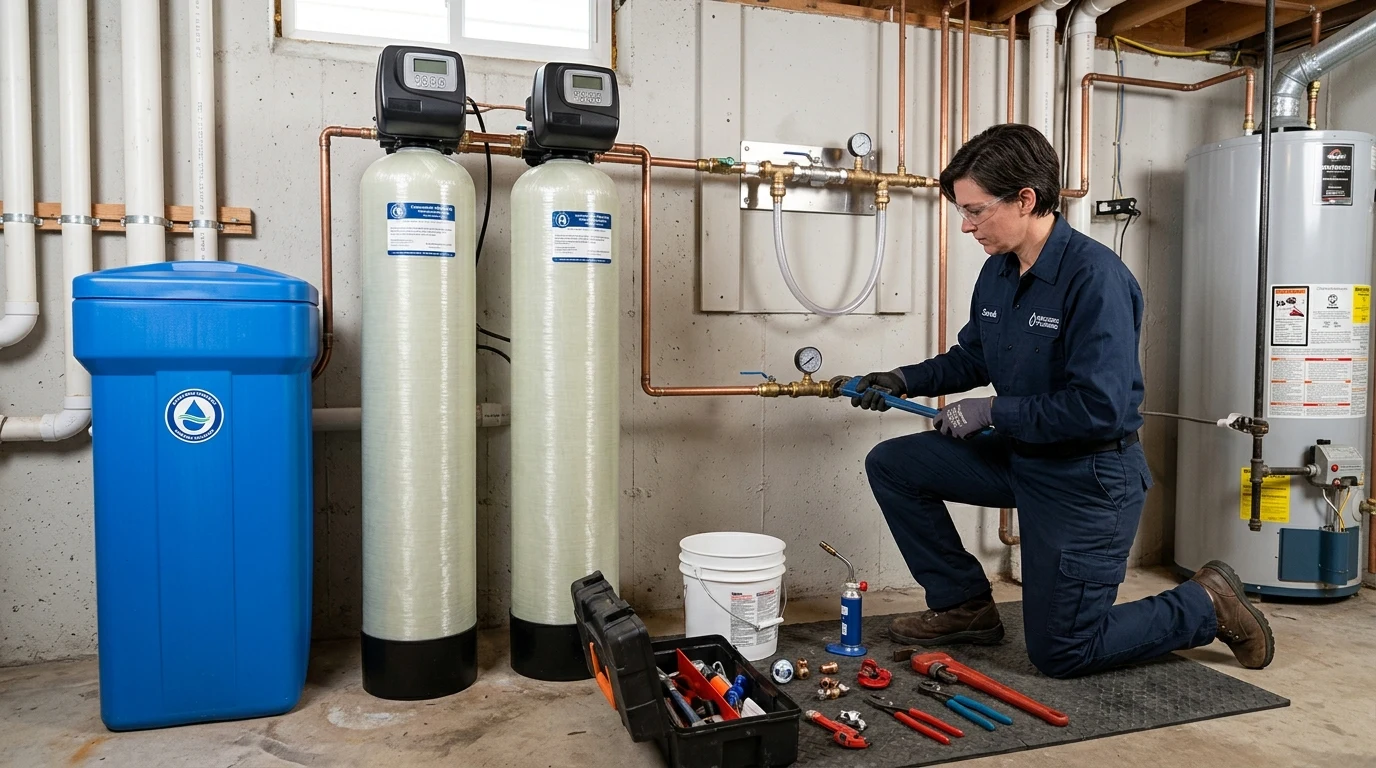
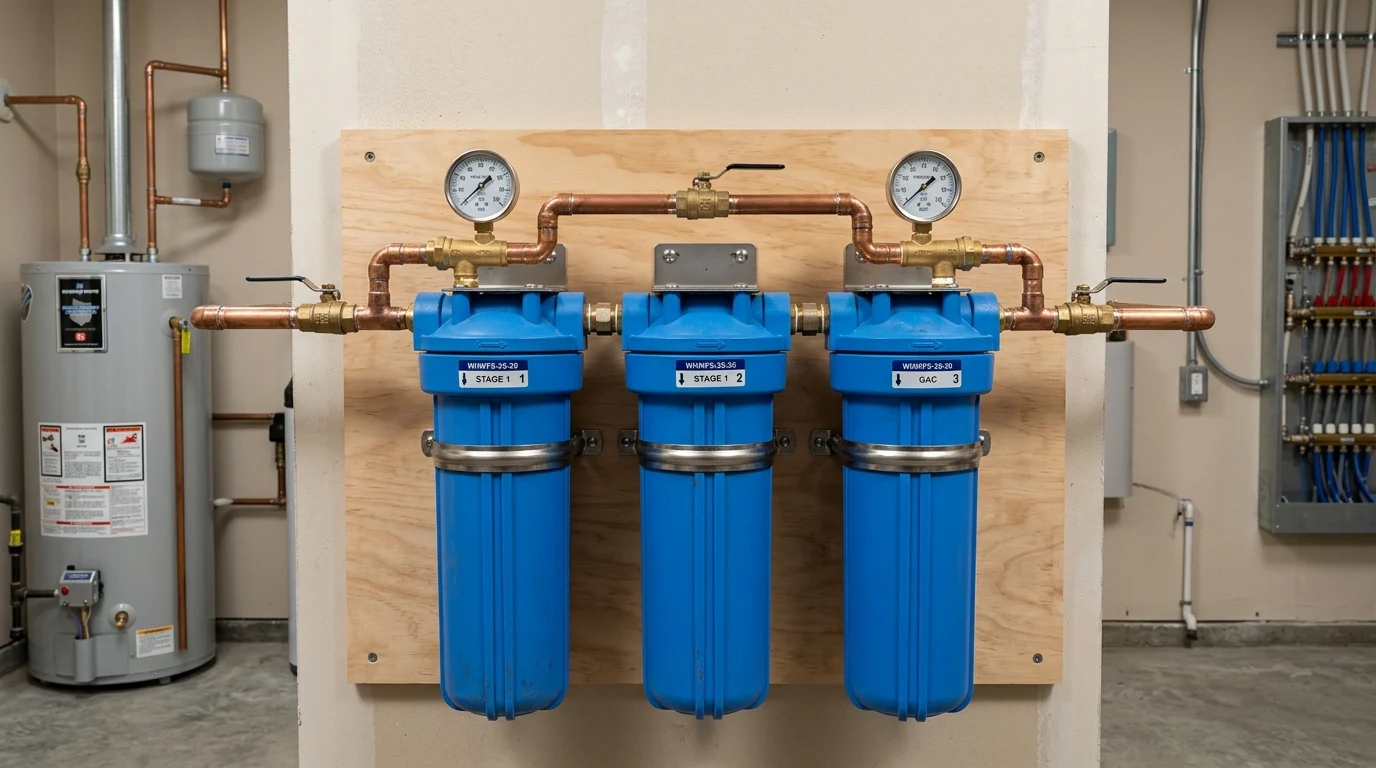
To protect modern residential infrastructure, mechanical plumbing contractors deploy two distinct treatment disciplines: ion-exchange water softening (which chemically removes hardness cations and replaces them with sodium or potassium ions) and multi-stage whole-house filtration (which extracts sediment, suspended particulate matter, chlorine, chloramines, volatile organic compounds [VOCs], and heavy metals through mechanical sieving, catalytic carbon adsorption, and kinetic degradation fluxion media). Understanding how these systems integrate with residential plumbing codes and Front Range hydrology is essential for any homeowner seeking long-term equipment protection and pure potable water.
2. Front Range Water Chemistry: Hardness Profiles Across Colorado Municipalities
Water hardness across Colorado’s Front Range varies dramatically depending on whether a municipality relies upon surface water diversions from Carter Lake, Horsetooth Reservoir, the Moffat Treatment Plant, or local deep aquifer groundwater wells. Broomfield residents, for instance, receive water treated through the Broomfield Water Treatment Facility sourced primarily from the Colorado-Big Thompson (C-BT) project and Windy Gap Reservoir, complemented by alluvial well blending during peak summer demand.
According to the Water Quality Association (WQA) classification standards, water hardness is categorized into distinct operational tiers based on calcium carbonate equivalence:
- Soft Water (0.0 to 1.0 GPG / 0 to 17.1 mg/L): Virtually free of dissolved mineral cations; excellent soap lathering; minimal scale potential, though aggressively soft water can be slightly corrosive to bare copper piping if pH drops below 7.0.
- Slightly Hard Water (1.0 to 3.5 GPG / 17.1 to 60 mg/L): Common in high-elevation mountain streams; minor mineral spots on glassware; safe for most domestic appliances.
- Moderately Hard Water (3.5 to 7.0 GPG / 60 to 120 mg/L): Noticeable scum formation with bar soap; light lime scale accumulation around shower aerators and faucet escutcheons over several months.
- Hard Water (7.0 to 10.5 GPG / 120 to 180 mg/L): Standard Front Range baseline across Broomfield, Westminster, and Thornton. Rapid lime scale formation inside hot water storage tanks, tankless heating coils, and dishwasher heating elements.
- Very Hard Water (10.5+ GPG / 180+ mg/L): Common in rural Adams and Weld County private well systems. Aggressive scaling, restricted flow diameters in galvanized and copper pipe lines, premature failure of washing machine solenoid valves, and severe dermatological dryness.
| Colorado Municipality / District | Primary Water Source | Typical Hardness Range (GPG) | Hardness (mg/L or PPM) | Recommended Treatment Strategy |
|---|---|---|---|---|
| City and County of Broomfield | C-BT, Windy Gap, Alluvial Wells | 6.5 – 11.2 GPG | 110 – 192 mg/L | Ion-Exchange Softener + Catalytic Carbon |
| Westminster (Standley Lake) | Clear Creek Watershed Runoff | 7.0 – 12.5 GPG | 120 – 214 mg/L | Demand Softener + 5-Micron Sediment Filter |
| Thornton & Northglenn | South Platte River & Gravel Lakes | 8.5 – 14.0 GPG | 145 – 240 mg/L | High-Capacity Softener + Whole-House Carbon |
| Arvada & Wheat Ridge | Ralston Reservoir & Moffat Canal | 5.8 – 9.8 GPG | 100 – 168 mg/L | Dual-Tank Softener + Reverse Osmosis |
| Boulder (Betasso Treatment) | Lakewood Reservoir, Silver Lake | 2.5 – 5.5 GPG | 42 – 94 mg/L | Catalytic Carbon + Sub-Micron Filtration |
| Erie & Lafayette | Carter Lake / Northern Water | 7.2 – 11.8 GPG | 123 – 202 mg/L | Demand Softener + Pre-Filter String Core |
3. The Physics and Chemistry of Scale Accumulation in Domestic Piping
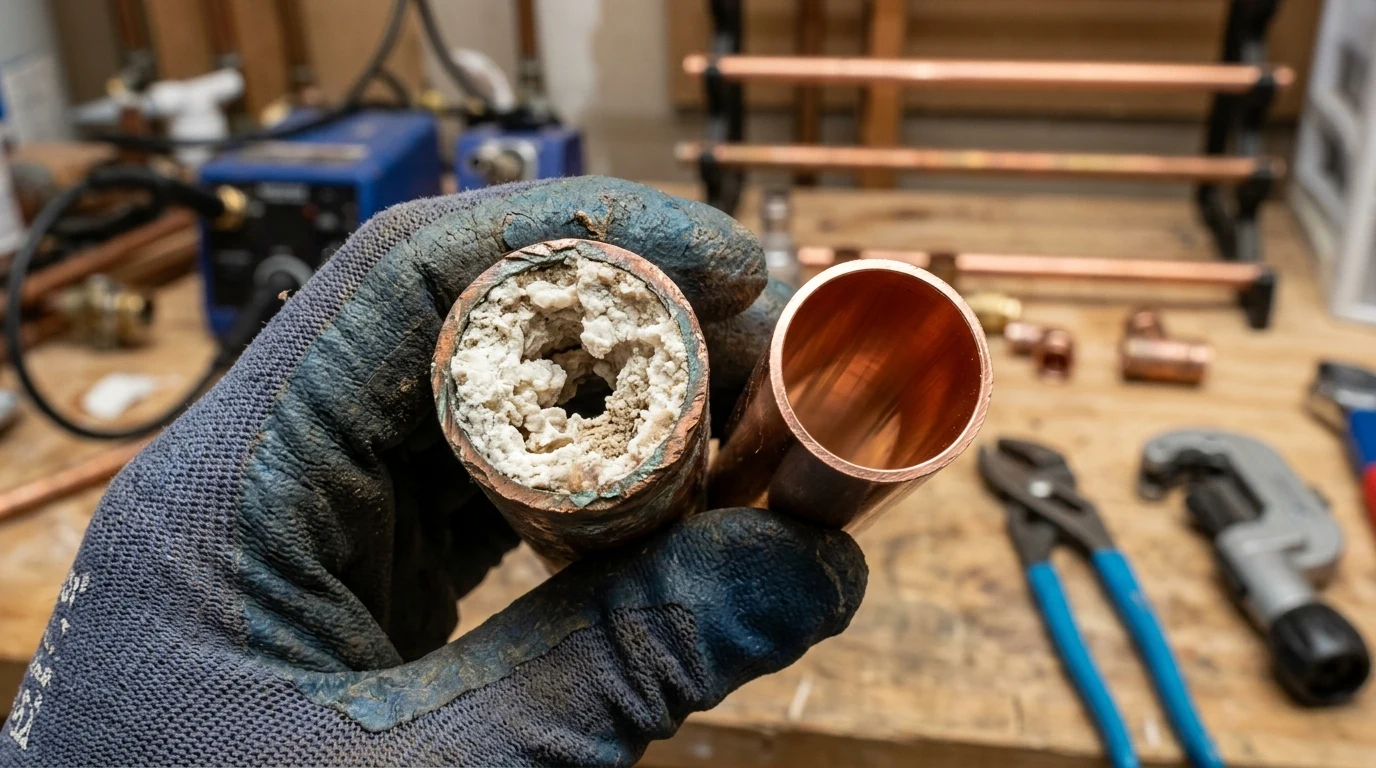
The formation of scale inside plumbing lines is governed by thermal thermodynamics and the chemical equilibrium of calcium bicarbonate. In unheated municipal water lines, calcium and magnesium ions exist in a dissolved, metastably balanced ionic state alongside bicarbonate (HCO₃⁻) ions:
Ca(HCO₃)₂ (aqueous) + Heat → CaCO₃ ↓ (solid calcite scale) + CO₂ ↑ (carbon dioxide gas) + H₂O (water)
As water enters a water heater or encounters friction turbulence within pipe transitions, heat forces carbon dioxide gas out of solution. This drives the pH upward locally and causes calcium carbonate to crystallize rapidly out of solution. In tankless water heaters equipped with copper or stainless-steel plate heat exchangers, the water velocity is high and the thermal gradient across the heat exchanger wall is intense—often exceeding 140°F (60°C) at the metal boundary layer.
Under these conditions, a 1/16-inch layer of calcite scale forms across the heat transfer surfaces in less than 18 months in typical Front Range water. Because calcium carbonate has an extremely low thermal conductivity (approximately 1.3 to 2.2 W/m·K, compared to 386 W/m·K for copper), that microscopic 1/16-inch insulating layer forces the burner to consume 15% to 22% more natural gas to achieve the setpoint water temperature. Left unchecked, the copper heat exchanger tubes overheat, deform, develop micro-fissures, and suffer thermal fatigue breach.
In traditional atmospheric tank water heaters, precipitated calcium carbonate settles to the curved bottom head directly above the 40,000 BTU natural gas burner. As the burner fires, the trapped water beneath the sediment blanket superheats into microscopic steam bubbles, generating violent popping, banging, and rumbling noises known in the plumbing trade as “kettling.” This trapped thermal energy causes the glass lining of the steel tank to fracture, exposing bare carbon steel to aggressive galvanic corrosion and precipitating catastrophic tank bottom failure.
4. Ion-Exchange Water Softening: Mechanics, Sizing & Regeneration Cycles
The gold standard in permanent domestic water conditioning is the cation-exchange water softener. An ion-exchange softener consists of a mineral tank filled with hundreds of thousands of microscopic, cross-linked polystyrene divinylbenzene polymer resin beads (typically 8% to 10% cross-link density), a digital metered control valve, and an adjacent brine storage vessel containing sodium chloride (NaCl) or potassium chloride (KCl) salt pellets.
The Ion-Exchange Mechanical Cycle
During standard operational service, raw municipal water enters the top of the mineral tank, flows downward through the compacted resin bed, and exits up through the central riser tube into the home. Each resin bead is engineered with millions of negatively charged sulfonic acid functional sites that are pre-charged with positively charged sodium (Na⁺) or potassium (K⁺) ions. Because calcium (Ca²⁺) and magnesium (Mg²⁺) ions possess a higher electro-chemical valence charge (+2 vs +1) and greater ionic radius, they displace the sodium ions and bond tightly to the resin matrix. The water leaving the tank is chemically softened, with all hardness cations stripped to below 0.5 GPG.
Engineering Softener Sizing Formulas
Undersized water softeners regenerate too frequently, wasting hundreds of gallons of backwash water and excessive salt, while oversized systems suffer from resin bed channeling and bacterial biofilm stagnation. Mechanical sizing requires computing the Daily Grains of Hardness (DGH):
Engineering Calculation Workflow:
- Step 1: Calculate Total Effective Hardness: Measure water hardness in GPG. If iron is present, add 5 GPG for every 1.0 PPM of dissolved ferrous iron. Example for Broomfield: 10 GPG + 0 Iron = 10 GPG.
- Step 2: Determine Daily Household Water Consumption: Standard plumbing engineering allocates 75 gallons per person per day (GPD). For a family of 4: 4 persons × 75 GPD = 300 GPD.
- Step 3: Calculate Daily Grain Capacity Required: Multiply daily consumption by total effective hardness: 300 GPD × 10 GPG = 3,000 grains/day.
- Step 4: Establish Optimal Regeneration Frequency: An efficient softener should regenerate every 6 to 8 days to maintain resin bed vigor without excessive salt consumption. For a 7-day cycle: 3,000 grains/day × 7 days = 21,000 grains.
- Step 5: Apply Operational Safety Reserve: Adding a 20% safety margin: 21,000 × 1.20 = 25,200 grains.
- Conclusion: Select a 32,000-grain (1.0 cubic foot resin) or 40,000-grain digital metered demand system.
The 5-Stage Regeneration Sequence
Modern electronic control heads (such as Fleck, Clack, or Autotrol commercial-grade platforms) monitor domestic water flow via an optical turbine meter. When the programmed grain capacity threshold is approached, the unit initiates regeneration during low-demand night hours (typically 2:00 AM):
- Stage 1: High-Velocity Backwash (8–12 Minutes): Water flow is inverted, forcing raw water down the riser tube and violently upward through the resin bed. This expands the resin bed by 50%, flushes accumulated silt and sediment to the drain, and re-stratifies the bead matrix to eliminate hydraulic channeling.
- Stage 2: Brine Draw & Slow Rinse (45–60 Minutes): The control head venturi creates a vacuum that pulls saturated sodium chloride brine solution from the salt tank. As this dense brine trickles through the resin bed, the extreme concentration of Na⁺ ions forces the trapped Ca²⁺ and Mg²⁺ cations off the resin sites, flushing the hard minerals down the drain line.
- Stage 3: Fast Rinse / Repack (6–10 Minutes): High-pressure downward flow washes residual salt solution and chloride ions out of the tank to ensure clean, freshwater delivery without any salty aftertaste.
- Stage 4: Brine Tank Refill (Automatic): The valve injects a precise volume of treated softened water back into the brine tank to dissolve salt pellets for the subsequent regeneration cycle.
- Stage 5: Service Return: The internal bypass seals, returning the conditioned vessel to live pressurized domestic distribution.
5. Whole-House Multi-Stage Water Filtration Systems
While a water softener addresses dissolved mineral hardness, it is not designed to remove chemical disinfectants, industrial micro-pollutants, or suspended sediment. Municipal water utilities along the Front Range rely on free chlorine or chloramines (chlorine bonded with ammonia) to maintain residual disinfection throughout dozens of miles of underground municipal piping.
While chlorination protects public health against waterborne pathogens, it introduces significant plumbing degradation mechanisms:
- Degradation of Elastomer Seals: Chlorine and chloramines chemically attack the peroxide-cured EPDM, nitrile, and silicone rubber components used in modern plumbing fixtures, causing toilet flappers, faucet cartridges, washing machine hoses, and water heater dip tubes to soften, swell, and fail prematurely.
- Accelerated Copper Pitting: When combined with low alkalinity or residual dissolved oxygen, chlorine aggressively oxidizes the protective cupric oxide patina inside copper tubing, sparking micro-galvanic pitting corrosion and pinhole slab leaks.
- Aesthetic and Dermatological Issues: Unfiltered chlorine volatilizes into chloroform and trihalomethane gases in hot showers, irritating respiratory pathways and exacerbating eczema.
Filtration Media Disciplines Compared
| Filtration Discipline | Primary Media | Target Contaminants | Micron Rating | Service Lifespan |
|---|---|---|---|---|
| Sediment Mechanical Barrier | Spun Polypropylene / Pleated Polyester | Rust flakes, sand, municipal silt, pipe debris | 5.0 – 1.0 μm | 6 – 9 Months |
| Standard Activated Carbon (GAC) | Bituminous Coal or Coconut Shell | Free chlorine, bad tastes, odors, pesticides | 10 – 20 μm | 100,000 Gallons / 1 Year |
| Catalytic Activated Carbon | Thermally Modified High-Surface Carbon | Chloramines, hydrogen sulfide (H₂S), VOCs, PFAS/PFOA | 0.5 – 5.0 μm | 250,000 Gallons / 2–3 Years |
| KDF-55 Kinetic Fluxion | High-Purity Copper-Zinc Granules | Heavy metals (lead, mercury), chlorine redox, bacteriostatic | Flow Media | 3 – 5 Years (Bed) |
| Reverse Osmosis (Point-of-Use) | Thin-Film Composite (TFC) Polyamide | Total Dissolved Solids (TDS), arsenic, nitrates, fluoride, microplastics | 0.0001 μm | 2 – 4 Years (Membrane) |
6. Point-of-Use Reverse Osmosis (RO) for Pure Drinking Water
While an ion-exchange softener softens water for the entire home, it replaces calcium and magnesium with a proportionate quantity of sodium ions. For every grain of hardness removed per gallon, approximately 7.5 milligrams of sodium are added to each liter of water. In water containing 12 GPG hardness, the softened water will contain roughly 90 mg/L of sodium. While completely safe for bathing, laundry, and plumbing equipment, homeowners seeking ultra-purified drinking and culinary water, or those on strict sodium-restricted diets, deploy an under-sink Reverse Osmosis (RO) system.
Reverse osmosis operates by forcing softened, pre-filtered water under line pressure (50 to 75 PSI) against a semi-permeable thin-film composite (TFC) polyamide membrane. The microscopic pore size of the membrane is 0.0001 microns—approximately 100,000 times smaller than the diameter of a human hair. Under this hydrostatic pressure gradient, pure H₂O molecules diffuse across the synthetic barrier, while 95% to 99% of all dissolved inorganic solids (including sodium, fluoride, nitrates, lead, pharmaceuticals, and PFAS forever chemicals) are rejected and diverted down the drain as concentrate brine.
Modern high-efficiency RO manifolds incorporate an automated permeate pump or high-recovery membrane that reduces the historical 4:1 wastewater ratio down to an eco-friendly 1:1 or 1.5:1 ratio. The purified permeate water is stored in a pressurized hydro-pneumatic diaphragm vessel lined with virgin butyl rubber, delivering pressurized, mineral-free water on demand through a dedicated lead-free designer faucet and optional connection to your refrigerator’s icemaker and water dispenser.
7. Salt-Based Softeners vs. Salt-Free “Conditioners”: Engineering Reality
One of the most persistent controversies in residential water treatment is the debate between traditional ion-exchange salt-based softeners and physical Template Assisted Crystallization (TAC) salt-free conditioners. Plumbers across Colorado frequently encounter homeowners frustrated by misleading claims that magnetic, electronic, or salt-free cartridges “soften” water without salt or backwash drain lines.
From an objective chemical and mechanical engineering perspective, these two technologies serve completely different operational purposes:
- Ion-Exchange Softeners (True Softening): Chemically extract the physical calcium and magnesium ions from the water stream. Hardness is reduced to zero. Soap scum is completely eliminated, laundry whites stay bright, water feels noticeably silky, and hot water heater scale formation is 100% prevented. Water tested via titration or test strips measures 0 GPG.
- Salt-Free TAC Conditioners (Scale Inhibitors): Do not remove a single milligram of calcium or magnesium. Instead, water passes over catalytic ceramic polymer beads coated with microscopic nucleation sites. Dissolved calcium carbonate ions are catalytically converted into microscopic, stable, inert calcite micro-crystals that remain suspended in the water column without adhering to smooth metallic pipe walls.
The Engineering Verdict for Colorado: In applications where water sits stagnant—such as inside a standing hot water heater tank, on a glass shower door as water evaporates, or within a humidification tray—TAC conditioned water will still leave heavy, chalky white mineral spots once the water droplet evaporates. Salt-free conditioners can be effective scale mitigators for tankless water heaters in continuous-flow commercial loops, but they cannot deliver the aesthetic, soap-saving, skin-conditioning, or laundry benefits of genuine ion-exchange softening.
8. Well Water Hardness & Complex Contaminants in Rural Front Range Basins
Homeowners in unincorporated Boulder County, Weld County, and eastern Adams County often depend on private alluvial or deep bedrock wells rather than municipal treatment plants. Well water presents an entirely distinct spectrum of geochemical challenges that require comprehensive pre-treatment before standard softening can be executed safely:
Dissolved Iron & Manganese Chemistry
Well water frequently contains clear-water soluble ferrous iron (Fe²⁺) and dissolved manganese (Mn²⁺). When ferrous iron passes through an unconditioned system and contacts dissolved oxygen or atmospheric air in a toilet tank, it rapidly oxidizes into insoluble reddish-brown ferric hydroxide (Fe³⁺) flakes. This creates severe staining on porcelain fixtures, ruins white laundry, and chemically fouls standard water softener resin beads.
If iron concentrations exceed 2.0 to 3.0 PPM, standard ion-exchange softening alone is insufficient. The high iron load quickly coats the resin bead outer pores, permanently blinding the ion-exchange sites. Under these conditions, a professional installation requires an upstream Air Injection Oxidizing (AIO) filter utilizing Katalox Light or Birm catalytic media. The AIO system introduces a pressurized pocket of atmospheric air inside the tank head during nightly regeneration, flash-oxidizing dissolved iron and manganese into solid precipitates that are mechanically filtered out and backwashed to drain without hazardous chemical regenerants.
Iron Bacteria & Biofilm Elimination
In some rural Front Range wells, iron-fixing bacteria thrive in low-oxygen groundwater, feeding on dissolved iron and secreting a stringy, rust-colored slime known as bacterial biofilm. This slime clogs softener control valves, blinds sediment filters within days, and imparts an unpleasant swampy or sewage-like odor. Eliminating iron bacteria requires an engineered well shock-chlorination protocol followed by continuous low-dose chlorine chemical injection and a contact retention tank upstream of an activated catalytic carbon backwashing filter.
9. Plumbing Diagnostic Flowchart: Field Troubleshooting for Water Quality Systems
When a residential water treatment system malfunctions, determining whether the fault lies within the municipal supply, the pre-filter array, the resin bed, or the control valve requires systematic forensic troubleshooting. Certified service technicians follow this structured diagnostic protocol:
Master Diagnostic Matrix for Water Treatment Faults
Symptom A: Sudden Drop in Whole-House Water Pressure
- Step 1 (Differential Pressure Check): Measure incoming dynamic line pressure before and after the whole-house filter. If pressure differential (ΔP) exceeds 15 PSI, the sediment or carbon block filter is blinded with municipal silt. Action: Replace filter cartridges.
- Step 2 (Softener Bypass Isolation): Turn the softener bypass valve to the “Bypass” position. If full household pressure immediately restores, the obstruction is located inside the softener vessel. Action: Check for crushed lower distributor basket, compacted or broken resin beads, or seized upper pilot valve.
- Step 3 (Municipal Surge Check): If pressure remains depressed on bypass, test the main water meter curb stop and residential Pressure Reducing Valve (PRV).
Symptom B: Water Remains Hard (White Spots & No Soap Lathering)
- Step 1 (Salt Bridge Inspection): Probe the salt level inside the brine tank using a broom handle. If the handle hits a solid crust with empty air underneath, a salt bridge has formed. Action: Gently break the crust and allow salt pellets to fall into the standing water.
- Step 2 (Brine Draw Verification): Initiate a manual regeneration cycle and observe Stage 2. If the water level inside the brine tank does not drop during the 45-minute brine draw, the venturi injector is clogged with sediment or the brine line has sucked air through a cracked compression nut. Action: Disassemble the valve injector nozzle, clean with fine nylon brush, and inspect O-rings.
- Step 3 (Internal Valve O-Ring Bypass): If brine draws normally and salt is consumed but water tests hard, the central internal riser pipe O-ring has deteriorated, allowing unconditioned raw water to leak directly into the service line. Action: Depressurize unit, remove valve head, and replace riser seal assembly.
Symptom C: Salty Water Coming Out of Household Faucets
- Step 1 (Restricted Drain Line): Inspect the flexible drain tubing connected to the control valve. If the drain hose is kinked, frozen where it exits the foundation, or clogged with lint, the fast rinse cycle cannot discharge waste brine. Action: Clear obstruction and verify unobstructed flow through the required air gap.
- Step 2 (Low Dynamic Water Pressure): If municipal or well pressure drops below 30 PSI during the regeneration rinse cycle, insufficient flow velocity prevents the brine from being purged from the resin bed. Action: Adjust well pressure switch or PRV to maintain minimum 40 PSI static.
- Step 3 (Timer Desynchronization): Check the digital controller’s time of day clock. If a power outage shifted the clock by 12 hours, the unit may be regenerating at 2:00 PM during peak kitchen or shower use rather than 2:00 AM. Action: Reset master clock.
10. International Plumbing Code (IPC) Installation Standards in Colorado
Installing water treatment equipment in Broomfield and surrounding municipalities is governed by the International Plumbing Code (IPC) as amended by the Colorado State Plumbing Board. Non-compliant installations risk contaminating potable water lines through cross-connections or causing severe structural water damage.
Critical Code Requirements
- Air-Gap Backflow Prevention (IPC Section 608.16.5): The brine discharge drain line from a water softener or reverse osmosis system must never be directly hard-piped into a waste pipe, sump pit, or standpipe. It must terminate with an approved physical air gap measuring at least twice the diameter of the discharge pipe, but never less than 1.0 inch (25 mm) above the flood-level rim of the receiving drain receptor. This physical separation prevents toxic raw sewage from being siphoned back into the drinking water resin bed during a municipal sewer main surcharge.
- Bypass Valve Assembly (IPC Section 611.1): Every water softener must be equipped with an accessible, rated bypass valve (either an integrated three-valve brass manifold or factory valve-body bypass) allowing the unit to be isolated mechanically for servicing without terminating cold water supply to the residence.
- Discharge Volume & Sump Sizing: Regeneration backwash releases 35 to 65 gallons of high-salinity brine at flow rates up to 3.5 to 5.0 GPM. In finished basements where discharge is routed into an ejector basin, the sump pump must be rated for corrosive brine handling and high duty-cycle thermal continuous operation.
- Dedicated Unsoftened Outdoor Hose Bibb Loops: Irrigation lines, garden hose spigots, and sillcocks must be tapped before the water softener bypass manifold. Softened water containing sodium will kill turf grass, flowers, and ornamental landscaping over time, while dramatically accelerating salt consumption.
11. Step-by-Step Maintenance Protocol for Front Range Homeowners
To ensure decades of trouble-free performance from your water softening and filtration infrastructure, follow this quarterly and annual maintenance regimen:
Preventive Maintenance Checklist:
- Monthly Salt Level & “Salt Bridge” Inspection: Maintain salt levels at least 1/3 full in the brine tank, keeping pellets 3 to 4 inches above the brine water level. Inspect for “salt bridging”—a hardened crust of recrystallized salt that bridges across the tank, leaving an empty void beneath that prevents pellets from dissolving into brine. Break bridges gently using a wooden broom handle.
- Annual Resin Bed Chemical Cleaning: Front Range municipal water contains trace iron and chlorine that oxidizes and fouls resin bead pores over time. Once per year, pour 4 ounces of an approved phosphoric acid resin cleaner (such as Pro Res Care) directly down the brine well tube before initiating a manual regeneration.
- Semi-Annual Sediment Pre-Filter Replacement: Monitor differential pressure gauges flanking your 20-inch Big Blue pre-filter. When pressure drop exceeds 10 PSI across the filter housing during active fixture demand, isolate the housing, depressurize via the red pressure-relief button, and install a fresh 5-micron spun polypropylene cartridge.
- Brine Tank Desludging (Every 3–4 Years): Over years of service, insoluble binder clays and impurities from commercial salt pellets accumulate at the bottom of the brine vessel as dense grey sludge. Disconnect the brine suction line, empty remaining salt, wash the interior with a mild chlorine solution, rinse thoroughly, and refill with high-purity (99.6%) evaporated solar salt crystals.
12. Frequently Asked Questions (FAQ)
How much does hard water really cost a Colorado homeowner annually?
According to studies by the Battelle Memorial Institute and the Water Quality Association, untreated hard water (10 GPG) costs the average Front Range household between $800 and $1,400 per year in hidden expenses. This includes a 15%–22% penalty in natural gas heating efficiency due to mineral scale insulation, 50% more laundry detergent and dishwashing soap required to overcome mineral antagonism, premature replacement of water heaters (average lifespan reduced from 12 years down to 5–7 years), and recurring repairs to leaking toilet fill valves and dripping faucets.
Should I use sodium chloride (salt) or potassium chloride in my softener?
Both salts perform ion exchange identically. Sodium chloride is the industry standard due to cost-effectiveness ($8–$10 per 40-lb bag vs. $30–$38 per bag for potassium chloride). However, potassium chloride is ideal for individuals on medically restricted sodium diets and is environmentally beneficial when backwash water is discharged onto vegetation. Note that when using potassium chloride, the softener’s salt-dose programming must be increased by approximately 10%–15% because potassium has a higher molecular weight than sodium.
Will a water softener make my drinking water taste salty?
No. Softened water does not contain table salt (NaCl). The softener chemically exchanges sodium ions for calcium and magnesium ions. The chloride ion—which gives table salt its distinctive sharp salty flavor—is completely flushed down the sewer drain during the backwash and fast-rinse stages. The conditioned water has a clean, smooth, neutral taste profile.
Can I install a water softener if I have modern PEX piping?
Yes, absolutely. While PEX (cross-linked polyethylene) is immune to interior pitting corrosion, it is completely vulnerable to calcium scale encrustation around brass fitting inserts, crimp rings, thermostatic shower cartridges, and connected fixtures. Installing a softener protects your expensive water heater, boiler, dishwasher, and faucets regardless of whether your home is plumbed in copper, CPVC, or PEX.
How long does water softener resin typically last in Colorado?
High-quality 8% or 10% cross-linked polystyrene resin lasts between 12 and 18 years under normal conditions. However, in municipalities with un-filtered municipal chloramines (such as parts of Adams County and Denver metro), chlorine oxidizes the divinylbenzene cross-links, causing resin beads to crack, fracture, and turn into a mushy gel after 7 to 10 years. Installing an activated or catalytic carbon whole-house pre-filter strips chlorine before it touches the softener, doubling resin lifespan.
Why does my water feel “slippery” after taking a shower with soft water?
The “slippery” sensation is actually the feeling of completely clean human skin! In hard water, dissolved calcium and magnesium react with the fatty acids in soap to form an insoluble chemical precipitate known as “soap curd” or bathtub ring. This scum sticks tenaciously to your skin, leaving a dry, squeaky, friction-heavy film. In softened water, soap dissolves and lathers instantly, rinsing off 100% cleanly and allowing your skin’s natural moisturizing oils to emerge unhindered.
Can backwash brine from a water softener damage a septic system?
Extensive multi-year studies conducted by the Water Quality Research Foundation (WQRF) and the EPA have conclusively shown that normal water softener brine effluent does not harm anaerobic or aerobic bacteria in septic tanks, nor does it adversely affect soil drain field percolation. The discharge volume is comparable to a standard load of laundry, and the calcium ions present in the wastewater actually help maintain healthy soil flocculation.
What is the difference between free chlorine and chloramine in tap water?
Free chlorine consists of dissolved hypochlorous acid and hypochlorite ions added directly to water. It is relatively easy to remove using standard granular activated carbon (GAC). Chloramine is formed by intentionally bonding chlorine with ammonia. Chloramines are far more chemically stable and persistent, remaining active throughout miles of distribution piping. However, chloramines require specialized catalytic activated carbon with extensive contact time to break the chemical chlorine-ammonia bond.
Protect Your Home’s Plumbing with Expert Front Range Water Treatment
Eliminate destructive hard water scale, preserve your tankless water heater, and enjoy bottle-quality drinking water straight from your tap. Broomfield Emergency Plumber provides precision water hardness testing, custom-engineered softening arrays, and whole-house catalytic carbon filtration throughout Broomfield and the North Metro corridor.